
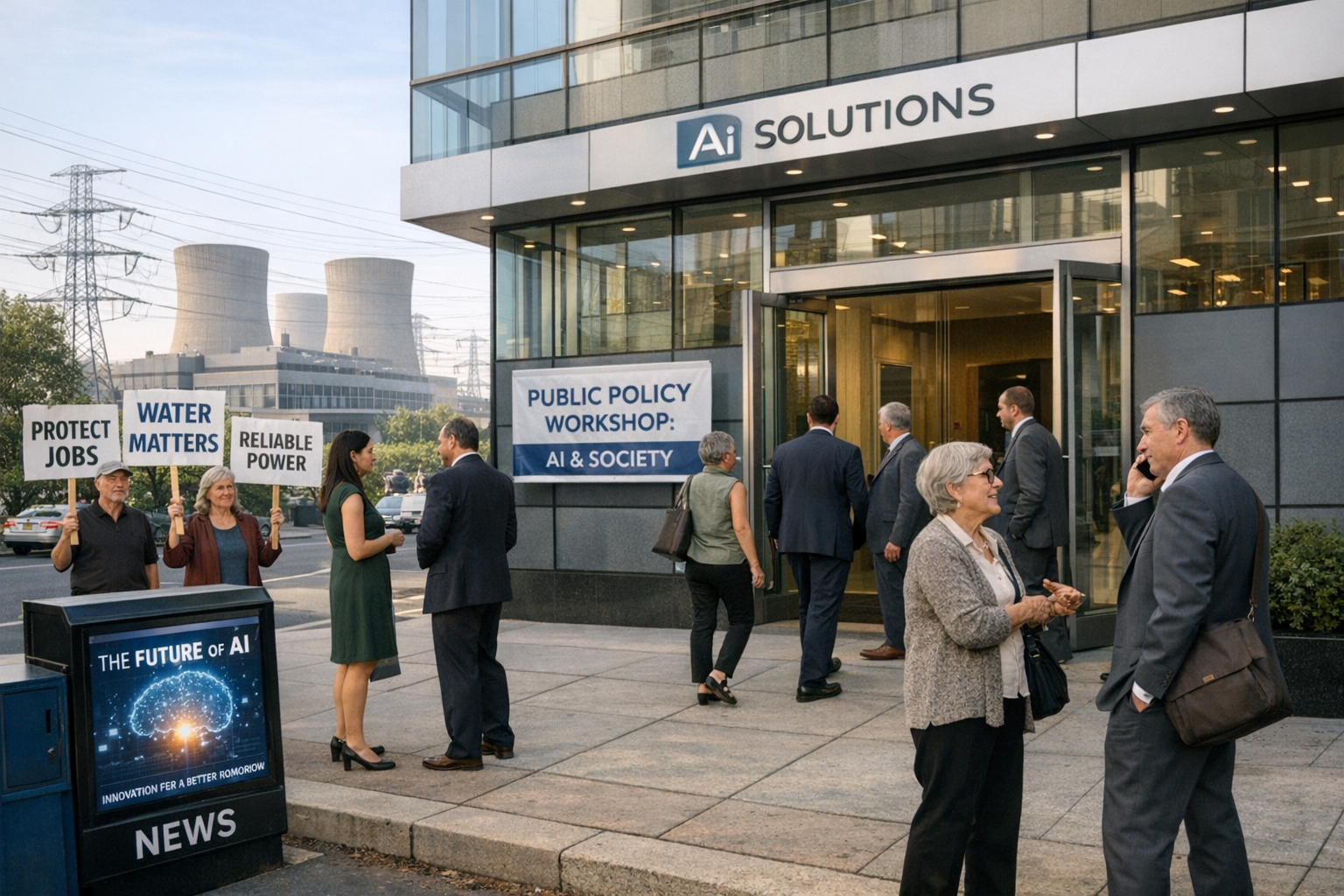
The artificial intelligence industry, long accustomed to being treated as a symbol of innovation and national ambition, is confronting a more skeptical public — and responding with a new campaign to persuade Americans that the technology can be made to serve them, not simply the companies building it.
OpenAI, one of the most visible firms in the sector, has in recent days released a policy manifesto built around what it called “people-first” ideas, announced plans for a Washington office and public-facing workshop for policymakers and nonprofit groups, and moved further into media with its acquisition this month of the tech-focused outlet TBPN. Anthropic, another leading lab, has rolled out a company-backed institute devoted to studying A.I.’s social consequences.
Taken together, the steps suggest an industry increasingly aware that it has an image problem — and increasingly intent on managing it before distrust solidifies into tougher regulation, local political resistance and a broader backlash against the physical infrastructure needed to power A.I.
A campaign to shape the debate
OpenAI’s new paper, “Industrial Policy for the Intelligence Age,” is notable less for a specific technological breakthrough than for its political framing. The document argues for a reworked social compact around A.I., presenting the company as not merely a builder of powerful systems but as a participant in a larger debate over jobs, public benefits and national competitiveness.
The company’s planned “OpenAI Workshop” in Washington appears designed with a similar purpose: to place the firm in closer, more regular conversation with lawmakers, policy staff and civil society groups at a moment when federal officials are still struggling to decide how aggressively to regulate the technology.
The push extends beyond OpenAI. Anthropic’s new institute, while presented as a research effort, also positions the company to help define how A.I.’s risks and benefits are discussed in academic and policy circles. Across the sector, spending on lobbying and political influence has also increased as companies try to shape the rules before they are written.
To critics, these efforts look less like civic engagement than a polished attempt at reputation repair.
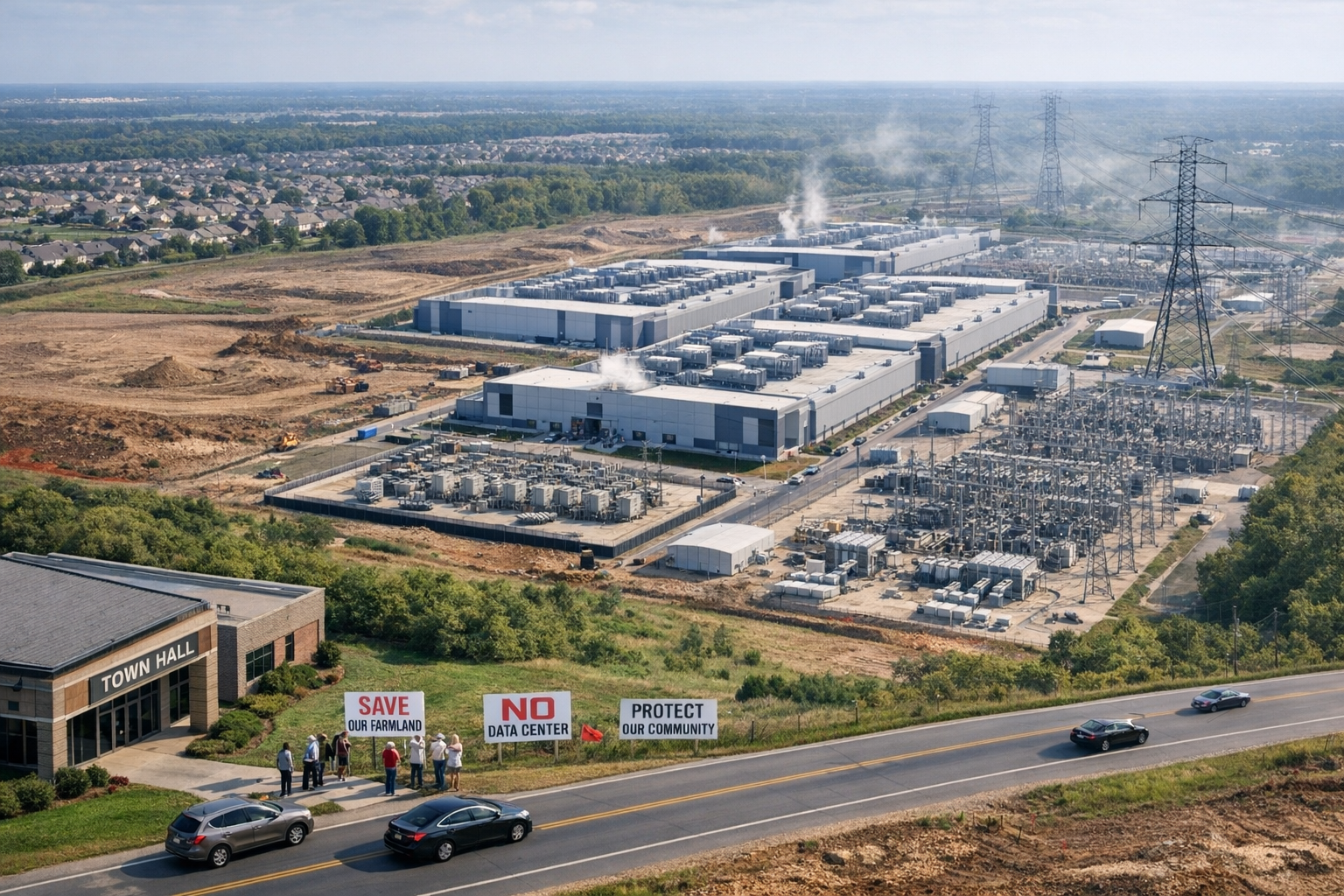
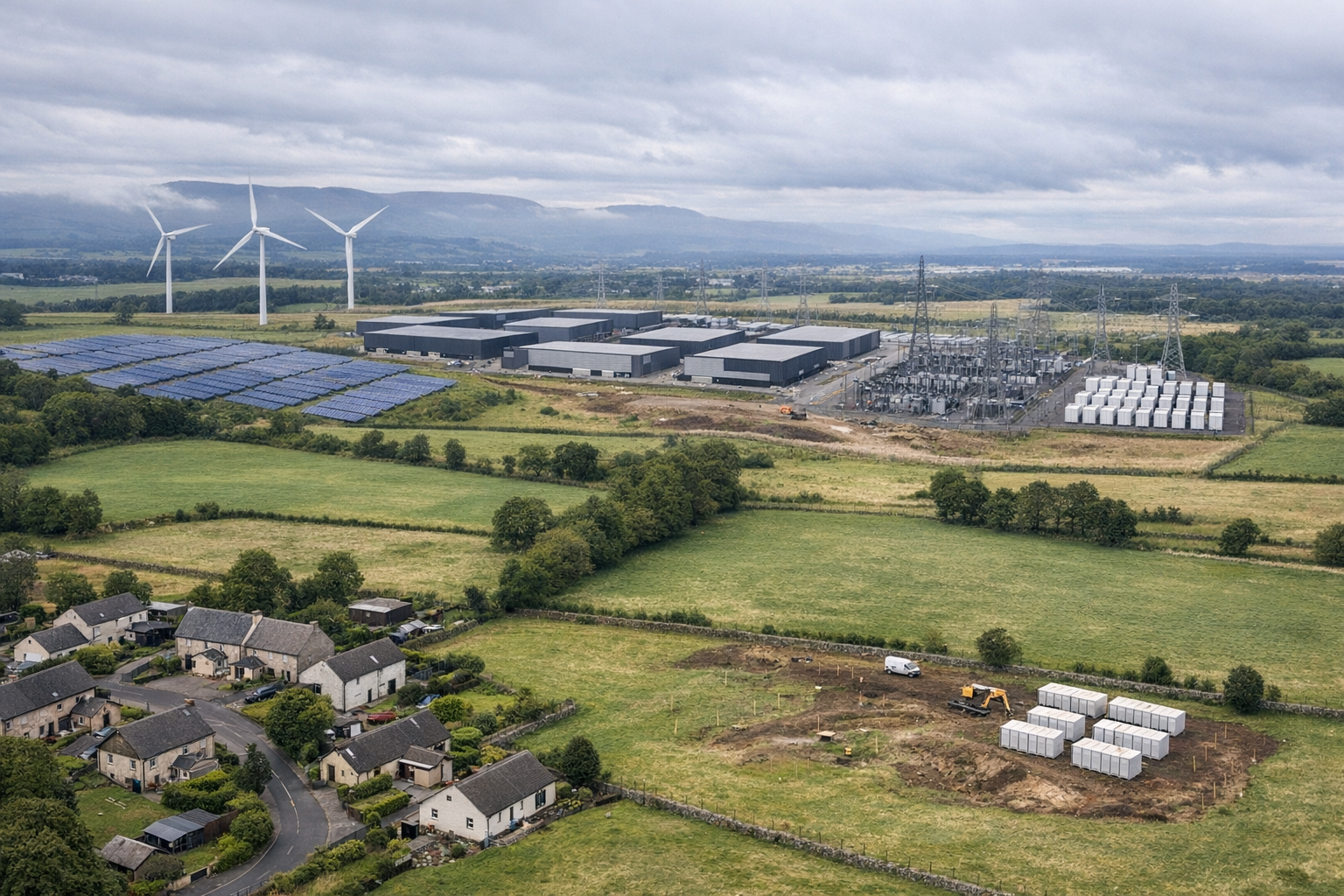
That skepticism has only deepened as some A.I. firms and their backers promote a rapid buildout of data centers, power infrastructure and water-intensive facilities in communities that often feel they have little say in the process.
Public unease is growing
For all the excitement around generative A.I., Americans remain uneasy about its consequences. Pew Research Center has found that half of U.S. adults feel more concerned than excited about A.I. And in late 2025, a Morning Consult survey found that 41 percent of voters supported banning A.I. data centers near where they live. Fifty-eight percent said such facilities were at least somewhat responsible for rising household electricity costs.
Those numbers help explain why the industry’s latest messaging has turned so sharply toward the language of social benefit, worker protections and public partnership. Companies that only recently emphasized speed, scale and technical progress are now trying to sound more attentive to everyday anxieties: whether A.I. will eliminate jobs, strain the power grid, consume local water supplies or enrich a small group of firms while exporting the costs to everyone else.
The challenge is that many of those anxieties are no longer abstract.
The infrastructure backlash
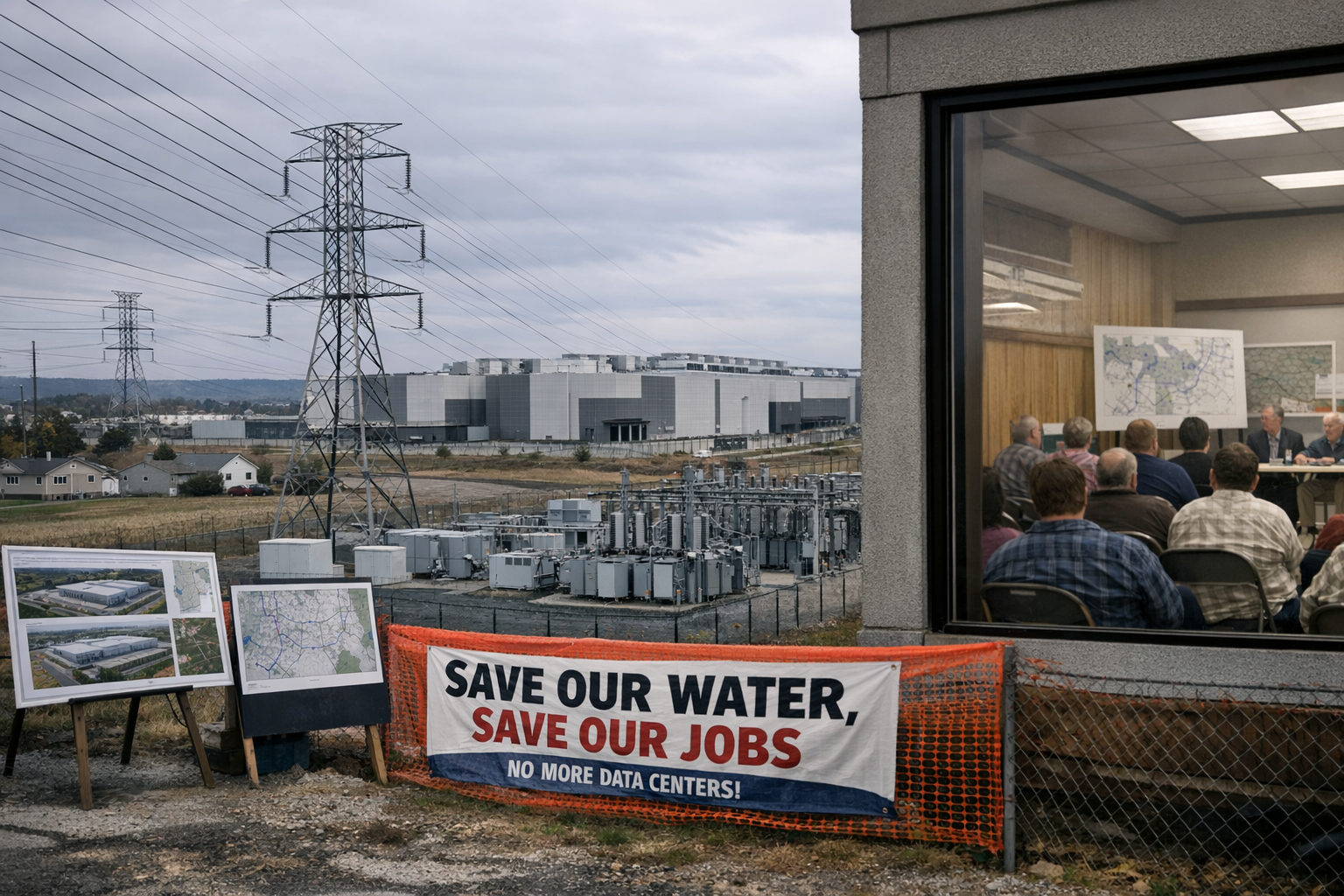
The industry’s image campaign is colliding with a widening fight over the places where A.I. is physically built.
The White House’s A.I. Action Plan, unveiled last July, called for a rapid expansion of data centers and streamlined permitting, embracing a build-fast approach meant to preserve American leadership in the race against China and other rivals. Large technology companies have committed vast sums to that effort, with the sector pouring investment into facilities that require enormous amounts of land, electricity and cooling capacity.
But the local response has become increasingly hostile, and not only in liberal strongholds.
In March, the Texas Republican Party passed a resolution opposing additional “open loop” data centers until stronger protections were in place for grid reliability, water consumption and public health. The move was striking precisely because Texas has often marketed itself as friendly terrain for business expansion and light-touch regulation.
Resistance has also surfaced in other states, with communities objecting to projects they say could raise utility bills, worsen environmental stress and alter neighborhoods without delivering clear local benefits. The politics are unusual: conservative voters wary of corporate overreach and government favoritism are finding common cause with progressives concerned about climate, labor and land use.
That bipartisan discontent is what makes the industry’s current public-relations drive so significant. If opposition to A.I. infrastructure hardens at the state and local level, the consequences could extend far beyond brand perception, threatening the speed of the buildout on which many of these companies’ business plans depend.
Winning trust, or buying time?
Whether the new policy papers, institutes and workshops will meaningfully improve public trust remains uncertain.
Supporters of the industry argue that A.I. is too economically and strategically important to be developed in a vacuum, and that engagement with policymakers and researchers is both inevitable and necessary. On that view, labs are maturing into institutions that understand they must address the social consequences of their products.
Critics counter that company-funded research arms and media acquisitions risk blurring the line between independent analysis and corporate advocacy. A policy institute underwritten by an A.I. company may produce useful work, they argue, while still functioning as an extension of a lobbying strategy. A workshop for policymakers may foster understanding, while also helping a company frame the terms of debate in its own favor.
That tension is likely to become more pronounced as election-year politics intensify and as Washington weighs the competing demands of faster infrastructure approvals and greater local control. The central question is no longer simply how powerful A.I. will become. It is who gets to define what it is for, who bears its costs and whether the public will accept the bargain being offered.
For now, the industry appears to believe it can still make its case. But the protests around data centers, the polling on public unease and the broader distrust of large technology companies suggest that the era in which A.I. could be sold chiefly as an inevitable good may be ending.
Sources
Further reading and reporting used to add context:
- https://www.techradar.com/ai-platforms-assistants/openai/openai-says-ai-could-mean-a-4-day-week-with-no-loss-in-pay-but-warns-jobs-and-wealth-are-at-risk
- Industrial policy for the Intelligence Age | OpenAI
- AI companies know they have an image problem. Will funding policy papers and thinktanks dig them out? | AI (artificial intelligence) | The Guardian
- https://forum.openai.com/public/resources/industrial-policy-for-the-intelligence-age-2026-04-08
- https://www.theguardian.com/p/x4ncj9
- https://openai.com/global-affairs/openai-proposals-for-the-us-ai-action-plan/
- https://arxiv.org/abs/2602.23679
- https://www.reddit.com/r/GUARDIANauto/comments/1sjaqti/tech_ai_companies_know_they_have_an_image_problem/
- https://en.wikipedia.org/wiki/Empire_of_AI
- https://openai.com/business/guides-and-resources/staying-ahead-in-the-age-of-ai/
- https://www.reddit.com/r/OpenAI/comments/1sfkqsy/we_responded_to_openais_industrial_policy_paper/
- https://en.wikipedia.org/wiki/A_National_Policy_Framework_for_Artificial_Intelligence
- https://www.readaboutai.com/april-9-2026/
- https://www.reddit.com/r/GUARDIANauto/comments/1sjjvfe/us_the_guardian_view_on_ai_politics_us_datacentre/
- https://en.wikipedia.org/wiki/Executive_Order_14179
- https://www.reddit.com/r/theguardian/comments/1sjkd2z/the_guardian_view_on_ai_politics_us_datacentre/
- https://openai.com/global-affairs/openais-economic-blueprint/
- https://www.ai.cc/blogs/openai-industrial-policy-for-the-intelligence-age-2026-api-developers-compliance-guide/
- https://www.reddit.com/r/GUARDIANauto/comments/1sjk6x3/opinion_the_guardian_view_on_ai_politics_us/
- https://techcrunch.com/2026/02/25/the-public-opposition-to-ai-infrastructure-is-heating-up/
- https://en.wikipedia.org/wiki/Parents_%26_Kids_Safe_AI_Coalition
- https://en.wikipedia.org/wiki/AI_Action_Plan
- https://cdn.openai.com/pdf/21b88bb5-10a3-4566-919d-f9a6b9c3e632/openai-ostp-rfi-oct-27-2025.pdf
- https://en.wikipedia.org/wiki/Model_specification_%28artificial_intelligence%29
- White House Unveils America's AI Action Plan – The White House
- https://texasgop.org/resolution-to-require-artificial-intelligence-data-centers-to-adhere-to-oil-and-gas-industry-water-protocols-and-use-recycled-water/
- https://apnews.com/article/be261f8a8ee07a0623d4170397348c41
- https://apnews.com/article/7431bea2ee491b7cf4b9aa012ac419f1
- https://apnews.com/article/7458d9d1bb537929c5dcfb5192695223
- https://apnews.com/article/dcf48112ce98a7b61bfd32157359ce2f
- https://texasgop.org/resolution-opposing-federal-ban-on-state-regulation-of-artificial-intelligence/
- https://time.com/7304994/trump-ai-regulation-plan/
- https://texasgop.org/resolution-on-the-establishment-of-additional-data-centers-in-texas/
- https://www.skadden.com/insights/publications/2025/07/the-white-house-releases-ai-action-plan
- https://www.whitecase.com/insight-alert/white-house-unveils-comprehensive-ai-strategy-winning-race-americas-ai-action-plan
- https://en.wikipedia.org/wiki/AI_Impact_Summit_2026
- https://www.whitehouse.gov/releases/2025/07/wide-acclaim-for-president-trumps-visionary-ai-action-plan/
- https://en.wikipedia.org/wiki/Stargate_LLC
- https://www.whitehouse.senate.gov/news/release/whitehouse-colleagues-urge-white-house-to-reconsider-potential-executive-action-on-fast-track-data-center-buildout-for-ai/
- https://sharedsapience.com/the-century-report-february-9-2026/
- https://www.skadden.com/-/media/files/publications/2025/07/white_house_releases_ai_action_plan_key_legal_and_strategic_takeaways_for_industry.pdf?rev=60c5591ac0f3493089dd338c552b43e5
- https://pro.morningconsult.com/analysis/ai-data-center-energy-prices-november-2025
- https://www.foxnews.com/politics/fox-news-poll-broad-anxiety-about-ai-doesnt-extend-jobs/
- https://www.yahoo.com/news/articles/americans-ai-every-day-most-223403847.html
- https://itif.org/publications/2026/02/26/survey-most-americans-say-tech-companies-should-allowed-set-ai-limits/
- https://news.gallup.com/poll/708224/gen-adoption-steady-skepticism-climbs.aspx
- What the data says about Americans’ views of artificial intelligence | Pew Research Center
- https://heraldwire.com/american-public-deeply-apprehensive-about-ais-future-demanding-urgent-regulation/
- https://www.ipsos.com/en-us/google-ipsos-multi-country-ai-survey-2026
- https://today.yougov.com/politics/articles/52615-americans-increasingly-likely-say-ai-artificial-intelligence-negatively-affect-society-poll/
- https://www.axios.com/2026/01/12/most-americans-skeptical-trump-big-tech-ties
- https://www.axios.com/local/nashville/2026/03/05/vanderbilt-poll-bipartisan-support-ai-regulations
- https://pro.morningconsult.com/analysis/ai-data-center-construction-voter-polling-october-2025
- https://youthpoll.yale.edu/spring-2026-results
- https://www.axios.com/2026/01/18/google-ipsos-poll-ai-global-americans/
- https://apnews.com/article/d15f7793c6b79444908ca8a7b68f7ef1
- https://www.lemonde.fr/en/opinion/article/2025/10/04/ai-s-appetite-for-power-could-trigger-electricity-shortages-in-the-us_6746097_23.html
- https://time.com/7310716/californians-say-ai-is-moving-too-fast/
- https://www.tomshardware.com/tech-industry/ai-data-centers-soaring-energy-consumption-is-causing-skyrocketing-power-bills-for-households-across-the-us-states-reporting-spikes-in-energy-costs-of-up-to-36-percent
- https://www.ipsos.com/sites/default/files/ct/news/documents/2026-01/Google%20Ipsos%20Our%20Life%20With%20AI%202025%20Topline.pdf
- https://www.eesi.org/files/November_2025_EESI_Impact_%28Printable_8.5_x_11%29_.pdf
- https://openai.com/index/openai-acquires-tbpn
- https://www.axios.com/2026/02/27/ai-influence-power-players
- https://www.axios.com/2026/04/02/openai-acquires-tbpn
- https://www.theguardian.com/technology/2026/apr/12/ai-image-problem-policy-papers-thinktanks
- https://www.axios.com/2026/02/27/google-openai-workers-push-for-military-ai-limits
- https://time.com/7012763/cari-tuna/
- https://www.axios.com/2026/01/30/openai-a16z-cash-ai-super-pac
- https://en.wikipedia.org/wiki/Public_First_Action
- https://medium.com/nlplanet/anthropic-refuses-pentagon-collaboration-weekly-ai-newsletter-march-2nd-2026-4a49e187e06b
- https://en.wikipedia.org/wiki/Thinking_Machines_Lab
- https://sharedsapience.com/century-report/the-century-report-april-1-2026/
- https://ai.contextix.io/ai/2026-02-15-regulatory-moat-gambit-eu-enforcement
- https://en.wikipedia.org/wiki/Leading_the_Future
- https://www.devflokers.com/blog/2026-ai-reset-anthropic-ban-openai-funding
- https://en.wikipedia.org/wiki/Dario_Amodei
- https://alignment.anthropic.com/2025/anthropic-fellows-program-2026/
- https://www.forbes.com/sites/phoebeliu/2026/02/20/ais-biggest-builders-openai-anthropic-among-biggest-government-lobbyists/
- https://axis-intelligence.com/eu-ai-lobbying-2026/
- https://en.wikipedia.org/wiki/Anthropic%27s_Responsible_Scaling_Policy
- https://publicancy.com/itself-the-trap-anthropic-built-essential-update-2026/
- https://www.themeridiem.com/policy/2026/2/12/anthropic-pivots-to-shape-ai-regulation-as-industry-consensus-shifts
- https://www.anthropic.com/news/anthropic-partners-with-u-s-national-labs-for-first-1-000-scientist-ai-jam
- https://website.anthropic.com/events/anthropic-partner-kickoff-2026
- https://www.anthropic.com/news/introducing-the-anthropic-national-security-and-public-sector-advisory-council
- https://www.anthropic.com/events/anthropic-partner-kickoff-2026
- https://www.anthropic.com/events/anthropic-at-google-cloud-next-2026
- https://www.anthropic.com/news/anthropic-and-iceland-announce-one-of-the-world-s-first-national-ai-education-pilots
- https://www.anthropic.com/news/lawrence-livermore-national-laboratory-expands-claude-for-enterprise-to-empower-scientists-and
- https://www.anthropic.com/news/rwandan-government-partnership-ai-education
- https://www.anthropic.com/institute
- https://www.anthropic.com/research/economic-index-march-2026-report
- https://www.anthropic.com/events/agentic-ai-in-action
- https://assets.anthropic.com/m/ec212e6566a0d47/original/Disrupting-the-first-reported-AI-orchestrat%E2%80%A6
- https://assets.anthropic.com/m/4e20a4ab6512e217/original/anthropic-response-to-ostp-rfi-march-2025-final-final-sunmision-v3.pdf
- https://www-cdn.anthropic.com/82fce012122e850bdfb7eecb1feb73800f01c213.pdf
- https://www-cdn.anthropic.com/13e4cfd61ee168c0372256d7de83d57c9df7c6d1.pdf
- https://assets.anthropic.com/m/4e20a4ab6512e217/original/Anthropic-Response-to-OSTP-RFI-March-2025-Final-Submission-v3.pdf
- https://alignment.anthropic.com/2025/sabotage-risk-report/2025_pilot_risk_report.pdf
- https://www.axios.com/2026/01/29/openai-palantir-headline-hill-valley-forum
- https://openai.com/form/asu-gsv-2026/
- https://content.govdelivery.com/accounts/WAKIRK/bulletins/40b3886
- https://openai.com/residency//
- https://openai.com/blog/introducing-openai-for-nonprofits/
- https://openai.com/index/announcing-devday-2025/
- https://help.openai.com/en/articles/9359041-openai-for-nonprofits
- https://forum.openai.com/public/resources/test-resource-2025-02-13
- https://academy.openai.com/public/events/openai-nonprofit-ai-jam-2025-utki4rztxa
- https://openai.com/index/nonprofit-commission-advisors/
- https://www.govconwire.com/articles/openai-anthropic-larson-ramasamy-keynotes-govcon-leadership
- https://www.washingtonpost.com/technology/2025/05/05/openai-restructures-abandons-plan-profit/
- https://cdn.openai.com/pdf/oai_nonprofit-jam-report.pdf
- https://www.reddit.com/r/jobboardsearch/comments/1m04ifh
- https://www.reddit.com/r/jobboardsearch/comments/1kmthtd
- https://www.reddit.com/r/jobboardsearch/comments/1jt2tvx
- https://cdn.openai.com/global-affairs/openai-doe-rfi-5-7-2025.pdf
- https://www.washingtonpost.com/documents/cd2edf3d-c892-4293-b2d7-41c882d2e1fb.pdf
- https://www.citizen.org/wp-content/uploads/OpenAI-letter-four.pdf
- https://cdn.openai.com/pdf/small-business-jam-report-dec-2025.pdf
- https://techxplore.com/news/2025-12-openai-awards-405m-wide-range.pdf
- https://www.reddit.com/r/ai_news_byte_sized/comments/1qi6bke/former_openai_policy_chief_launches_independent/
- https://www.reddit.com/r/Crypto_donut/comments/1kfp4ei
- https://www.reddit.com/r/ChatGPTcomplaints/comments/1r1x4ei/action_plan_1117_february_2026/
- https://www.reddit.com/r/ArtificialInteligence/comments/1rdo8zl/openai_has_changed_its_mission_statement_6_times/







Leave a Reply