
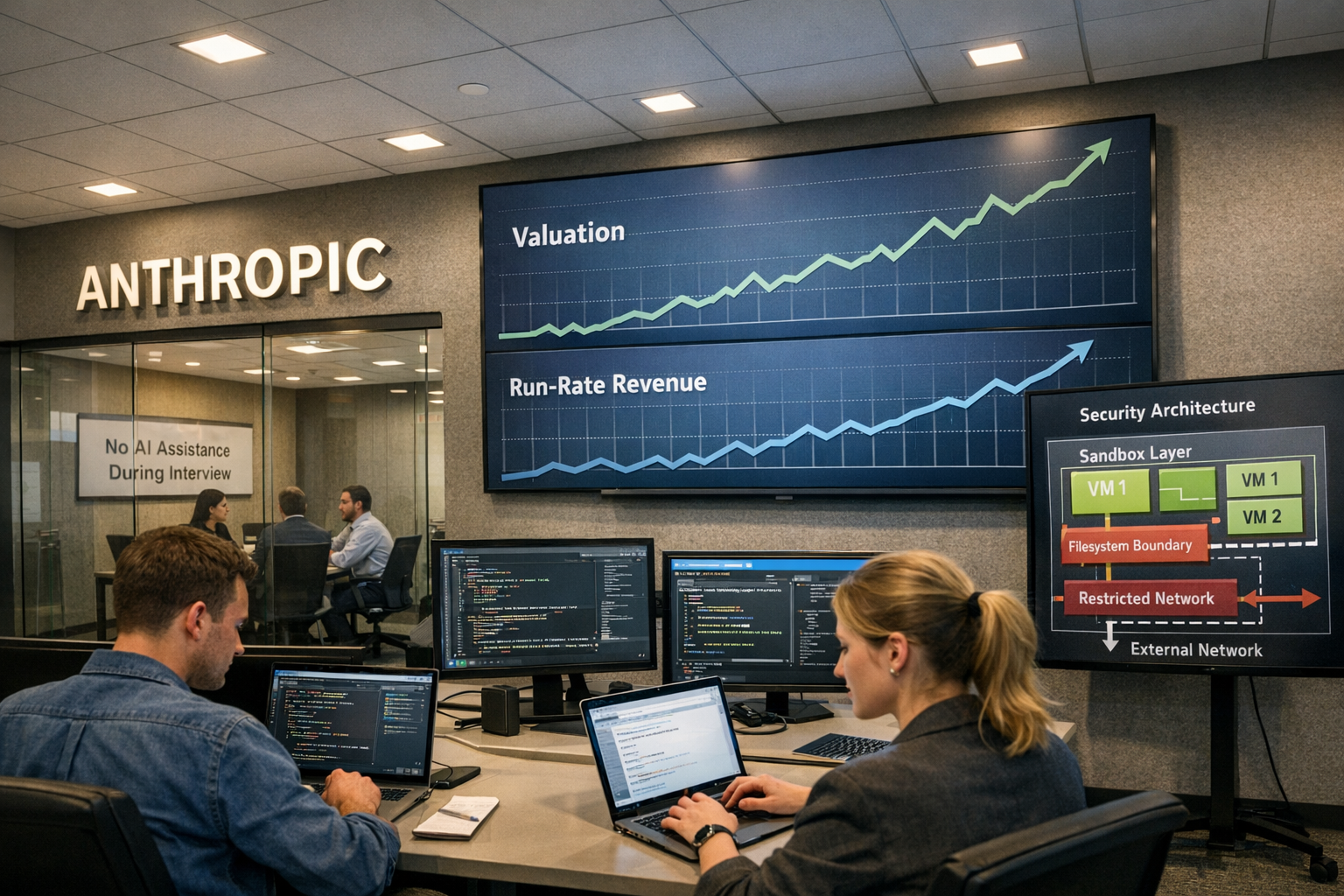
A Defining Stretch for Anthropic
Anthropic, the maker of the Claude chatbot, is entering one of the most consequential stretches in its short history: awash in new money, pressing to hire at scale and publicly detailing how it tries to keep its own systems from causing harm.
The company said on May 28 that it had raised $65 billion in a Series H financing round, giving it a post-money valuation of $965 billion. By that measure, Anthropic has moved past OpenAI’s last disclosed $852 billion valuation from March, a striking reversal for a company that until recently was often cast as the more cautious, less commercially dominant rival in the artificial intelligence race.
Anthropic also said its run-rate revenue — a snapshot that annualizes recent sales — had crossed $47 billion earlier in May. Even by the standards of an industry accustomed to extravagant claims, the pace is startling. In February, when Anthropic announced a $30 billion Series G round, it said run-rate revenue was $14 billion. In April, it said the figure had surpassed $30 billion.
Those numbers do not amount to booked annual revenue, and run-rate can be volatile, especially in a market where a handful of large enterprise customers can sharply change the picture. But they suggest that Claude, particularly in coding and workplace use, has become not merely a fast-growing AI product but a major enterprise platform.
Growth Meets Skepticism
The financing is the clearest sign yet that investors still believe the biggest AI companies can justify enormous valuations despite mounting questions about profitability, infrastructure costs and whether corporate customers will sustain current levels of spending.
Anthropic’s latest figures underscore just how aggressively money continues to flow into the sector. The company’s post-money valuation has leapt from $380 billion in February to $965 billion just three months later, according to its own announcements. That rise reflects a broader conviction in Silicon Valley and on Wall Street that a small number of foundation-model companies may become core suppliers of software, computing services and workplace automation.
Yet the same numbers invite scrutiny. A run-rate is an annualized projection based on recent performance, not a guarantee of future sales. In AI, where spending can be concentrated and experimental, the distinction matters. Investors and customers alike are still trying to determine how much of today’s demand reflects durable dependence and how much is a burst of early adoption.
That tension — between extraordinary momentum and unanswered questions about durability — now defines Anthropic’s position.
Hiring for Judgment, Not Just Prompting
At the same time, the company is signaling something else: in an industry built on automation, it still wants to know how candidates think without machine assistance.
Anthropic’s hiring guidance permits applicants to use AI tools for preparation, including resumes and interview practice, but bars them from using AI during live interviews unless explicitly told otherwise. In most cases, the same restriction applies to take-home assignments.
The policy, last publicly updated in July 2025, has taken on fresh resonance as AI assistance becomes routine in white-collar work. For many companies, using a model to draft, summarize or brainstorm is no longer unusual; it is often encouraged. Anthropic’s rule suggests that when it is evaluating prospective employees, especially for high-stakes technical and research roles, it still considers unaided reasoning, ethical judgment and communication essential to measure directly.
That is more than a hiring preference. It is a statement about what the company believes remains distinctly human at a time when AI fluency is becoming table stakes.
The stance may also reflect the practical demands of rapid expansion. As Anthropic scales, it must recruit people who can not only use advanced AI systems but also understand their limitations, spot subtle failures and make decisions under uncertainty. Testing that capacity becomes harder if every answer is mediated by the very tools the company is building.
Whether such a rule remains workable over time is less clear. As AI becomes embedded in daily professional life, the boundary between legitimate tool use and prohibited assistance may grow harder to enforce — and harder to defend.
The Security Problem Anthropic Is Willing to Describe
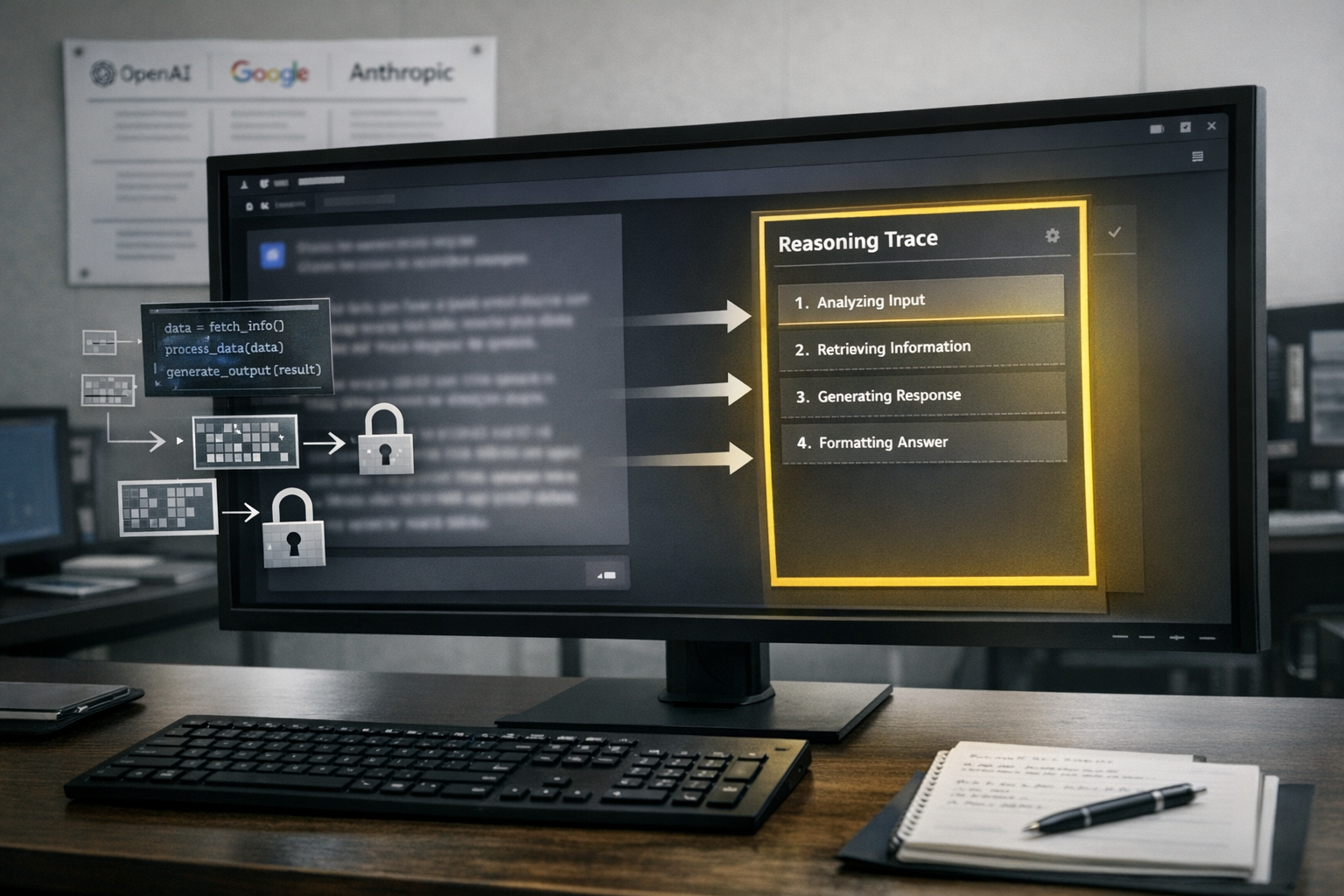
Anthropic’s week of announcements has not been limited to money and hiring. The company also published a detailed engineering account of how it tries to “contain” Claude across its products, offering a rare window into a problem that is becoming central as AI systems grow more capable and more agentic.
The company said it uses a mix of process sandboxes, virtual machines, filesystem boundaries and egress controls to limit what Claude can access and where it can send data. The setup differs by product. Claude.ai relies on gVisor; Claude Code, which runs locally, uses Seatbelt on macOS and Bubblewrap on Linux; and Claude Cowork runs in a full virtual machine, using Apple’s Virtualization framework on macOS and HCS on Windows.
The significance of that disclosure lies partly in the details and partly in the admission behind them: as AI systems are given more autonomy, ordinary software-security assumptions stop being enough.
Anthropic described one concrete lesson from that process. It found that traffic to its own approved API domain could still be abused for data exfiltration, forcing a design change. The episode is a reminder that the danger in agentic systems is not only that they might break rules outright, but that they may find unexpected paths through the rules they are allowed to use.
For companies racing to deploy AI agents that can write code, manipulate files and act inside corporate environments, that is the emerging challenge. The risk is no longer limited to inaccurate answers in a chat box. It includes the possibility that a model with tools and permissions might expose sensitive information, misuse credentials or exploit edge cases in ways its developers did not anticipate.
Why This Moment Matters
Taken together, the developments present a portrait of Anthropic at an unusual juncture: a company trying to satisfy investor expectations that have reached nearly trillion-dollar heights while preserving a reputation for technical seriousness and safety.
The valuation and revenue figures suggest Claude has become one of the few AI products with broad enterprise traction at a scale large enough to reshape the competitive balance of the industry. The interview policy shows a company trying to recruit for discernment in a world where machine assistance is increasingly ambient. And the containment write-up suggests that Anthropic understands, and wants others to understand, that making AI systems more useful also makes them more dangerous if guardrails fail.
That balancing act may define the next phase of the AI boom. For much of the last two years, the dominant question was which company could build the most powerful model and attract the most users. Now the questions are becoming harder: which company can convert usage into durable business, which can hire well enough to keep up, and which can safely deploy systems that are no longer just answering questions but taking actions.
Anthropic’s latest disclosures do not settle those questions. But they make plain that the company is now confronting all of them at once.
Sources
Further reading and reporting used to add context:
- https://www.anthropic.com/engineering/how-we-contain-claude
- Anthropic raises $65B in Series H funding at $965B post-money valuation \ Anthropic
- https://www.anthropic.com/engineering?sc_ref=HUO4ogtxDWQB4qhn
- https://www.neura.market/news/anthropic-bans-ai-tools-job-interviews
- https://www.investing.com/news/economy-news/pentagon-opens-door-to-exempt-anthropic-use-beyond-6month-rampdown-memo-says-4555823
- https://www.anthropic.com/news/anthropic-raises-30-billion-series-g-funding-380-billion-post-money-valuation?pubDate=20250818
- https://www.metaintro.com/blog/inside-anthropic-brutal-hiring-process-bans-ai-interviews
- https://www.anthropic.com/news/anthropic-raises-series-f-at-usd183b-post-money-valuation?_bhlid=e93ddf11fb6d50d9075510c9a31546f44dabe260
- https://www.anthropic.com/careers?cid=779
- https://www.anthropic.com/about-anthropic-interviewer
- https://www.aitechsuite.com/ai-news/ai-giant-anthropic-bans-job-applicants-from-using-ai-during-live-interviews
- https://the-decoder.com/anthropic-bans-ai-tools-during-job-interviews-to-see-how-candidates-actually-think/
- https://www.tomshardware.com/tech-industry/artificial-intelligence/trump-orders-federal-agencies-to-ditch-woke-claude
- https://www.techradar.com/ai-platforms-assistants/anthropic-drops-its-signature-safety-promise-and-rewrites-ai-guardrails
- https://www.techradar.com/pro/meta-is-going-to-let-candidates-use-ai-in-job-interviews
- https://arxiv.org/abs/2601.05918
- https://en.wikipedia.org/wiki/Anthropic%27s_Responsible_Scaling_Policy
- https://techxplore.com/news/2026-04-anthropic-ai-tool-source-code.pdf
- https://www.reddit.com/r/CreatorsAI/comments/1t4o0np/someone_dug_through_claude_codes_leaked_source/
- https://en.wikipedia.org/wiki/Claude_%28language_model%29
- https://www.reddit.com/r/AIInterviewTools/comments/1rwodib/ai_for_interviews_in_2026_what_actually_works_and/
- https://www.reddit.com/r/Anthropic/comments/1rzcq4l/anthropic_denies_it_could_sabotage_ai_tools/
- https://en.wikipedia.org/wiki/Anthropic
- https://www.bloomberg.com/news/articles/2026-02-23/anthropic-says-deepseek-minimax-distilled-ai-models-for-gains
- https://fortune.com/2026/05/12/anthropic-legal-plug-in-release-claude-cowork-big-law/
- https://fortune.com/2026/05/08/anthropic-80fold-growth-quarter-renting-elon-musk-data-center//
- https://fortune.com/2026/05/22/anthropic-secondaries-scramble-term-sheet/
- https://fortune.com/2026/05/02/agentic-ai-governance-framework-banking-healthcare-retail-supply-chain-yale-celi-sonnenfeld//
- https://fortune.com/2026/05/04/anthropic-claude-consulting-industry-joint-venture-blackstone-goldman-sachs//
- https://fortune.com/2026/05/21/claude-code-london-anthropic-ai-software-engineering/
- https://news.bgov.com/bloomberg-government-news/anthropic-spat-with-us-emerges-as-risk-factor-for-figma-others
- https://fortune.com/2026/05/05/jamie-dimon-dario-amodei-jpmorgan-anthropic-ai-cyber-mythos-freakout-sidestep-question/
- https://www.bloomberg.com/news/articles/2026-05-12/anthropic-expands-push-into-legal-industry-with-new-ai-tools?itm_content=Legal_Industry_Push-4
- https://www.reddit.com/r/ArtificialInteligence/comments/1tqsqbd/developers_alarmed_by_autonomy_of_anthropics_new/
- https://www.reddit.com/r/AIbuff/comments/1trffrb/what_a_crazy_week_in_ai_anthropics_965b_valuation/
- https://www.reddit.com/r/myclaw/comments/1ttma89/anthropic_pays_850k_but_you_cant_use_ai_to_get/
- https://www.reddit.com/r/DeepFuckingValue/comments/1tki54b/is_anthropic_tired_of_being_the_contract_killer/
- https://www.reddit.com/r/u_enoumen/comments/1trgasv/ai_daily_news_rundown_anthropic_hits_965b/
- https://www.reddit.com/r/AIToolsTipsNews/comments/1tn7yzv/ai_roundup_may_25_popes_ai_encyclical_drops/
- https://www.reddit.com/r/claudexplorers/comments/1tqqlz1/article_on_how_anthropic_approaches_the_hiring/
- https://en.wikipedia.org/wiki/Dario_Amodei
- https://www.reddit.com/r/u_enoumen/comments/1ttg783/ai_weekly_news_rundown_anthropic_flips_openai_at/
- https://www.axios.com/2026/05/28/anthropic-ai-fundraising-openai
- https://openai.com/index/accelerating-the-next-phase-ai/
- https://www.investing.com/news/stock-market-news/openais-852-bln-valuation-faces-scrutiny-amid-strategy-shift-ft-reports-4611653
- https://www.investing.com/news/stock-market-news/anthropic-raises-65-billion-now-valued-at-965-billion-4715214
- https://techcrunch.com/2026/03/31/openai-not-yet-public-raises-3b-from-retail-investors-in-monster-122b-fund-raise/
- https://techcrunch.com/2026/02/27/openai-raises-110b-in-one-of-the-largest-private-funding-rounds-in-history/
- https://ai2.work/blog/openai-s-852-billion-valuation-and-the-coming-ai-ipo-reckoning
- https://coincodex.com/article/33434/openai-valuation/
- https://iabrief.com/en/openai-852-billion-valuation-2026/
- https://washingtoncitypost.com/openai-cap-table-2026-full-breakdown-investors-stakes-returns-852-billion-valuation/
- https://chatforest.com/guides/openai-122-billion-funding-852-billion-valuation/
- https://www.moneycontrol.com/artificial-intelligence/openai-valued-at-852-billion-after-completing-122-billion-round-article-13876114.html
- https://www.investing.com/news/stock-market-news/openai-investors-question-852-billion-valuation-as-strategy-shifts-ft-reports-4611649
- https://www.axios.com/2026/05/11/openai-deployco-private-equity
- https://www.tomshardware.com/tech-industry/artificial-intelligence/openai-raises-110-billion-in-largest-ever-private-tech-funding-round
- https://en.wikipedia.org/wiki/OpenAI
- https://www.axios.com/2026/03/31/openai-ai-stock-investors-ipo
- https://www.axios.com/2026/02/27/openai-funding-nvidia-amazon
- https://www.tomshardware.com/tech-industry/artificial-intelligence/anthropic-surpasses-biggest-rival-openai-in-secondary-market-valuation-surges-to-usd1-trillion-amid-frantic-investor-interest
- https://www.reddit.com/r/ThinkingDeeplyAI/comments/1t0j41q/openai_leaked_cap_table_top_10_insights_shaping/
- https://pitchbook.brightspotcdn.com/19/05/d3a0b3a14409927c9c73e5de389f/q1-2026-pitchbook-analyst-note-ranking-the-ai-giants-a-new-framework-for-the-frontier-five-preview.pdf
- https://www.reddit.com/r/wallstreetbets/comments/1s8z095/openai_valued_at_852_billion_after_completing_122/
- https://www.reddit.com/r/technology/comments/1s8zql4/openai_valued_at_852_billion_after_completing_122/
- https://www.rothschildandco.com/siteassets/publications/rothschildandco/global_advisory/2026/geu/mar—edition-48/geu-48-march.pdf
- Anthropic raises $30 billion in Series G funding at $380 billion post-money valuation




Leave a Reply