

Britain Tries to Build Its Own AI Future as Anthropic Deepens London Bet
Britain is pushing ahead on two tracks in artificial intelligence at once: putting public money behind a homegrown “sovereign” AI strategy while welcoming a rapid expansion by one of the world’s most closely watched AI companies.
The government has begun deploying its new sovereign AI fund, backed by up to £500 million, in an effort to help British AI companies grow at home rather than be outmuscled or bought out by foreign rivals. At nearly the same time, Anthropic is enlarging its London presence dramatically and preparing to give British financial institutions access to a powerful restricted model known as Mythos Preview, a system the company has not released broadly to the public.
Together, the moves underscore a turning point for Britain’s AI ambitions. London is becoming more central both as a destination for frontier AI talent and as a testing ground for advanced commercial uses of the technology. But the developments are also intensifying a debate that has followed AI policy in Britain for months: whether the country can build meaningful national capacity in the technology without exposing itself to new economic and security risks.
From Policy Promise to Investment
The government’s sovereign AI effort had until recently been more aspiration than action. Officials set up a Sovereign AI Unit to support British companies, domestic computing capacity, data resources and technical talent, presenting the initiative as a long-term industrial strategy rather than a simple venture fund.
Now that strategy has entered a more concrete phase, with the first investments beginning to be made.
Ministers have cast the fund as part of a larger attempt to ensure that British AI firms can “start, scale and stay” in the country. The language reflects a long-running frustration in Britain’s technology sector: promising companies are often founded in the U.K., but many end up seeking larger pools of capital, infrastructure and customers abroad, especially in the United States.
That urgency has only grown as competition over AI infrastructure has intensified. Britain has sought to position itself as a serious player in advanced AI, but questions have mounted over whether it can provide enough compute, investment and regulatory clarity to compete with the vast spending underway in the United States and, increasingly, elsewhere.
Recent setbacks have sharpened that concern. Reports earlier this month that OpenAI had paused a major Britain-related investment linked to sovereign compute ambitions reinforced doubts about whether the country can secure the industrial foundations needed to support top-tier AI development at scale.
Against that backdrop, the launch of actual spending from the sovereign AI program carries significance beyond the size of any single investment. It is a signal that the government wants a direct hand in shaping which AI companies and capabilities remain anchored in Britain.
Anthropic Expands as London Gains Weight
At the same time, Anthropic is making a much larger commitment to London.
The company has secured office space with room for about 800 employees, a sharp increase from its current London head count of just over 200. The expansion points to the city’s growing role in the competition for elite AI researchers, engineers and policy staff, even as the industry remains heavily centered in the United States.
Anthropic’s move comes amid broader tensions between AI companies and governments over regulation, access and geopolitical dependence. For Britain, the company’s expansion offers both validation and complication. It suggests that London remains one of the few places outside Silicon Valley capable of attracting frontier AI activity at scale. But it also highlights a central tension in the government’s sovereign AI argument: Britain wants domestic control over critical AI capabilities even as some of the most important technology in its market is still being built by foreign firms.
That tension is especially visible in finance, one of the sectors where Britain has the most to gain — and potentially the most to lose — from early adoption of powerful AI systems.
Banks Prepare for Access to a Restricted Model
Anthropic has said that British financial institutions are expected to receive controlled access in the coming days to Mythos Preview, a model that has so far been limited to a small number of mainly American enterprise users.
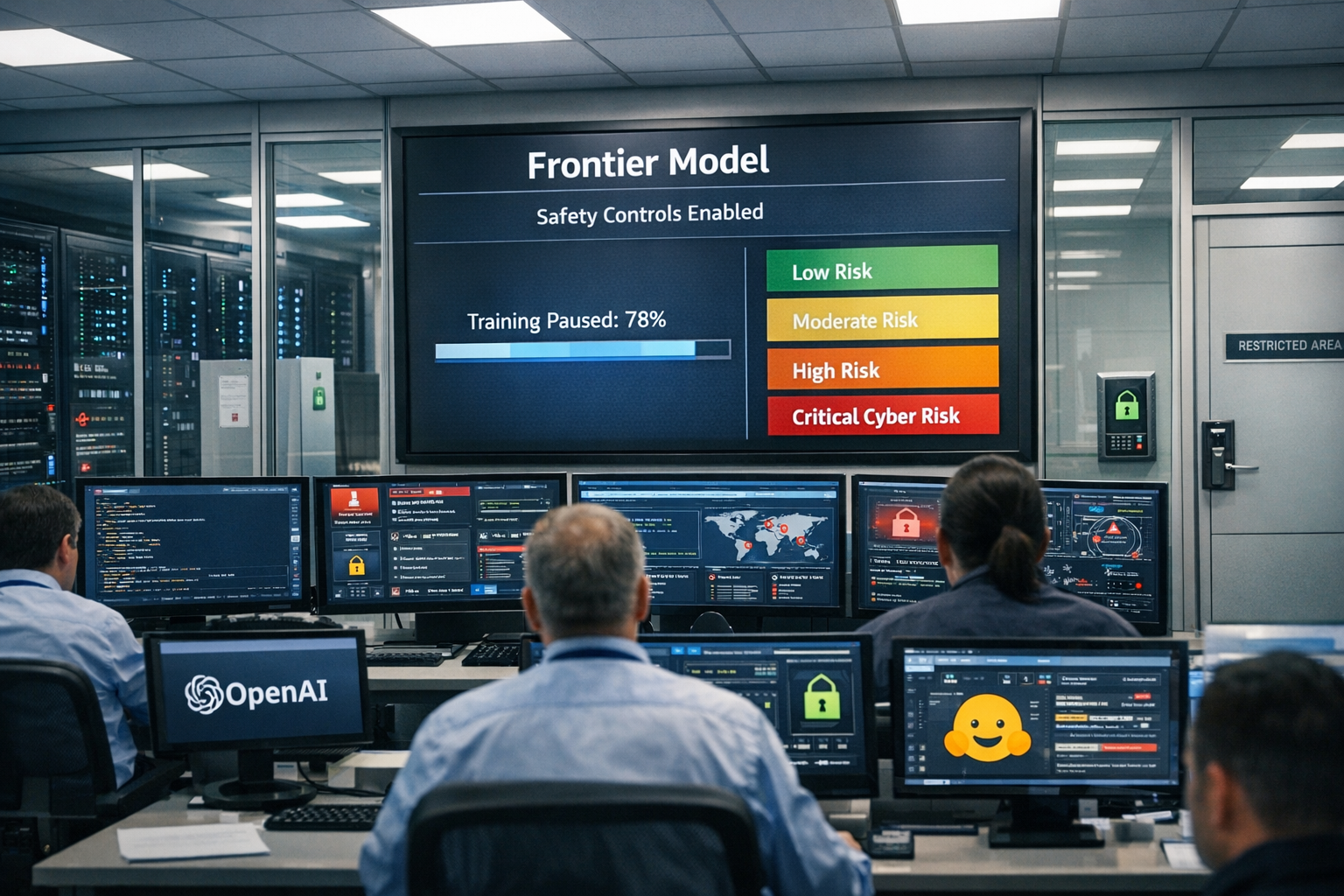
The company has treated Mythos differently from a conventional product launch. Rather than releasing it widely, it has framed the model as a specially governed preview, with restrictions reflecting concerns about its capabilities. British officials and Anthropic have both indicated that Mythos represents a meaningful jump in cyber ability. Britain’s AI Security Institute has said the system could autonomously identify weaknesses and carry out multi-step attack simulations.
Those capabilities help explain why banks are interested. Financial institutions are under constant pressure to improve fraud detection, defensive cybersecurity and operational efficiency, and advanced AI models hold obvious appeal in each of those areas. A system capable of identifying vulnerabilities or modeling complex attack paths could, in theory, make defenses stronger and faster.
But the same properties that make Mythos attractive for security work have also made it controversial.
Senior figures in finance have raised alarms about the implications of making such tools more broadly available, even under restrictions. The concern is not simply that a powerful model might be misused by a bad actor. It is also that deployment across a tightly interconnected financial system could introduce new operational dependencies, new failure modes and a fresh layer of systemic risk before regulators and firms have fully worked out the safeguards.
Safety Questions Collide With Growth Strategy
That clash — between competitiveness and caution — now sits at the heart of Britain’s AI policy.
Ministers have tried to present AI as both an economic opportunity and a manageable risk. They have urged the public and industry to embrace the technology, arguing that Britain cannot afford to fall behind in a field likely to shape productivity, jobs, national security and public services for years to come.
Yet the timing is awkward. The push for wider adoption is arriving just as more capable models are prompting sharper warnings about cyber threats, labor disruption and the concentration of technical power. In the case of Mythos, those concerns are especially acute because the model has already been described as too sensitive for broad public release.
The result is a policy balancing act. Britain wants to foster national champions, attract global AI firms, and accelerate adoption in strategic sectors like finance. But every one of those goals increases pressure on the country’s still-evolving oversight regime.
Officials are already in discussions with banks and cyber agencies about how these systems should be tested and controlled. What remains uncertain is whether those talks will lead to new rules on model evaluations, deployment conditions, disclosure obligations or incident reporting.
The Bigger Question: What “Sovereign AI” Really Means
For all the symbolism of the government’s new fund, a larger question remains unresolved: what counts as sovereignty in AI.
If the sovereign AI initiative helps British firms survive longer, gain access to compute and keep talent in the country, it could prove an important foundation for a domestic ecosystem. But £500 million, while substantial in political terms, is modest by the standards of frontier AI competition, where companies and governments are spending in the billions.
That leaves open the possibility that Britain’s role will be less about producing a full-stack national champion than about using public money to catalyze a mixed ecosystem — one in which British startups, government-backed infrastructure and major foreign AI companies coexist, and perhaps depend on one another.
Anthropic’s London expansion captures that ambiguity neatly. On one hand, it strengthens Britain’s claim to relevance in the global AI race. On the other, it shows how much of that race is still being run by companies headquartered elsewhere.
For now, Britain appears to be betting that both realities can work in its favor: public investment to keep a domestic stake in the technology, and private expansion from global firms to ensure the country remains close to the frontier.
Whether that combination produces durable national advantage — or simply deeper reliance on foreign-built systems deployed on British soil — is likely to become one of the defining technology questions facing the country in the years ahead.
Sources
Further reading and reporting used to add context:
- https://www.sovereignai.gov.uk/
- https://www.resultsense.com/news/2026-04-14-openai-permanent-london-office-2027-kings-cross
- https://www.theguardian.com/p/x4z7f6
- https://www.theguardian.com/technology/2026/mar/09/revealed-uks-multibillion-ai-drive-is-built-on-phantom-investments/
- https://aifundingtracker.com/top-ai-startups-uk/
- https://creati.ai/ai-news/2026-04-16/anthropic-london-expansion-800-staff-claude-code/
- https://www.techmeme.com/260416/p22
- https://www.reddit.com/r/Anthropic/comments/1sn4z62/anthropic_plots_major_london_expansion/
- https://www.resultsense.com/news/2026-04-16-uk-sovereign-ai-fund-500m-kendall
- https://theoutpost.ai/news-story/anthropic-announces-major-uk-expansion-with-800-staff-london-office-days-after-open-ai-s-move-25433/
- https://www.newsminimalist.com/articles/anthropic-expands-london-operations-with-new-office-for-800-employees-fa62f47d
- https://www.nextplatform.com/ai/2025/09/17/nvidia-and-hyperscaler-friends-do-massive-ai-deals-in-the-uk/1653500
- https://aifunding.me/insights/european-ai-startups-global-race-2026
- https://en.wikipedia.org/wiki/Axelera_AI
- https://www.rothschildandco.com/siteassets/publications/rothschildandco/global_advisory/2025/growth_equity_update/11/geu-44-november.pdf
- https://assets.publishing.service.gov.uk/media/697a36873c71d838df6bd400/ai_opportunities_action_plan-one-year-on.pdf
- https://en.wikipedia.org/wiki/National_Wealth_Fund_%28United_Kingdom%29
- https://www.reddit.com/r/uknews/comments/1sn4zqe/anthropic_plots_major_london_expansion/
- https://www.reddit.com/r/codex/comments/1rf9jxe/london_codex_event_recap_from_an_anthropic/
- https://www.reddit.com/r/Startup_eu/comments/1sndmwx/startups_supported_by_the_uks_new_500m_sovereign/
- https://en.wikipedia.org/wiki/Founders_Fund
- https://www.reddit.com/r/worldnews/comments/1snsdcq/finance_ministers_and_top_bankers_raise_serious/
- https://en.wikipedia.org/wiki/Anthropic
- https://www.reddit.com/r/ukpolitics/comments/1sjbl3u/bank_of_england_raises_alarm_over_threat_from_ai/
- AI Opportunities Action Plan: One Year On – GOV.UK
- https://www.gov.uk/government/collections/sovereign-ai-unit
- https://www.gov.uk/government/news/uk-will-win-ai-race-as-chancellor-sets-out-economic-big-choices
- https://www.gov.uk/government/news/chancellors-growth-plan-sets-key-principles-for-uk-eu-alignment
- https://www.gov.uk/government/case-studies/breaking-ai-to-make-it-better-dasas-investment-in-the-future-of-ai-assurance
- https://www.anthropic.com/system-cards/
- https://www.anthropic.com/news/sydney-fourth-office-asia-pacific
- https://www.gov.uk/government/speeches/mais-lecture-2026
- https://www.find-government-grants.service.gov.uk/grants/sovereign-ai—proof-of-concept-1
- https://www.gov.uk/government/news/investment-in-british-ai-companies-hits-record-levels-as-tech-sec-pitches-uk-as-global-magnet
- https://assets.publishing.service.gov.uk/media/68bea3fc223d92d088f01d69/Defence_Industrial_Strategy_2025_-_Making_Defence_an_Engine_for_Growth.pdf
- https://www.gov.uk/government/news/spring-budget-puts-uk-on-fast-track-to-becoming-science-and-technology-superpower
- https://assets.publishing.service.gov.uk/media/68627094354985706f111adc/E03349913_HMT_Spending_Review_June_2025_TEXT_CS_Accessible__002_.pdf
- https://assets.publishing.service.gov.uk/media/6878b5dda52cca025ef5bd87/uk_compute_roadmap_web_accessible.pdf
- https://assets.publishing.service.gov.uk/media/686e2be010d550c668de3cb1/DSIT_ARA_2024-25_web_optimised.pdf
- https://www.gov.uk/government/news/uk-space-agency-invests-17-million-to-drive-next-wave-of-space-innovation
- https://www.gov.uk/government/news/initial-100-million-for-expert-taskforce-to-help-uk-build-and-adopt-next-generation-of-safe-ai
- https://www.gov.uk/government/news/cardiff-capital-region-backed-by-30m-to-unlock-innovation-and-growth
- https://www.gov.uk/government/news/raft-of-tech-companies-investing-in-britain-as-government-vows-to-unleash-growth
- https://www.gov.uk/government/news/boost-for-uk-ai-as-microsoft-unveils-25-billion-investment
- https://www.gov.uk/government/news/500m-government-investment-to-boost-growth-and-opportunity-for-underrepresented-entrepreneurs
- https://www.gov.uk/government/news/search-for-britains-next-defence-unicorn-kicks-off-with-new-20-million-fund
- https://www.gov.uk/government/news/uk-ai-sector-attracts-200-million-a-day-in-private-investment-since-july
- https://assets.publishing.service.gov.uk/media/6902045d918e1f940b3cf7d3/investor-prospectus.pdf
- https://assets.publishing.service.gov.uk/government/uploads/system/uploads/attachment_data/file/702810/180425_BEIS_AI_Sector_Deal__4_.pdf
- https://assets.publishing.service.gov.uk/media/69d7c51a9df301a39cd8d86d/industrial-strategy-quarterly-update-january-march-2026.pdf
- https://www.axios.com/2026/04/16/scoop-bny-openai-gpt-cyber
- https://news.bloomberglaw.com/privacy-and-data-security/anthropic-plans-to-bring-mythos-to-uk-banks-within-the-next-week
- https://www.wired.com/story/openai-expands-london-office-major-research-hub/
- https://www.insurancejournal.com/news/international/2026/04/13/865559.htm
- https://thenextweb.com/news/anthropic-mythos-uk-banks
- https://www.disruptionbanking.com/2026/04/16/anthropics-mythos-reaches-british-banks/
- https://www.resultsense.com/news/2026-04-14-goldman-sachs-solomon-anthropic-mythos-cyber-risk
- https://tech.yahoo.com/ai/claude/articles/british-banks-given-access-ai-131709364.html
- https://www.theguardian.com/technology/2026/apr/10/us-summoned-bank-bosses-to-discuss-cyber-risks-posed-by-anthropic-latest-ai-model
- https://www.finextra.com/newsarticle/47589/uk-banks-to-gain-access-to-anthropics-mythos-cybersecurity-model-within-the-next-week
- https://tribune.com.pk/story/2602409/uk-financial-regulators-rush-to-assess-risks-of-anthropics-latest-ai-model-report
- https://finance.yahoo.com/news/wall-street-banks-try-anthropic-203030964.html
- https://www.silicon.co.uk/security/banking-anthropic-mythos-629405
- https://en.wikipedia.org/wiki/Claude_%28language_model%29
- https://www.reddit.com/r/mobiles/comments/1sn803x/anthropic_unveils_large_london_office_expansion/
- https://www.reddit.com/r/AIGuild/comments/1nt3nf2
- https://www.ubs.com/us/en/wealth-management/insights/market-news/article/_jcr_content.0000023273.file/PS9jb250ZW50L2RhbS9pbXBvcnRlZC9jaW9yZXNlYXJjaC9wZGYvMzIvNzUvOTkvNS8zMjc1OTk1L2VuLzMyNzU5OTUucGRm/3275995.pdf
- https://www.reddit.com/r/NowInTech/comments/1snqom1/anthropic_unveils_large_london_office_expansion/
- https://www.reddit.com/r/technology/comments/1sjo8rx/uk_financial_regulators_rush_to_assess_risks_of/
- https://www.lse.co.uk/news/uk-financial-regulators-rush-to-assess-risks-of-anthropics-latest-ai-model-ft-reports-hameb0jh5i7vc65.html
- https://pressnewsagency.org/uk-regulators-rush-to-assess-risks-of-latest-anthropic-ai-model-ft-reports/
- https://www.thestar.com.my/tech/tech-news/2026/04/13/uk-regulators-rush-to-assess-risks-of-latest-anthropic-ai-model-ft-reports
- https://www.newsmax.com/finance/streettalk/anthropic/2026/04/12/id/1252613/
- https://time.com/7380854/exclusive-anthropic-drops-flagship-safety-pledge/
- https://www.axios.com/2026/02/11/anthropic-claude-safety-chemical-weapons-values
- https://www.thenews.com.pk/latest/1398663-uk-watchdog-rushes-to-evaluate-risks-of-anthropics-latest-ai-model
- https://www.lse.co.uk/news/uk-financial-regulators-rush-to-assess-risks-of-anthropics-latest-ai-model-ft-reports-6rqb020v9rry14s.html
- https://economictimes.indiatimes.com/tech/artificial-intelligence/uk-financial-regulators-rush-to-assess-risks-of-anthropics-latest-ai-model-report/articleshow/130207974.cms/
- https://economictimes.indiatimes.com/tech/artificial-intelligence/uk-financial-regulators-rush-to-assess-risks-of-anthropics-latest-ai-model-report/articleshow/130207974.cms?from=mdr
- https://www.aol.com/articles/uk-regulators-rushing-assess-risks-210109720.html
- https://m.economictimes.com/tech/artificial-intelligence/uk-financial-regulators-rush-to-assess-risks-of-anthropics-latest-ai-model-report/amp_articleshow/130207974.cms
- https://www.marketscreener.com/news/uk-financial-regulators-rush-to-assess-risks-of-anthropic-s-latest-ai-model-ft-reports-ce7e50d9df81f022
- https://en.wikipedia.org/wiki/Anthropic%27s_Responsible_Scaling_Policy
- https://arxiv.org/abs/2508.19313
- https://www.reddit.com/r/ukpolitics/comments/1sjtp2g/uk_regulators_rush_to_assess_risks_of_latest/
- https://www.reddit.com/r/worldnews/comments/1sjol1r/uk_regulators_rush_to_assess_risks_of_latest/
- https://www.reddit.com/r/unitedkingdom/comments/1sjtocv/uk_regulators_rush_to_assess_risks_of_latest/
- https://www.gov.uk/government/speeches/liz-kendalls-speech-at-bloomberg
- https://www.theguardian.com/technology/2026/jan/28/artificial-intelligence-will-cost-jobs-admits-liz-kendall
- https://www.theguardian.com/technology/2025/sep/17/jensen-huang-nvidia-uk-ai-superpower-500m-nscale
- https://www.theguardian.com/technology/2025/sep/17/what-is-new-uk-us-tech-deal-ai-supercomputers-investment-economy
- https://www.theguardian.com/technology/2026/apr/09/openai-pulls-out-of-landmark-31bn-uk-investment
- https://www.standard.co.uk/news/tech/keir-starmer-uk-government-north-lanarkshire-liz-kendall-scotland-b1268670.html
- https://www.theguardian.com/business/live/2026/mar/17/rachel-reeves-mais-lecture-ai-adoption-deeper-eu-ties-regional-growth-business-live-news-updates?page=with%3Ablock-69b931238f082e70034c2c8f
- https://www.theguardian.com/technology/2025/sep/16/google-ai-investment-uk-trump-visit-rachel-reeves
- https://hansard.parliament.uk/html/commons/2025-11-24/WrittenStatements
- https://www.resultsense.com/news/2026-01-30-uk-government-ai-jobs-strategy
- https://www.reddit.com/r/GUARDIANauto/comments/1snrjgd/uk_liz_kendall_urges_uk_public_to_embrace_ai_as/
- https://www.reddit.com/r/TheColorIsBlue/comments/1sns39i/liz_kendall_urges_uk_public_to_embrace_ai_as/
- https://www.reddit.com/r/GUARDIANauto/comments/1snu6gu/tech_liz_kendall_urges_uk_public_to_embrace_ai_as/
- https://www.reddit.com/r/GUARDIANauto/comments/1snrg8w/world_liz_kendall_urges_uk_public_to_embrace_ai/
- https://www.reddit.com/r/AutoNewspaper/comments/1snrkxx/uk_liz_kendall_urges_uk_public_to_embrace_ai_as/
- https://www.reddit.com/r/AutoNewspaper/comments/1snu9lr/tech_liz_kendall_urges_uk_public_to_embrace_ai_as/
- https://www.reddit.com/r/NewsOfTheUK/comments/1snrwtl/liz_kendall_urges_uk_public_to_embrace_ai_as/
- https://www.reddit.com/r/AutoNewspaper/comments/1snrky2/world_liz_kendall_urges_uk_public_to_embrace_ai/
- https://hansard.parliament.uk/pdf/Commons/2026-03-18
- https://arxiv.org/abs/2401.01291
- Chancellor’s growth plan sets key principles for UK-EU alignment – GOV.UK






Leave a Reply