

The Cost of Letting A.I. Code Is Rising
For much of the past two years, A.I. coding tools were sold with a familiar Silicon Valley promise: pay a monthly subscription, then let the software write, edit and debug to your heart’s content.
That bargain is starting to fray.
In recent days, two of the most closely watched companies in the fast-growing market for coding assistants — Anthropic and GitHub — have offered a revealing glimpse into a new reality for the industry: the economics of autonomous coding agents are getting harder to ignore.
GitHub, owned by Microsoft, has formally tightened access to its individual Copilot plans, citing the soaring compute demands of “agentic workflows.” Anthropic, meanwhile, briefly appeared to test a far steeper price floor for Claude Code, before reversing the visible change after a burst of backlash and confusion online.
Taken together, the moves suggest that the era of relatively simple, all-you-can-use pricing for coding agents may be giving way to stricter limits, pricier tiers and more explicit metering.
GitHub Makes the Shift Official
On April 20, GitHub said it was changing its Copilot Individual plans, pausing new sign-ups for Pro, Pro+ and Student plans while imposing tighter token-based session and weekly usage limits. It also narrowed access to Anthropic’s Opus models within Copilot: Opus 4.7 remains available only on the more expensive Pro+ plan, while earlier Opus versions have been removed from Pro and are also set to leave Pro+.
GitHub said the changes were driven by a simple fact: coding agents now do far more work than older autocomplete-style assistants ever did.
“Agentic workflows have fundamentally changed Copilot’s compute demands,” the company said, adding that long-running, parallelized sessions now consume far more resources than its original plan structure was built to support.
That explanation points to a broader industry problem. Early coding assistants typically generated short bursts of text — a line completion here, a function suggestion there. Newer agents are asked to inspect large code bases, plan multistep changes, run parallel tasks, revise their own output and sustain long sessions. Each of those steps consumes tokens and computing power, and often at a much larger scale than the subscription prices users first became accustomed to.
GitHub’s new structure reflects that pressure. The company is now drawing sharper distinctions between basic plan access, premium-request allowances and separate token-based caps, rather than treating advanced agent use as something comfortably covered by a flat monthly fee. Its current documentation still lists Pro at $10 a month and Pro+ at $39 a month, making access to higher-end models and more intensive usage increasingly dependent on pricier plans.
Anthropic’s Brief Pricing Scare
Two days later, Anthropic set off a different kind of alarm.
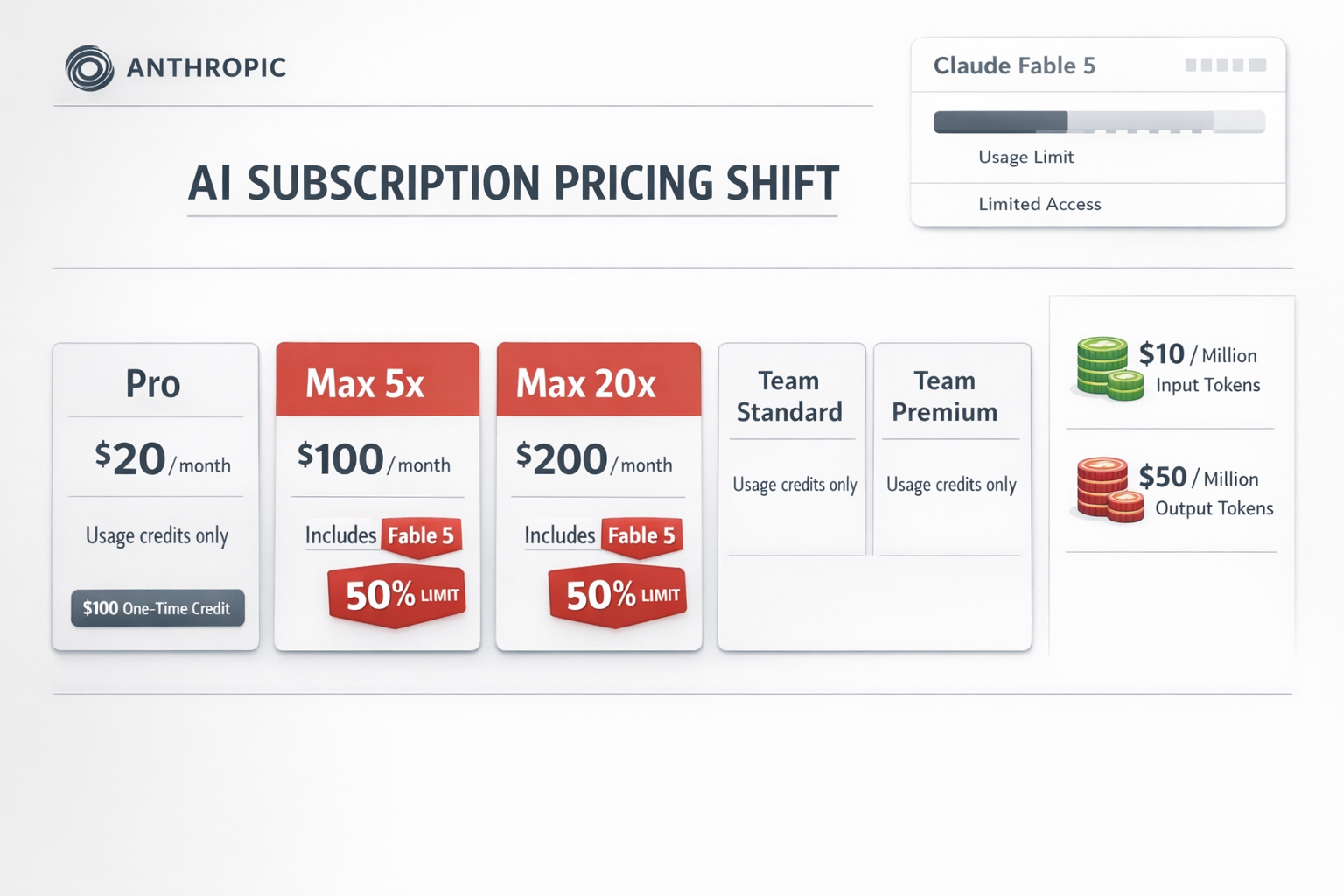
Visitors to the company’s pricing page briefly saw Claude Code marked as unavailable on the $20-a-month Pro plan and instead limited to the far more expensive Max tiers priced at $100 and $200 a month. The change was especially striking because Claude Code has become one of the most prominent products in the coding-agent category, widely used by developers and increasingly by educators and nontraditional technical users.
Then, just hours later, the pricing page changed back. Claude Code again appeared as included with Pro.
Anthropic did not publish a formal announcement explaining the episode. The most public explanation came through a social media post by Amol Avasare, the company’s head of growth, who said the company was running “a small test on ~2% of new prosumer signups” and that existing Pro and Max subscribers were unaffected. He later said it had been a mistake for the logged-out landing page and documentation to reflect the test, and that those changes had been reverted.
That left several questions unresolved. Anthropic’s live pricing page currently shows Claude Code included with Pro again, and the company’s support materials still refer to using Claude Code with a Pro or Max plan. But it remains unclear whether a limited experiment is still underway for some new users, and if so, what exactly Anthropic is testing.
What was unmistakable was the reaction. The prospect of moving a flagship coding tool from $20 a month to a $100 entry point touched a nerve among developers, hobbyists and instructors who have helped popularize these products. It also highlighted a central tension in the market: companies want broad adoption, but the heaviest users of coding agents may be among the least economical to serve at low fixed prices.
Why the Math Is Changing
The underlying issue is not difficult to see.
Coding agents are among the most computationally expensive consumer-facing A.I. products now being deployed at scale. They are not simply chatbots answering one-off questions. They can ingest repositories, reason across multiple files, propose changes, call tools, review code and continue working over extended sessions. In some cases they perform these tasks in parallel, multiplying token use.
That matters because many companies initially priced these tools in ways that made sense for lighter workloads. As users shifted from occasional prompts to sustained agent sessions, costs rose faster than many plan structures anticipated.
The industry has already been inching toward more disciplined pricing. Some companies have moved away from broad “included usage” language and toward quotas, credits or model-specific restrictions. Others have begun steering users toward smaller, cheaper models for routine tasks while reserving top-tier models for higher-priced plans.
GitHub’s latest change is one of the clearest official acknowledgments yet that the old assumptions no longer hold. Rather than obscuring the economics, the company effectively said that the product had changed enough — and become expensive enough — to require new guardrails.
A More Mature, and More Constrained, Market
The timing matters because coding agents have become one of the most hotly contested corners of the A.I. business. Anthropic’s Claude Code helped define the category. OpenAI has been pushing its Codex products. GitHub is trying to evolve Copilot beyond assisted autocomplete into a more autonomous developer tool. Start-ups are competing with their own agent-based systems aimed at professionals and enterprise teams.
That competition has pushed companies to advertise powerful capabilities, often at consumer-friendly price points. But as the tools become more autonomous, the costs of delivering them reliably appear to be forcing a reset.
For users, that likely means a more stratified market ahead: cheaper entry plans with tighter limits, premium tiers for the most capable models and heavier workloads, and more frequent experimentation around what exactly a monthly subscription includes.
For the companies, the challenge is not only technical but reputational. Developers tend to build habits, workflows and even training materials around specific tools. Sudden shifts in access or pricing can prompt anger out of proportion to a normal product tweak, because they threaten investments of time as much as money.
That is part of why Anthropic’s brief pricing-page change drew such a sharp response. And it is why GitHub’s more formal overhaul may resonate beyond its own customers. Both episodes point to the same conclusion: in A.I. coding, the technology may be getting better, but the business model is getting tougher.
What Comes Next
The immediate questions are practical ones. GitHub has not said how long its sign-up pause for individual plans will last or whether the new limits represent a temporary adjustment or a more durable baseline. Anthropic has not fully clarified whether any pricing experiment involving Claude Code is still active for a slice of new users.
The bigger question is whether the rest of the industry follows.
If usage keeps climbing and coding agents continue to shift from quick helper to semi-autonomous worker, today’s pricing skirmishes may look less like isolated stumbles than an early sign of a broader correction. The age of cheap, generously bundled A.I. coding may not be over. But it is beginning to look much less certain.
Sources
Further reading and reporting used to add context:
- https://www.techradar.com/news/live/claude-anthropic-down-outage-april-15-2026
- Changes to GitHub Copilot Individual plans – The GitHub Blog
- https://www.forbes.com/sites/johnkoetsier/2026/03/26/anthropic-huge-pricing-issues-with-glitching-claude-code-limits/
- https://docs.github.com/en/enterprise-cloud%40latest/copilot/reference/ai-models/supported-models
- https://claudelab.net/en/articles/claude-ai/claude-max-plan-complete-guide-2026
- https://www.reddit.com/r/ClaudeCode/comments/1sbw0a3/psa_anthropic_is_turning_on_pertoken_billing_for/
- https://www.reddit.com/r/GithubCopilot/comments/1srj6xi/github_copilot_is_not_the_same_product_you_signed/
- https://www.reddit.com/r/microsaas/comments/1ss6lqw/rip_claude_code_on_pro_it_was_nice_while_it_lasted/
- https://www.techradar.com/pro/bad-news-claude-users-anthropic-says-youll-need-to-pay-to-use-openclaw-now
- https://www.techradar.com/pro/github-integrates-claude-and-codex-ai-coding-agents-directly-into-github
- https://www.reddit.com/r/GithubCopilot/comments/1sqy7n9/opus_46_has_been_removed_from_pro_plan/
- https://www.reddit.com/r/GithubCopilot/comments/1s207vf/does_copilot_pro_10month_still_include_claude/
- https://www.techradar.com/ai-platforms-assistants/claude/claude-is-limiting-usage-more-aggressively-during-peak-hours-heres-what-changed
- https://aitoolsrecap.com/Blog/anthropic-removes-claude-code-pro-plan-pricing-test-2026
- https://www.reddit.com/r/GithubCopilot/comments/1s2ozvb/are_claude_sonnet_and_opus_models_still_available/
- https://www.reddit.com/r/ClaudeAI/comments/1ss3asp/does_claudes_20_plan_no_longer_include_claude_code/
- https://www.reddit.com/r/GithubCopilot/comments/1srgiw9/vscode_copilot_shows_upgrade_next_to_anthropic/
- https://arstechnica.com/ai/2025/04/anthropic-launches-200-claude-max-ai-plan-with-20x-higher-usage-limits/
- https://c-ai.chat/pricing/
- https://agent-wars.com/news/2026-04-11-github-copilot-pro-plus-usage-limits-opus-fast-retired
- https://rawpickai.com/blog/ai-tool-news-roundup-april-17-2026
- https://www.itpro.com/technology/artificial-intelligence/anthropic-promises-opus-level-reasoning-claude-sonnet-4-6-model-at-lower-cost
- https://www.tomsguide.com/ai/claude/claude-ai-will-start-training-on-your-data-soon-heres-how-to-opt-out-before-the-deadline
- https://docs.github.com/copilot/managing-copilot/managing-copilot-as-an-individual-subscriber/billing-and-payments/about-billing-for-individual-copilot-plans
- https://github.blog/changelog/2026-04-20-changes-to-github-copilot-plans-for-individuals/
- https://docs.github.com/en/billing/concepts/product-billing/github-copilot
- https://docs.github.com/es/copilot/managing-copilot/monitoring-usage-and-entitlements/about-premium-requests
- https://docs.github.com/en/copilot/how-tos/manage-and-track-spending/monitor-premium-requests
- https://docs.github.com/copilot/concepts/copilot-billing/about-individual-copilot-plans-and-benefits
- https://github.blog/changelog/2026-02-05-claude-opus-4-6-is-now-generally-available-for-github-copilot/
- https://docs.github.com/en/copilot/concepts/copilot-billing/understanding-and-managing-requests-in-copilot
- https://docs.github.com/en/copilot/rolling-out-github-copilot-at-scale/choosing-your-enterprises-plan-for-github-copilot
- https://docs.github.com/en/billing/managing-billing-for-github-copilot/managing-your-github-copilot-individual-subscription
- https://github.blog/changelog/2026-04-10-enforcing-new-limits-and-retiring-opus-4-6-fast-from-copilot-pro
- https://docs.github.com/assets/images/help/site-policy/github-privacy-statement%2807.22.20%29%28fr%29.pdf
- https://github.blog/wp-content/uploads/2021/02/Amicus_StudentVisas_MassDistrict.pdf
- https://support.anthropic.com/en/articles/11049744-how-much-does-the-max-plan-cost
- https://support.anthropic.com/en/articles/8325610-how-much-does-claude-pro-cost
- https://www.anthropic.com/max
- https://www.anthropic.com/claude-code/
- https://support.anthropic.com/id/collections/14445694
- https://docs.anthropic.com/en/docs/claude-code/setup
- https://support.anthropic.com/en/collections/12394590-max-plan
- https://support.anthropic.com/en/articles/11647753-understanding-usage-and-length-limits
- https://docs.anthropic.com/en/docs/claude-code/costs
- https://www.anthropic.com/claude-code
- https://docs.anthropic.com/en/docs/claude-code/getting-started
- https://support.anthropic.com/en/articles/11014257-about-claude-s-max-plan-usage/
- https://www-cdn.anthropic.com/files/4zrzovbb/website/bf04581e4f329735fd90634f6a1962c13c0bd351.pdf
- https://www-cdn.anthropic.com/b0d46f8c8e2f4cca2833c17cb68435035c0bb5a9/apr-pricing-tokens_2023-05-10-213025_tnty.pdf
- https://www-cdn.anthropic.com/bd374a9430babc8f165af95c0db9799bdaf64900.pdf
- https://www-cdn.anthropic.com/08eca2757081e850ed2ad490e5253e940240ca4f.pdf
- https://assets.anthropic.com/m/4e20a4ab6512e217/original/anthropic-ponseponse-to-ostp-rfi-march-2025–final-submission-v3.pdf
- https://www-cdn.anthropic.com/bf10f64990cfda0ba858290be7b8cc6317685f47.pdf
- Plans & Pricing | Claude by Anthropic
- Is Claude Code going to cost $100/month? Probably not—it’s all very confusing











Leave a Reply