
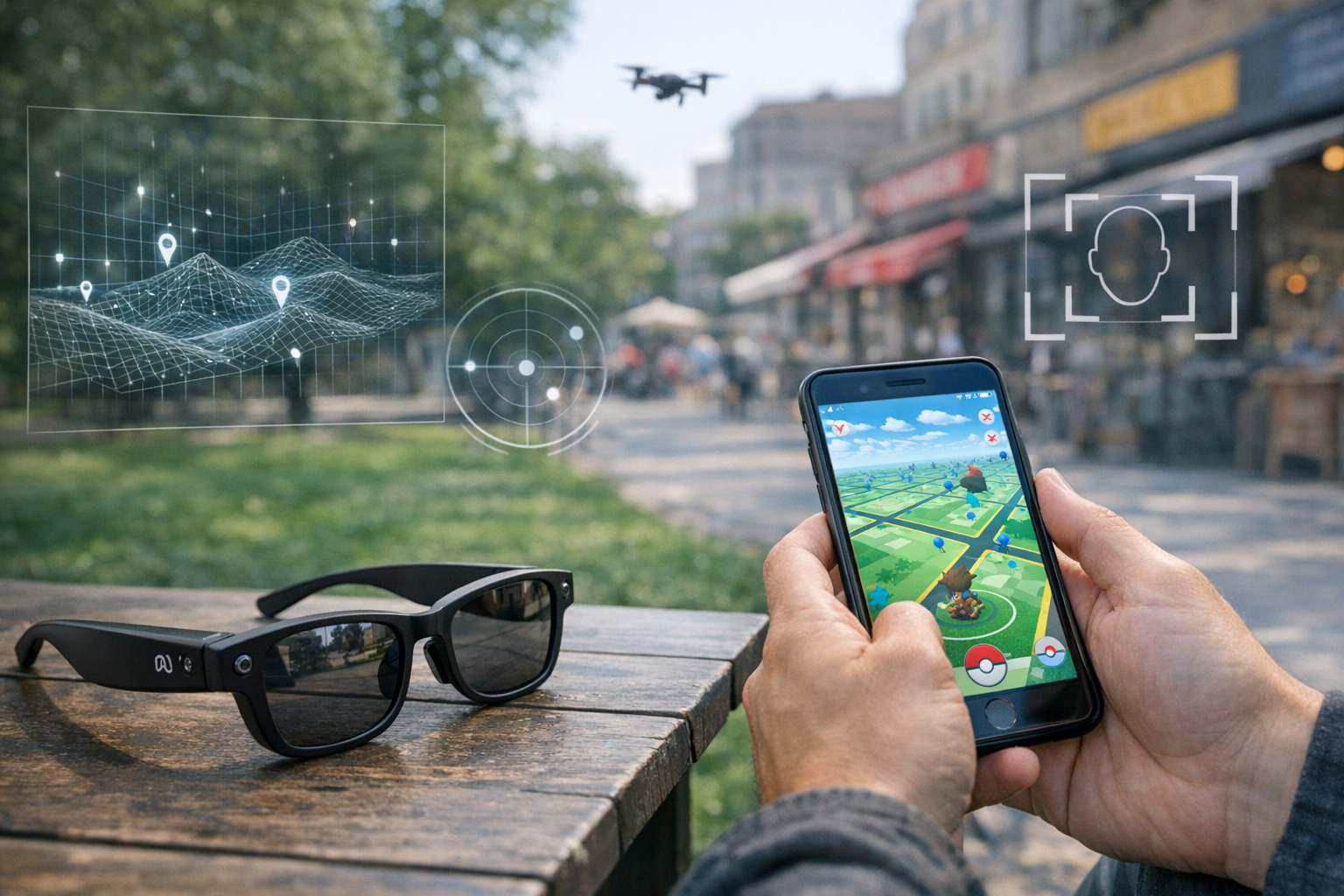
A pair of recent revelations about consumer technology have intensified concerns that the data people generate for entertainment and convenience can quietly migrate into tools with surveillance and military value.
One report found that location scans collected through *Pokémon Go*, the augmented-reality mobile game that turned city streets and parks into virtual hunting grounds, were used to help train artificial-intelligence models designed to understand the physical world. Another found that Meta had embedded dormant facial-recognition components inside software tied to its smart glasses before removing them after questions from journalists.
Taken together, the episodes point to a widening and increasingly contested frontier in artificial intelligence: the conversion of civilian platforms into infrastructure for national-security-adjacent systems.
Consumer data, defense relevance
The first case centers on Niantic, the company behind *Pokémon Go*, whose players have spent years pointing phone cameras at sidewalks, storefronts and public landmarks to capture the digital creatures layered over real environments. Those scans, according to reporting published this month, helped train spatial AI models developed by Niantic Spatial, a spinoff focused on helping machines interpret three-dimensional surroundings.
Niantic confirmed a partnership with Vantor, a drone-software company whose products include spatial detection tools with military applications. The company said, however, that raw scans from *Pokémon Go* users were not directly shared with Vantor.
That distinction may matter legally and technically, but it has done little to quiet the broader concern. If game-generated scans were used to build foundational models that can recognize terrain, landmarks and physical layouts, critics say, then a consumer pastime has still contributed to capabilities that could be useful for autonomous navigation in dangerous settings, including war zones.
The practical impact remains uncertain. It is not yet clear how much those models improve military drone performance in real combat conditions, or how central such consumer-collected imagery is to the resulting systems. But the direction of travel is clear enough to alarm privacy advocates and some researchers: an enormous archive of user-generated views of the world can be turned into machine perception.
Meta’s smart-glasses questions
The second case involves Meta, whose smart-glasses ambitions have increasingly placed it at the intersection of consumer electronics, artificial intelligence and wearable sensing.
Earlier this month, WIRED reported that Meta had included dormant code for a facial-recognition system known internally as “NameTag” inside the companion app for its smart glasses. Days later, after the report was published, WIRED reported that Meta removed the code.
The reporting raised questions not only about whether the feature was experimental or closer to launch than previously understood, but also about what sort of biometric database would have been needed to make it work and how ordinary people, including those who never bought the product, might have been affected.
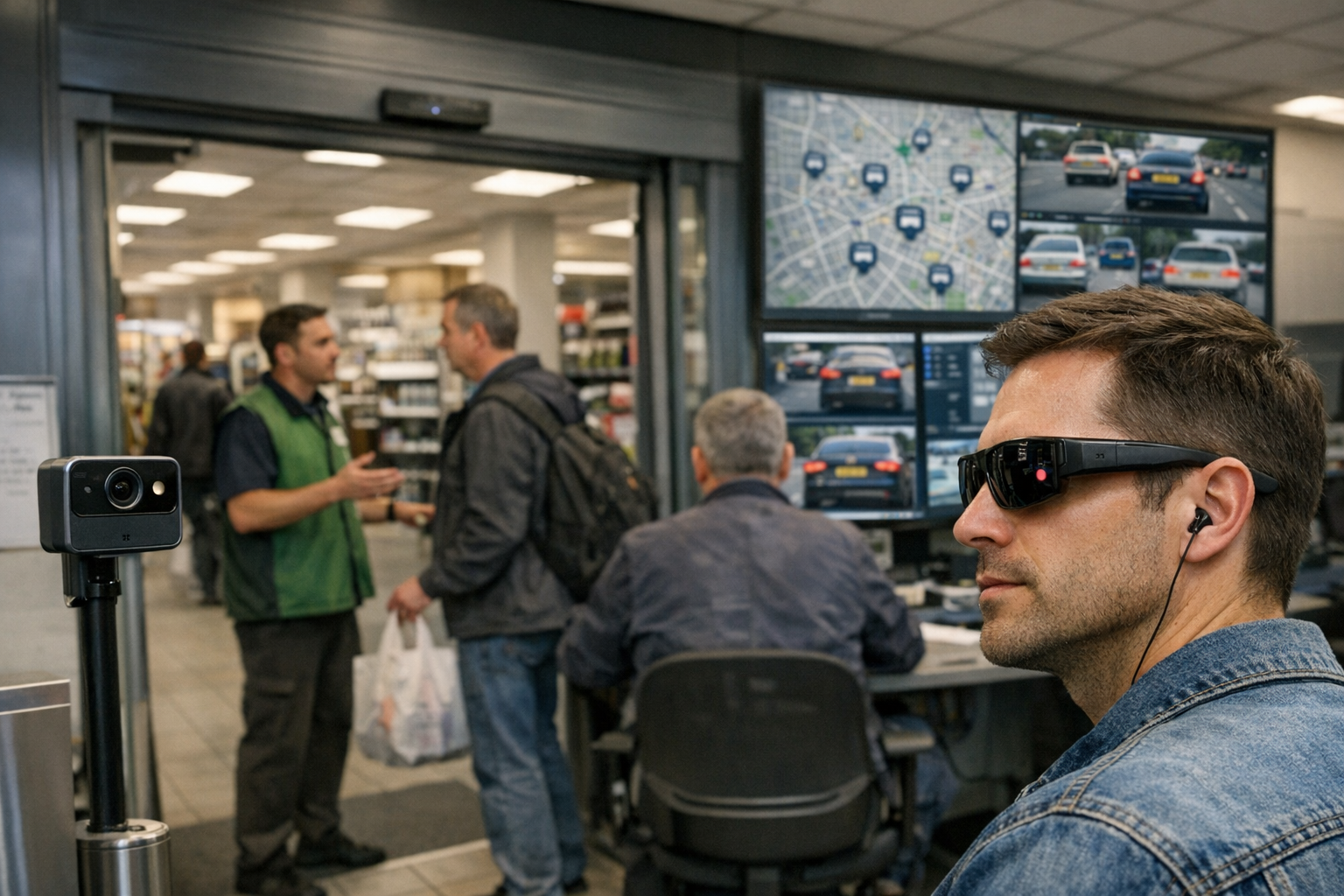
The concerns are amplified by Meta’s broader ties to defense-related work. The company is already a named partner in Anduril’s $159 million mixed-reality contract with the U.S. Army, announced last year, a reminder that wearable vision systems developed for consumers can have obvious military analogues. A set of glasses that identifies people in real time, overlays information on the wearer’s field of view and operates hands-free could serve very different purposes depending on who is using it and where.
Meta also brings a history of biometric controversy. The company has faced years of scrutiny over facial recognition and has previously paid major settlements tied to privacy claims. That history has made even dormant code politically combustible.
The blurred boundary between civilian and military AI
What links the two episodes is not a formal defense contract alone, but a deeper structural shift in the AI economy. Mass-market products now generate the kinds of data — visual, spatial, behavioral and biometric — that are useful far beyond the products’ original purpose.
A game that invites users to map their surroundings can help machines learn navigation. Smart glasses marketed as lifestyle devices can evolve into always-on perception systems. The same AI techniques that improve convenience for consumers can also support reconnaissance, identification and situational awareness.
That dual-use quality has become one of the defining dilemmas of the AI era. Companies often describe the downstream uses in neutral technical terms: spatial understanding, object detection, computer vision, personalized assistance. But those same capabilities can be adapted for policing, intelligence gathering and the battlefield.
The issue is especially sensitive now as technology companies deepen their involvement in defense work after years of internal employee revolts and public debate. In the late 2010s, protests over Pentagon contracts pushed some Silicon Valley firms to distance themselves from military projects. More recently, that hesitation has eased as geopolitical tensions, rapid advances in generative and visual AI, and growing government demand have made defense partnerships more common and more lucrative.
Questions of consent and disclosure
The latest reports also sharpen an old question for the platform age: what exactly did users agree to?
In the case of *Pokémon Go*, the open question is whether players were meaningfully informed that scans captured for gameplay could contribute to systems with military-adjacent applications, even if their raw data was not directly passed to a defense-oriented partner. In the Meta case, the uncertainty is whether users — and bystanders — would ever have had a clear understanding of how facial-recognition features might function in a consumer wearable device.
For privacy advocates, the concern is not merely one of data transfer, but of transformation. Information gathered in one context can be processed into a model, and that model can then be deployed somewhere entirely different. By the time the original data has been abstracted into software, many of the practical protections people assume they have may no longer apply in the same way.
That helps explain why these developments have drawn so much attention. They suggest that the most consequential military or surveillance implications of AI may not always begin with classified systems or secretive procurement deals. Sometimes they begin with a mobile game, a pair of glasses, or an app people download without imagining where their data might ultimately lead.
Sources
Further reading and reporting used to add context:
- https://www.pcgamer.com/hardware/reports-suggest-meta-was-working-on-another-facial-recognition-feature-that-was-quietly-pushed-out-to-millions-of-users-before-being-just-as-quietly-deleted/
- https://www.theguardian.com/technology/2026/jun/12/pokemon-go-data-trained-ai-that-could-assist-military-drones-in-war-zones
- https://www.theguardian.com/technology/computing/2026/jun/12/all
- https://cybernews.com/tech/meta-smart-glasses-facial-recognition-buchodi/
- https://www.theguardian.com/world/drones
- https://www.theguardian.com/world/2026/jun/03/can-autonomous-ai-powered-killer-drones-take-morality-onboard
- https://www.malwarebytes.com/blog/privacy/2026/06/metas-face-recognition-code-raises-new-concerns-about-smart-glasses
- https://spacedaily.com/n-metas-smart-glasses-companion-app-was-downloaded-more-than-50-million-times-before-anyone-disclosed-that-it-already-contained-three-ai-models-capable-of-detecting-a-face/
- https://www.techradar.com/computing/virtual-reality-augmented-reality/metas-smart-glasses-might-soon-sport-facial-recognition-and-the-code-to-power-this-dystopian-feature-is-already-present-in-the-meta-ai-app-on-your-phone
- https://www.engadget.com/2190115/meta-quietly-removes-face-recognition-code-from-its-smart-glasses-app/
- https://www.theguardian.com/science/2026/jun/03/ai-weapons-drones-moral-code-former-uk-gchq-chief-david-omand
- https://www.digitaltrends.com/wearables/meta-accused-of-preparing-facial-recognition-features-for-ai-smart-glasses/
- https://www.wired.com/story/meta-smart-glasses-face-recognition-nametag-connections/
- https://www.techradar.com/computing/virtual-reality-augmented-reality/meta-is-rumored-to-be-working-on-an-ai-pendant-and-smart-glasses-different-to-what-weve-seen-before
- https://www.reddit.com/r/InterstellarKinetics/comments/1u0pkig/breaking_meta_has_quietly_deleted_a_hidden_facial/
- https://www.reddit.com/r/gadgets/comments/1twxrp5/meta_silently_added_facerecognition_code_for_its/
- https://www.reddit.com/r/u_TWiT_tv/comments/1u0ox7g/meta_quietly_added_face_recognition_code_for_its/
- https://www.freevacy.com/news/wired/analysis-shows-metas-smart-glasses-already-contain-facial-recognition-code/7438
- https://es.wired.com/articulos/meta-incluyo-en-secreto-codigo-de-reconocimiento-facial-para-sus-gafas-en-millones-de-telefonos
- https://www.xataka.com/realidad-virtual-aumentada/anduril-meta-tienen-nueva-e-inquietante-obsesion-convertir-a-gafas-inteligentes-instrumentos-guerra/amp
- https://techcrunch.com/2026/02/13/meta-plans-to-add-facial-recognition-to-its-smart-glasses-report-claims/
- https://www.techradar.com/computing/virtual-reality-augmented-reality/your-meta-ray-ban-smart-glasses-dont-have-facial-recognition-yet-and-over-70-privacy-advocacy-organizations-want-it-to-stay-that-way
- https://www.wired.it/article/meta-riconoscimento-facciale-smart-glass/
- https://www.anduril.com/news/anduril-announces-usd5b-series-h-raise
- https://www.theinformation.com/briefings/meta-discussed-adding-facial-recognition-smart-glasses
- https://es.wired.com/articulos/meta-elimina-el-codigo-de-reconocimiento-facial-tras-reporte-de-wired
- https://webiano.digital/metas-hidden-face-recognition-code-raises-the-stakes-for-ai-glasses/
- https://www.reddit.com/r/augmentedreality/comments/1tx1jmh/meta_silently_added_facerecognition_code_for_its/
- https://www.reddit.com/r/conspiracy/comments/1u1n6b6/metas_facerecognition_code_raises_new_concerns/
- https://www.reddit.com/r/technology/comments/1ty7q5s/meta_silently_added_facerecognition_code_for_its/
- https://en.wikipedia.org/wiki/Anduril_Industries
- https://www.reddit.com/r/DigitalPrivacy/comments/1u3ob3n/meta_silently_added_facerecognition_code_for_its/
- https://www.reddit.com/r/technology/comments/1txtxlp/metas_facial_recognition_plans_for_smart_glasses/
- https://www.t3.com/tech/vr/ray-ban-meta-smart-glasses-could-soon-recognise-who-youre-looking-at-and-tell-you-their-name
- https://www.megamobilecontent.com/news/2026/06/11/meta-facial-recognition-nametag-smart-glasses-50-million-phones/
- https://techmymoney.com/2026/06/10/meta-face-recognition-code-removed-smart-glasses/
- https://www.digitaltrends.com/wearables/meta-denied-face-scanning-tech-on-ai-smartglasses-and-then-silently-wiped-the-evidence/
- https://www.europapress.es/portaltic/ciberseguridad/noticia-meta-introduce-secreto-codigo-reconocimiento-facial-gafas-ia-millones-moviles-wired-20260605103032.html
- https://www.tomshardware.com/tech-industry/cyber-security/us-air-force-bans-use-of-smart-glasses-among-its-troops-earbuds-and-other-bluetooth-devices-limited-to-official-duties
- https://www.reddit.com/r/augmentedreality/comments/1u0p89b/meta_deletes_facerecognition_system_from_its/
- https://www.reddit.com/r/technology/comments/1u0hase/meta_deletes_facerecognition_system_from_its/
- https://www.reddit.com/r/TechGawker/comments/1tyihhf/meta_said_smartglasses_face_recognition_was_still/
- https://www.macrumors.com/2026/02/13/meta-facial-recognition-smart-glasses/
- https://www.theinformation.com/briefings/meta-plans-add-facial-recognition-feature-smart-glasses
- https://www.cbsnews.com/texas/news/meta-glasses-texas-investigation-5-20-2026/
- https://fortune.com/2026/05/12/dhs-ice-meta-glasses-ai-facial-recognition/
- https://www.thedailystar.net/tech-startup/news/meta-reportedly-wants-facial-recognition-smart-glasses-4106646
- https://www.wareable.com/wearable-tech/meta-developing-name-tag-facial-recognition-smart-glasses
- https://www.infobae.com/america/the-new-york-times/2026/03/09/meta-planea-anadir-tecnologia-de-reconocimiento-facial-a-sus-lentes-inteligentes/
- https://www.noypigeeks.com/accessories/meta-facial-recognition-smart-glasses-report/
- https://tech.slashdot.org/story/26/02/13/1336235/meta-plans-to-let-smart-glasses-identify-people-through-ai-powered-facial-recognition
- https://theweek.com/tech/smart-glasses-new-privacy-threat
- https://www.reddit.com/r/augmentedreality/comments/1tk6xey/texas_attorney_general_has_launched_an/
- https://www.aclum.org/app/uploads/2026/04/Sign-On-Letter-to-Meta-Regarding-Facial-Recognition-Features-on-Meta-Glasses-April-14.pdf
- https://www.reddit.com/r/Adguard/comments/1t743bi/smart_glasses_or_spy_glasses_meta_may_let_people/
- https://en.wikipedia.org/wiki/Meta_Platforms
- https://www.reddit.com/r/techbeat/comments/1u0kg2v/meta_ai_smart_glasses_code_reveals_unreleased/
- https://www.wired.com/story/meta-removes-face-recognition-code-meta-ai-app-smart-glasses/
- https://www.forbes.com/sites/aliciapark/2026/05/06/pentagon-hands-meta-backed-scale-ai-500-million-contract-5-times-last-years-deal-report-says/
- https://techcrunch.com/2026/03/05/meta-sued-over-ai-smartglasses-privacy-concerns-after-workers-reviewed-nudity-sex-and-other-footage/
- https://www.sfgate.com/tech/article/meta-glasses-privacy-22293369.php
- https://www.anduril.com/news/anduril-awarded-contract-to-redefine-the-future-of-mixed-reality
- https://www.anduril.com/article/anduril-awarded-contract-to-redefine-the-future-of-mixed-reality
- Pokémon Go data trained AI that could assist military drones in war zones | Technology | The Guardian








Leave a Reply