
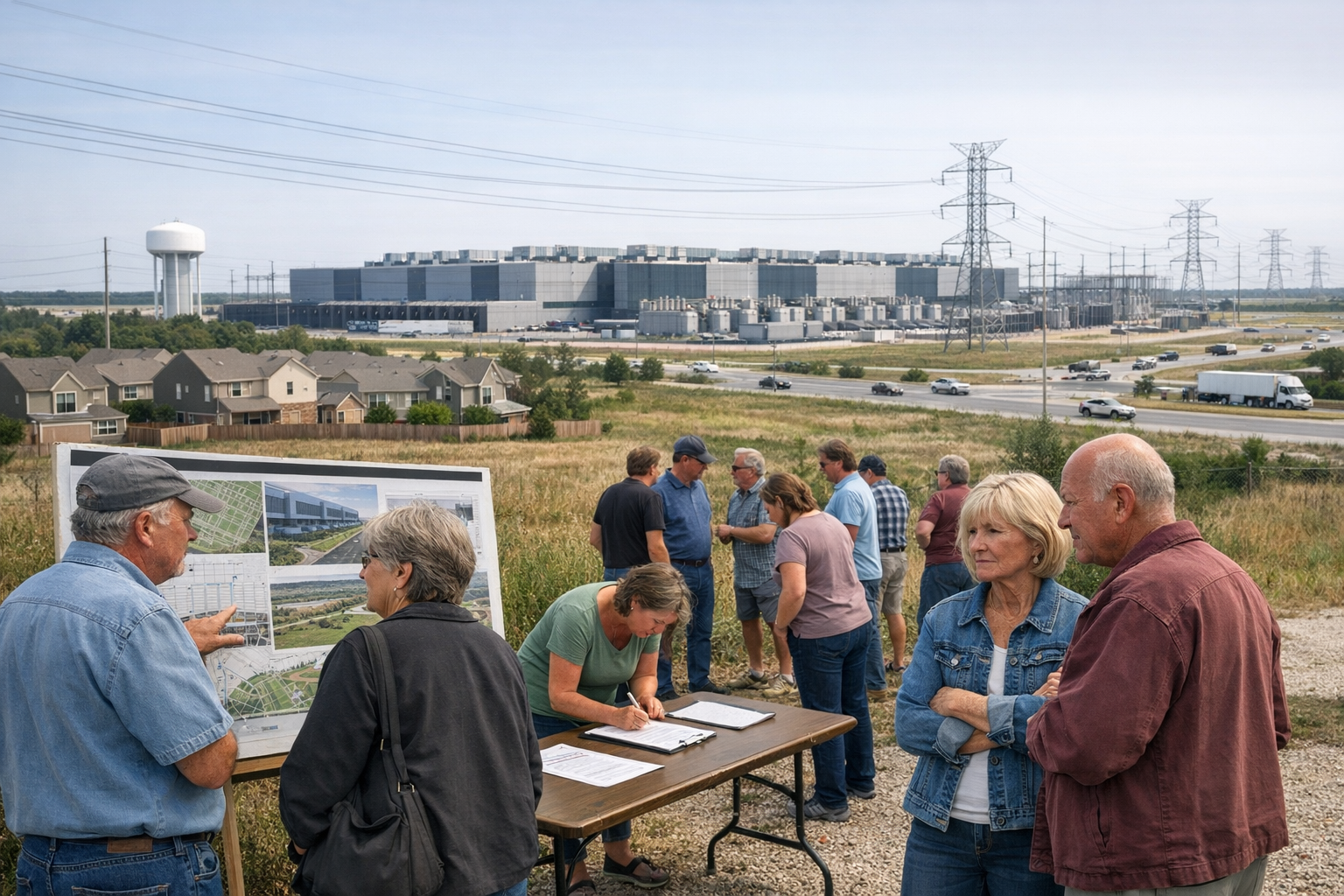
The politics of artificial intelligence are moving out of conference rooms and into utility hearings, planning disputes and suburban mailboxes.
In the United States, President Donald Trump this week promoted a voluntary industry pledge that he said would protect households from footing the bill for the fast-growing wave of AI data centers. In Australia, a sprawling proposed data center project on Melbourne’s outer edge has stirred local anger and become a national test of how far governments will go to accommodate the physical demands of the AI boom.
Together, the disputes underscore a new reality: AI is no longer only a story about software, chips and market value. It is increasingly a story about electricity, land, water and who gets to decide how industrial-scale infrastructure fits into everyday communities.
A voluntary pledge in the United States
Speaking on July 23 at the Environmental Protection Agency headquarters, Mr. Trump said the administration’s “Ratepayer Protection Pledge” had grown to include more than 200 additional utilities, data center developers, cooperatives and states. The White House said the pledge now covers 80 percent of power delivered to homes and businesses in the United States.
The promise is politically potent because it addresses one of the most sensitive questions raised by the AI buildout: whether ordinary customers will absorb the cost of new generation, transmission lines and grid upgrades needed to serve power-hungry data centers.
Major technology companies, including Google, Microsoft, Meta, Oracle, xAI, OpenAI and Amazon, have backed the federal effort. But the pledge is nonbinding, and that has made it an uneasy answer to a problem that is already producing fights in state capitals and before utility regulators.
Across the country, lawmakers and commissioners have been grappling with whether data center developers should pay directly for the infrastructure their projects require, rather than spreading those costs across ratepayers. Some states have moved to require that principle on their own. In Washington, a bipartisan House committee bill is also advancing that would write it into law.
That tension — between a voluntary promise and binding rules — sits at the center of the American debate. Utilities and technology companies have argued that large projects can bring jobs, tax revenue and grid investment. Consumer advocates and some state officials have warned that without firm guardrails, residential customers could end up subsidizing the private race to build AI capacity.
The concern has sharpened as Americans continue to struggle with higher electricity bills in many regions, making any suggestion of AI-related cost shifting politically combustible.
A suburban flashpoint outside Melbourne
In Australia, the pressure is taking a different form but revolves around the same underlying issue: the physical footprint of AI.
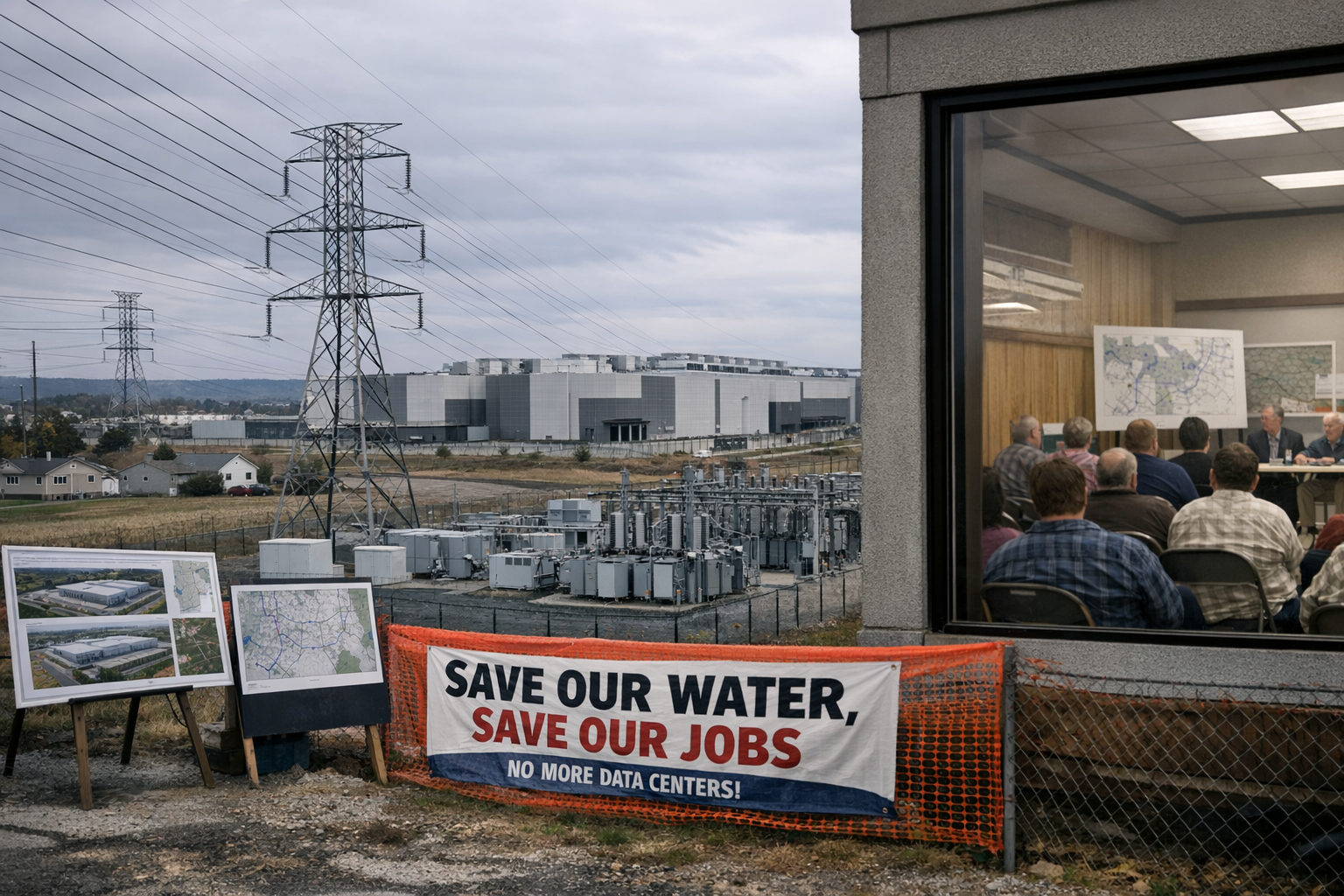
A proposed “Victorian AI Hub” at Plumpton, on Melbourne’s outer fringe, has become a flashpoint after residents rallied behind a petition seeking a full public assessment before planning decisions are made. More than 3,600 people have signed the petition, reflecting anxieties that extend beyond one development and into a broader national debate over the pace and scale of data center expansion.
For nearby residents, the project has arrived not as an abstract investment thesis but as a possible transformation of the landscape around them. Reports on the scale of the proposed facility — described as vastly larger than a major shopping complex — have heightened fears about traffic, noise, visual impact and pressure on shared infrastructure.
The case has resonated because it captures the dilemma now confronting governments in fast-growing outer suburbs and peri-urban areas: how to weigh the economic appeal of AI-linked investment against concerns over biodiversity, cultural heritage, water use, transmission needs and community amenity.
Australia’s federal government has already tried to shape that conversation. On March 23, it set out national expectations for data center projects, saying they should align with the national interest, support the energy transition, use water responsibly, invest in local jobs and strengthen domestic capability. Projects that meet those expectations are meant to move more quickly through approvals.
But the Plumpton dispute suggests that broad policy settings may not settle the politics on the ground, where residents often want more scrutiny before large industrial projects are locked in.
The scale problem
The deeper reason these conflicts are intensifying is simple: AI infrastructure requires a great deal of power and physical space, and demand is rising fast.
In Australia, the Australian Energy Market Operator said that by the end of the March 2026 quarter, 11 large data center projects totaling 5.4 gigawatts were already moving through the transmission connection process, most of them in New South Wales and Victoria. That is a striking figure in a country where energy planning, grid constraints and housing growth are already under strain.
In the United States, the surge in projected data center electricity demand has similarly forced a reconsideration of how utilities plan for growth and how regulators allocate costs. The questions are no longer theoretical. Every proposed campus, transmission link or substation can become a local political issue, especially when communities fear that the benefits will flow elsewhere while the burdens remain close to home.
What makes these fights especially consequential is that they are unfolding before many rules have fully caught up. Existing planning systems and utility frameworks were not designed with the explosive rise of AI computing in mind. Regulators are now being asked, in real time, to decide who pays, who profits and who bears the disruption.
Why this matters now
For years, the AI race was discussed mostly in terms of talent, capital and semiconductor supply. Now its next bottleneck may be public consent.
The American pledge promoted by Mr. Trump is an effort to reassure voters that the AI boom will not show up on their monthly utility bills. The battle in outer Melbourne is a warning that even when projects promise investment and technological prestige, communities may resist if they believe decisions are being rushed or the local costs are too high.
Neither conflict has been resolved. In the United States, it remains unclear whether a voluntary pledge can meaningfully protect consumers without enforcement. In Australia, the ultimate size, conditions and even viability of the Plumpton project remain uncertain.
But together, they point to the same conclusion: the future of AI will be shaped not only by breakthroughs in code and hardware, but by zoning fights, grid politics and the willingness of the public to host the infrastructure that makes the technology possible.
Sources
Further reading and reporting used to add context:
- Trump expands voluntary pledge to curb data center utility costs | AP News
- https://www.tomshardware.com/tech-industry/policy/president-trump-expands-ai-data-center-ratepayer-protection-pledge-to-include-state-governors-and-utility-companies-white-house-claims-this-will-make-electricity-more-affordable
- https://www.techradar.com/pro/200-us-utility-firms-join-trump-electricity-pledge-as-data-center-electricity-use-expected-to-quadruple-by-2035-but-does-the-presidents-pledge-have-the-teeth-to-regulate-electricity-pricing
- President Trump’s Ratepayer Protection Pledge Secures American AI Dominance, Protects Consumers – The White House
- https://www.theguardian.com/us-news/2026/jul/23/trump-datacenter-costs-big-tech
- https://www.theguardian.com/australia-news/2026/jul/26/mega-datacentre-planned-for-outer-melbourne-will-be-almost-six-times-the-size-of-chadstone-shopping-centre
- https://www.datacenterdynamics.com/en/news/trump-expands-ratepayer-protection-pledge-with-200-plus-new-signatories/
- https://www.eenews.net/articles/amid-rising-energy-costs-trump-pushes-data-centers-to-pay-more/
- https://www.washingtonpost.com/business/2026/07/23/trump-ai-data-centers-pledge/91a8568a-86ac-11f1-9cec-0fb26676f07e_story.html
- https://www.reddit.com/r/melbourne/comments/1v6ssuc/mega_datacentre_planned_for_outer_melbourne_will/
- https://www.parliament.vic.gov.au/get-involved/petitions/fully-assess-planning-decision-for-a-proposed-victorian-ai-hub/
- https://www.ktiv.com/2026/07/23/rates-are-going-stay-same-or-lower-trump-administration-pledges-protect-utility-customers-ai-costs/?outputType=amp
- https://www.costar.com/article/216486412/growing-alliance-supports-push-for-data-centers-to-fund-their-own-power
- https://www.latitudemedia.com/news/why-energy-bills-keep-rising-even-as-utilities-join-trumps-ai-ratepayer-pledge/
- https://ia.acs.org.au/article/2026/government-data-centre–expectations–spark-backlash.html
- https://public-inspection.federalregister.gov/2026-04645.pdf
- https://www.annewebster.com.au/media/labor-must-do-better-on-data-centres-and-artificial-intelligence-related-development-than-railroading-regional-communities—media-release
- https://www.reddit.com/r/aussie/comments/1v6l8h6/mega_datacentre_planned_for_outer_melbourne_will/
- https://www.reddit.com/r/AustralianDataCentres/comments/1umv9aw/data_centre_myths_in_australia_seven_claims/
- https://www.industry.gov.au/news/new-data-centre-expectations-help-bring-benefit-ai-all-australians
- https://www.nsw.gov.au/ministerial-releases/data-centre-investment-sustainable-development
- https://synclineenergy.com.au/mreh/
- https://www.infrastructure.nsw.gov.au/media/qwwpt03m/nsw-data-centre-consultation-paper_wcag.pdf
- https://www.aemo.com.au/newsroom/news-updates/digital-demand-surge
- https://www.dta.gov.au/media-releases/new-cloud-policy-accelerating-secure-modern-government-services
- https://www.planning.vic.gov.au/guides-and-resources/council-resources/regional-planning-hub
- https://www.infrastructureaustralia.gov.au/ipl/delivering-net-zero-and-clean-energy-economy/decarbonising-infrastructure
- https://www.openaustralia.org.au/senate/?id=2026-03-26.88.2
- https://www.aph.gov.au/search/url/Inquiry/27377_34_
- https://www.parliament.nsw.gov.au/lcdocs/submissions/95017/2026%20ADM%2BS%20Submission%20NSW%20Data%20Centres%20Inquiry.pdf
- https://datacentres.org.au/wp-content/uploads/2026/04/2026_Australian-Data-Centre-Forecast-Report-Issue-1-1.pdf
- https://heritagecouncil.vic.gov.au/protecting-our-heritage/heritage-protection-process/hcv-hub
- https://www.parliament.nsw.gov.au/lcdocs/submissions/95078/0116%20Business%20Council%20of%20Australia.pdf
- https://www.synclinecommunitycable.com.au/
- https://www.climatecouncil.org.au/wp-content/uploads/2026/06/CC-Report-Data-Centres.pdf
- https://www.aemc.gov.au/sites/default/files/2026-03/Draft%20determination%20-%20Package%202.pdf
- https://www.reddit.com/r/Geelong/comments/1tuar91/new_ai_data_centres_to_be_built_in_western/
- https://www.reddit.com/r/AustralianDataCentres/comments/1s209kc/independent_scorecard_which_australian_data/
- https://www.reddit.com/r/AustralianDataCentres/comments/1s5gwln/nsw_releases_data_centre_consultation_paper_five/
- https://www.reddit.com/r/AustralianDataCentres/comments/1s1dvam/federal_government_just_set_expectations_for/
- https://www.reddit.com/r/AustralianDataCentres/comments/1uw71aq/treasury_foi_brief_anthropic_makes_copyright/
- https://www.reddit.com/r/AustralianDataCentres/comments/1ujkmuc/in_one_quarter_a_new_reference_point_for/
- https://www.reddit.com/r/AustralianDataCentres/comments/1qtlxov/complete_directory_of_australian/
- https://www.reddit.com/r/aus/comments/1s22e3f/australia_has_set_new_expectations_for_ai_data/
- https://www.reddit.com/r/melbourne/comments/1tronll/the_data_centre_megahub_being_quietly_mapped_out/
- https://www.abc.net.au/news/2026-06-09/firefighter-concern-over-data-centres-in-melbourne-west/106762858
- https://www.abc.net.au/news/2026-06-02/vic-werribee-fire-response/106748650
- https://www.abc.net.au/news/2026-04-23/victorian-government-announces-new-cfa-funding/106594188
- https://www.abc.net.au/news/2026-02-04/melbourne-lord-mayor-ai-data-centres-environmental-impact/106300650
- https://archive.md/2026.05.30-071547/https%3A/www.theage.com.au/national/victoria/as-big-as-175-mcg-fields-the-mega-data-centre-coming-to-melbourne-s-west-20260522-p5zzv7.html
- https://www.energymagazine.com.au/how-australia-can-power-its-ballooning-data-centre-fleet/
- https://www.abc.net.au/news/2026-03-16/should-data-centres-fund-their-own-power-generation-/106461412
- https://t.co/oReJhazNnU
- https://www.reddit.com/r/melbourne/comments/1u0s4y6/fire_insiders_alarmed_over_data_centre_expansion/
- https://7news.com.au/news/locals-fighting-ai-data-centre-expansion-plans-near-their-melbourne-homes-c-22354118.amp
- https://tbhconsultancy.com/are-integrated-utility-precincts-the-answer-to-victorias-data-centre-problem/
- https://www.parliament.vic.gov.au/49f481/globalassets/hansard-daily-pdfs/hansard-2145855009-36107/hansard-2145855009-36107.pdf
- https://www.greenleft.org.au/2026/1455/news/communities-speak-out-against-vast-ai-data-centre-expansion
- https://www.aemo.com.au/-/media/files/major-publications/tpss/submissions/syncline-energy.pdf?rev=0ee495d6f0034b27b6e0e89cacda52fa&sc_lang=en
- https://www.epa.vic.gov.au/clean-complete-after-massive-chemical-blaze
- https://www.parliament.vic.gov.au/49d5f3/globalassets/hansard-daily-pdfs/hansard-2145855009-36002/hansard-2145855009-36002.pdf
- https://www.parliament.vic.gov.au/49ea63/globalassets/hansard-daily-pdfs/hansard-974425065-35683/hansard-974425065-35683.pdf
- https://www.parliament.vic.gov.au/49b93a/globalassets/hansard-daily-pdfs/hansard-2145855009-35713/hansard-2145855009-35713.pdf






Leave a Reply