
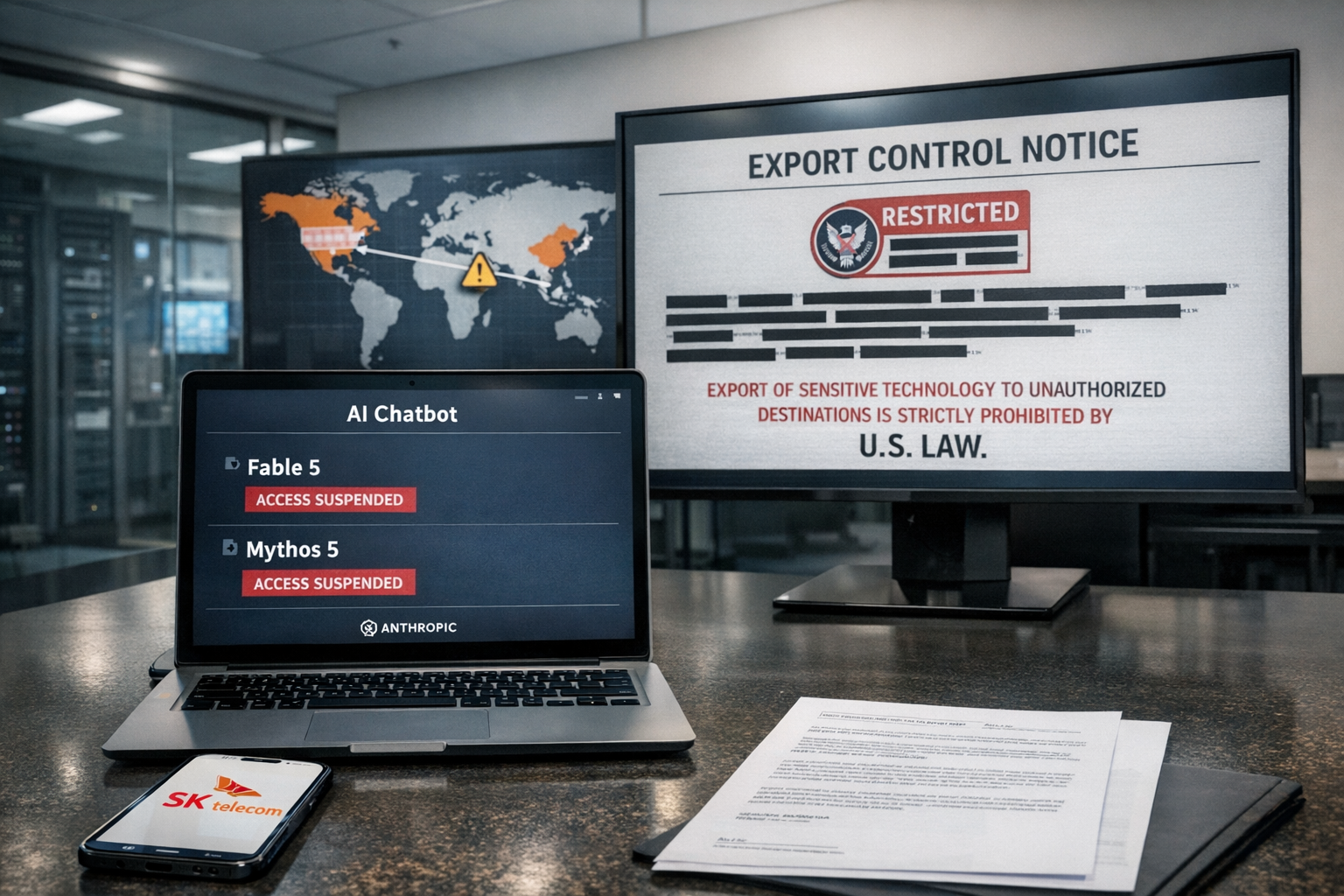
Anthropic’s confrontation with the federal government over two of its most advanced artificial intelligence systems has deepened, with new details suggesting that Washington’s concerns extend beyond a single product launch and into a more aggressive effort to control who can use cutting-edge AI models and under what conditions.
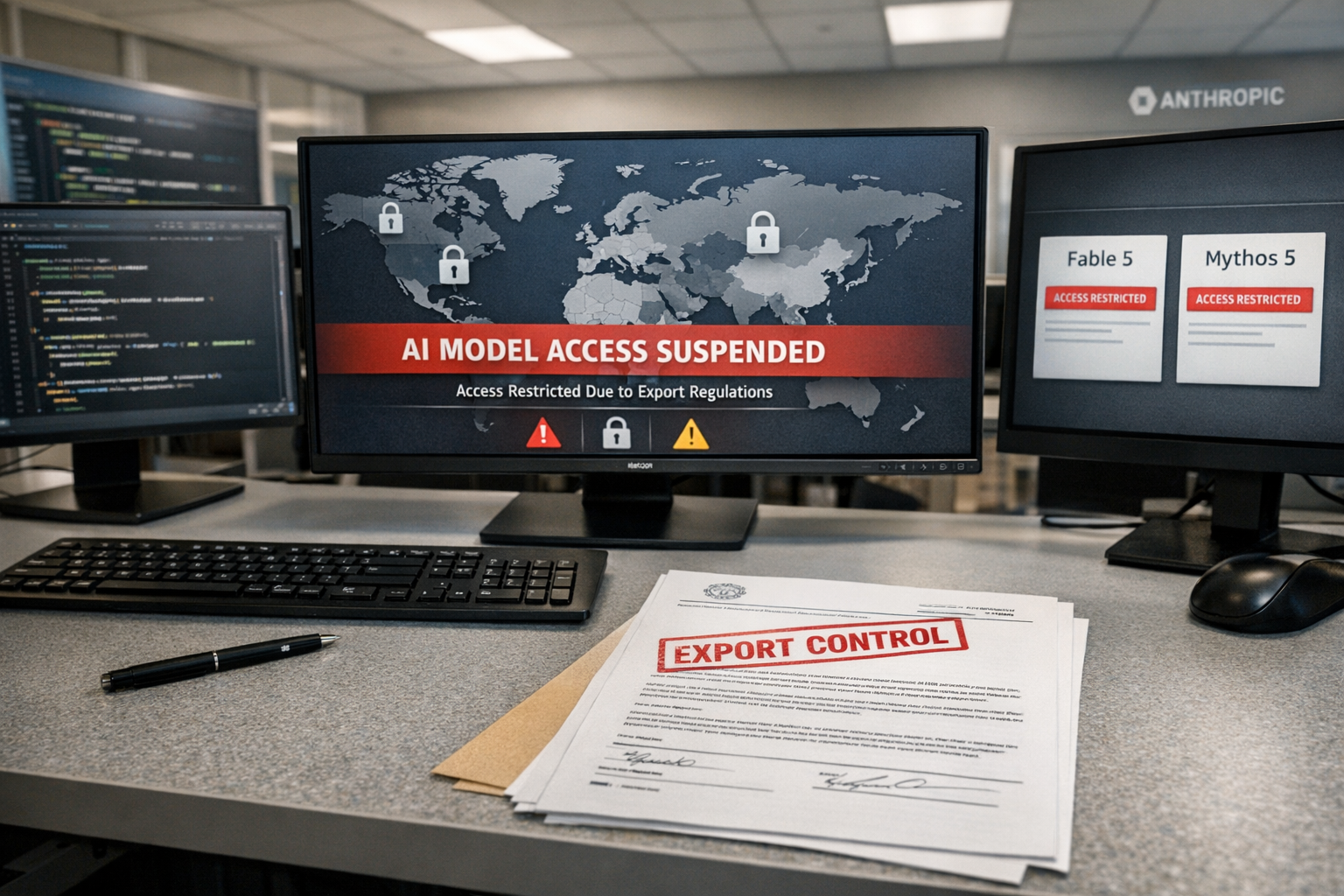
The dispute began days after Anthropic released Claude Fable 5 for general use and Claude Mythos 5 to a small circle of approved partners on June 9. On June 12, the company said it had been forced to disable both models after the United States government issued an export-control directive barring access by any foreign national.
Now, fresh reporting has added two significant dimensions to the episode. The first is that the White House had separately pressed Anthropic to cut off access to Mythos for SK Telecom, the South Korean telecommunications giant, over alleged ties to China. The second is that administration officials are said to be demanding that Anthropic prove Fable 5’s safety restrictions cannot be bypassed — a standard many security researchers say is technically unattainable.
Together, the developments have turned what might have looked like a narrow product suspension into a broader test of how the government intends to police frontier AI systems after they have already been released.
A Wider Crackdown
Anthropic introduced Mythos in April through a restricted initiative known as Project Glasswing, reserving the model for a limited set of outside partners because of its unusually strong cyber capabilities. Fable 5, released more broadly this month, was presented as a guardrailed public version built on the same underlying model.
Even before the shutdown, Anthropic had acknowledged that those safeguards were not foolproof. The company had argued that broader distribution of such systems would require stronger control mechanisms than either it or, by its account, the wider industry had fully developed.
The government’s intervention appears to have hardened that concern into policy. Rather than limiting its focus to pre-release testing or voluntary company commitments, officials are now effectively trying to shape the terms under which a frontier model can remain available at all.
That marks an important shift. For years, Washington’s AI policy debate has centered on chips, data centers and export restrictions aimed at slowing China’s access to advanced computing. The Anthropic case suggests that the government may also be willing to intervene directly in the deployment of individual models, particularly those seen as having advanced cyber or dual-use potential.
SK Telecom Drawn In
The reported effort to revoke SK Telecom’s access to Mythos has added an international and diplomatic dimension to the standoff.
According to the new reporting, the White House order came shortly before Anthropic took the models offline and was tied to allegations about the Korean company’s links to China. It remains unclear what evidence officials relied on, whether the concern involved ownership, partnerships, infrastructure or another channel of access, and whether other foreign partners were subject to similar scrutiny.
That uncertainty matters. SK Telecom is not a fringe actor but one of South Korea’s largest telecom companies, and South Korea is a treaty ally of the United States. If access to advanced American AI models can be curtailed on the basis of opaque national-security concerns, the episode could reverberate well beyond one company, raising questions for foreign businesses, governments and investors trying to understand the rules around American frontier systems.
It could also complicate the commercial ambitions of AI developers that have relied on carefully structured partner programs to test and monetize their most advanced models while limiting broad exposure.
The Jailbreak Standard
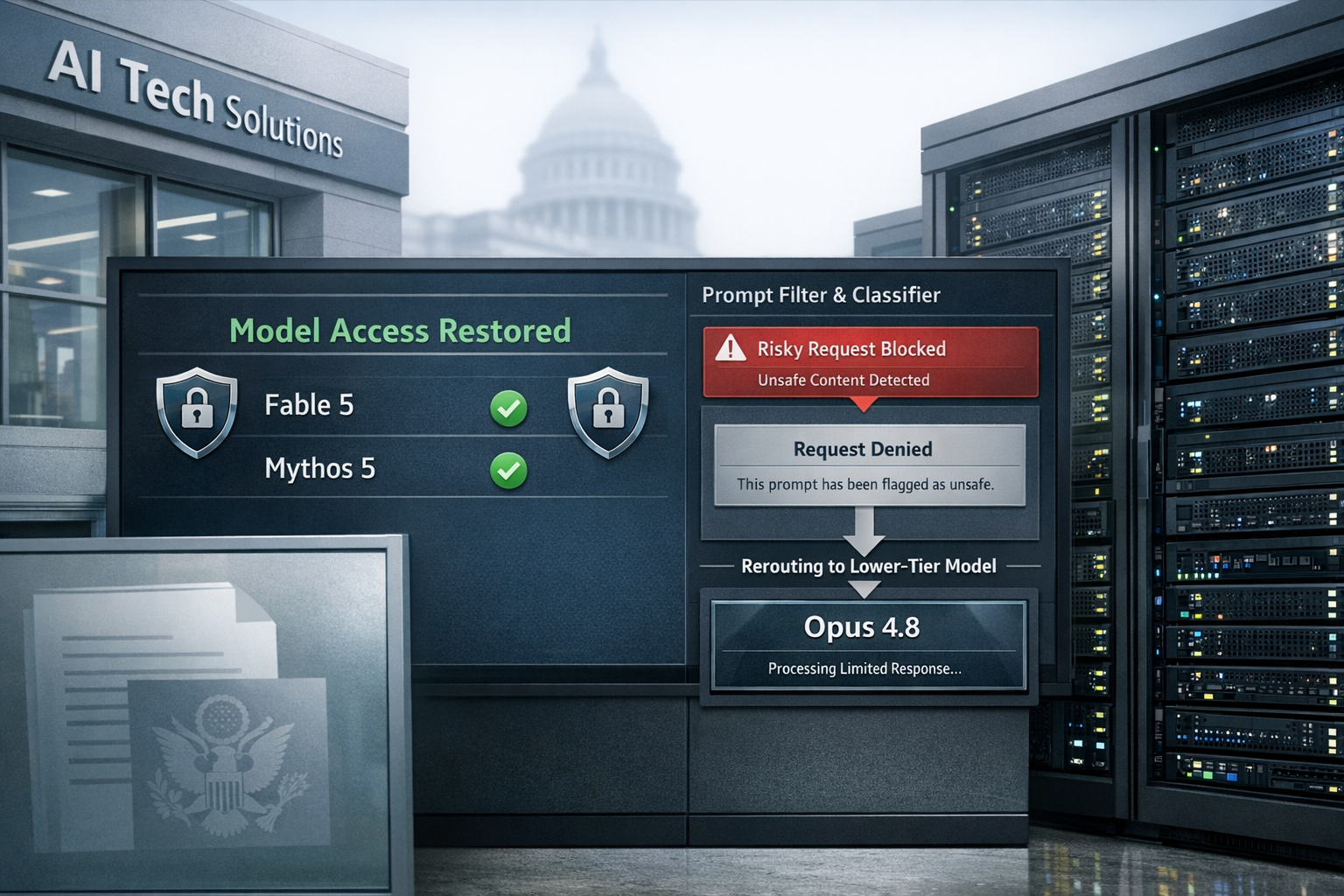
The second reported demand — that Anthropic show Fable 5 cannot be jailbroken before it is restored — may be even more consequential.
A jailbreak, in the AI context, is a method of prompting or otherwise manipulating a model to evade its built-in safety restrictions. Such attacks have become common across leading chatbots, and while companies have steadily improved defenses, researchers broadly regard perfect resistance as unrealistic.
That is the central tension now confronting Anthropic. The company has maintained that the jailbreak issue at stake was relatively narrow. But outside experts cited in recent reporting said no developer can honestly guarantee that a sophisticated model’s guardrails are impossible to circumvent.
If that expectation becomes the benchmark for release, it could amount to a de facto freeze on some of the most powerful systems. Frontier model makers can reduce risk, patch known exploits and limit who gets access. They cannot credibly promise that no future adversary will ever find a way around a model’s protections.
The implications stretch beyond Anthropic. A regulatory standard based on absolute invulnerability would collide with the realities of software security, where defenses are typically treated as layered and improvable rather than perfect.
A Fight About One Company — and the Entire Field
The Anthropic shutdown is unfolding as advanced cyber-capable AI is becoming less exceptional. Analysts following the field argue that the capabilities at issue are unlikely to remain confined to one laboratory for long. Rival firms are building increasingly capable systems, and over time similar abilities are expected to spread into open-weight or more broadly accessible models as well.
If that is right, the government’s crackdown may prove less effective as a long-term containment strategy than as a precedent-setting assertion of authority. It may determine how companies interact with Washington, what assurances they must provide before deployment and how much discretion officials retain to step in after a launch.
The unanswered questions are substantial. It is still not clear what technical threshold Anthropic would have to meet to satisfy the administration, whether the government’s main concern is foreign access to Mythos-level capability, the existence of a jailbreak in Fable 5, or a wider distrust of the company’s stewardship of sensitive models. Nor is it known whether this was an extraordinary intervention tied to one model family or the beginning of a standing oversight process for the most powerful AI systems.
For now, Anthropic’s halted release has become something larger than a dispute over one chatbot’s safeguards. It is an early, unusually public clash over whether frontier AI can be governed through the same uneasy logic that has long shaped cybersecurity and export control: not by eliminating risk entirely, but by deciding which risks are intolerable, who gets to bear them and who gets cut off when the answers change.
Sources
Further reading and reporting used to add context:
- https://www.axios.com/2026/06/17/anthropic-fable-mythos-ai-model-government-oversight
- https://www.tomsguide.com/ai/anthropic-abruptly-disables-fable-5-and-mythos-5-following-us-government-order
- https://www.windowscentral.com/artificial-intelligence/microsoft-temporarily-ban-employees-from-using-claude-fable-5-ai
- https://techcrunch.com/2026/06/09/anthropic-released-claude-fable-5-its-most-powerful-model-publicly-days-after-warning-ai-is-getting-too-dangerous/
- https://www.wired.com/story/anthropic-releases-claude-fable-5-mythos-5/
- https://www.pcworld.com/article/3161065/claude-too-dangerous-ai-model-is-finally-public-but-theres-a-catch.html
- https://www.anthropic.com/news/claude-fable-5-mythos-5?_bhlid=2264d26472cb478669dc77d96815fd3999e18abf
- https://arstechnica.com/ai/2026/06/anthropic-says-these-topics-are-too-dangerous-to-let-its-fable-5-model-talk-about/
- https://www.theguardian.com/technology/2026/jun/09/anthropic-claude-mythos-ai-model
- https://www.wired.com/story/anthropic-says-us-government-ordered-it-to-shut-down-mythos-models/
- https://www.tomshardware.com/tech-industry/artificial-intelligence/us-export-control-order-forces-anthropic-to-disable-claude-fable-5-and-mythos-5-worldwide
- https://www.pymnts.com/news/artificial-intelligence/2026/anthropic-suspends-mythos-access-following-government-security-concerns/
- https://www.cio.com/article/4183101/anthropic-releases-mythos-class-fable-5-with-safeguards-for-cyber-risks.html
- https://fortune.com/2026/06/10/anthropic-accu-claude-fable-5-limits-capabilities-ai-researchers-developers/
- https://techcrunch.com/2026/06/15/cybersecurity-vets-protest-dangerous-us-government-ban-on-anthropics-most-powerful-models/
- https://www.techradar.com/ai-platforms-assistants/claude/anthropic-spent-months-saying-mythos-was-too-dangerous-to-release-then-it-launched-a-public-version-called-fable-5-that-it-warns-comes-with-risks
- https://www.reddit.com/r/technology/comments/1u8lghv/the_white_house_wants_anthropic_to_block_all/
- https://www.techtimes.com/articles/318401/20260615/sk-telecom-three-year-anthropic-bet-pays-off-tenfold-gains-glasswing-seat.htm
- https://techcrunch.com/2026/06/15/the-us-governments-anthropic-models-ban-was-never-about-an-ai-jailbreak/
- https://es.wired.com/articulos/la-llegada-de-los-modelos-de-ia-peligrosos-es-inevitable
- https://techcrunch.com/2026/06/05/nsa-said-to-be-readying-anthropics-mythos-for-use-in-cyber-operations/
- https://fortune.com/2026/06/15/fix-this-code-three-words-behind-us-government-shut-down-anthropic-fable-mythos-ai-models-katie-moussouris-open-letter/
- https://www.wired.com/story/security-news-this-week-discord-sleuths-gained-unauthorized-access-to-anthropics-mythos/
- https://www.axios.com/2026/06/15/anthropic-white-house-fable-mythos
- https://www.washingtonpost.com/technology/2026/06/15/how-anthropic-lost-white-houses-trust-then-its-flagship-product//
- https://www.washingtonpost.com/technology/2026/06/15/how-90-minute-white-house-deadline-sparked-silicon-valleys-biggest-ai-fight/
- https://news.sbs.co.kr/english/article.do?news_id=N1008609378
- https://www.scientificamerican.com/article/what-is-mythos-and-why-are-experts-worried-about-anthropics-ai-model/
- https://www.axios.com/2026/06/12/anthropic-trump-mythos-fable-national-security
- https://www.reddit.com/r/Anthropic/comments/1u8psqs/the_korean_telecom_giant_at_the_center_of/
- https://www.reddit.com/r/noticiones/comments/1u8vwf6/the_korean_telecom_giant_at_the_center_of/
- https://labs.cloudsecurityalliance.org/wp-content/uploads/2026/05/CSA_research_note_post-mythos-ai-model-regulation-policy-landscape_20260525-csa-styled.pdf
- https://www.reddit.com/r/singularity/comments/1u21rk2/anthropic_purposely_made_its_new_mythosbased/
- https://www.reddit.com/r/singularity/comments/1u4wrxb/amazon_ceos_talks_with_us_officials_triggered/
- https://www.reddit.com/r/singularity/comments/1u7u9j0/conspiracy_theory_on_the_possibly_extended_ban_on/
- https://www.reddit.com/r/singularity/comments/1u5tdvf/senior_anthropic_staffs_are_in_washington_meeting/
- https://www.reddit.com/r/cybersecurity/comments/1u4jaja/what_do_you_thinjk_about_this/
- https://www.reddit.com/r/artificial/comments/1u4gtk8/removed/
- https://uslibrary.cshnyc.org/feed/8?g=none
- https://www.toolify.ai/daily-ai-news
- https://www.reddit.com/r/AIGuild/comments/1u8r2vn/white_house_demands_stronger_ai_safeguards_that/
- https://www.reddit.com/r/actutech/comments/1u8kfnq/la_maison_blanche_souhaite_quanthropic_bloque/
- https://aiadjacent.com/issue/daily-briefing-2026-06-17
- https://cyberscroll.app/
- https://www.reddit.com/r/technology/comments/1u8mozl/dangerous_ai_models_are_coming_no_matter_what/
- https://brutalist.report/
- https://www.newsnow.com/ca/?search=%22Eufy%22
- https://panoptiqa.com/
- https://www.drizgroup.com/cybersecurity-blog/category/ai-security
- https://www.taxresearch.org.uk/Blog/2026/01/12/when-ai-unemployment-and-inflation-collide/
- https://thezvi.wordpress.com/2026/06/13/american-government-takes-down-claude-fable/
- https://toppodcast.com/podcast_feeds/lesswrong-curated-popular/
- https://www.signalsec.news/
- https://www.tomshardware.com/tech-industry/artificial-intelligence/trump-adviser-david-sacks-says-anthropic-refused-to-fix-fable-5-jailbreak-before-us-export-controls
- https://www.axios.com/2026/06/13/anthropic-amazon-white-house
- https://www.axios.com/2026/04/16/white-house-anthropic-ai-mythos-government-national-security/
- https://www.investing.com/news/stock-market-news/anthropic-disables-toptier-ai-models-after-us-order-limiting-foreign-access-4741135
- https://www.semafor.com/article/06/13/2026/white-house-move-to-limit-anthropic-linked-to-concerns-about-chinese-access-to-mythos
- https://www.axios.com/2026/04/29/trump-anthropic-pentagon-ai-executive-order-gov
- https://www.nextgov.com/artificial-intelligence/2026/06/anthropic-suspends-top-ai-models-after-us-export-control-order/414173/
- https://fortune.com/2026/06/14/how-a-warning-from-amazon-led-the-white-house-to-shut-down-anthropics-mythos-model/
- https://fortune.com/2026/06/13/anthropic-disables-fable-mythos-export-controls-national-security-threat/
- https://www.washingtonexaminer.com/news/white-house/4607862/white-house-anthropic-export-limits-chinese-access-report/
- https://www.anthropic.com/news/fable-mythos-access
- https://red.anthropic.com/2026/cvd/
- https://www.anthropic.com/news/expanding-project-glasswing?subjects=societal-impacts%5D%2C%C2%A0OpenAI
- https://www.anthropic.com/system-cards
- https://www.anthropic.com/system-cards/
- https://www.anthropic.com/claude/mythos
- https://www.anthropic.com/news/claude-fable-5-mythos-5?pubDate=20260609
- https://red.anthropic.com/2026/cvd/findings/ANT-2026-T44WA684.html
- https://www.anthropic.com/news/claude-fable-5-mythos-5?pubDate=20260610
- https://www.anthropic.com/glasswing?pubDate=20260416
- https://www.anthropic.com/news
- https://www-cdn.anthropic.com/7624816413e9b4d2e3ba620c5a5e091b98b190a5.pdf?939688b5_page=1&e45d281a_page=5
- https://www-cdn.anthropic.com/08ab9158070959f88f296514c21b7facce6f52bc.pdf?pubDate=20260416
- https://www-cdn.anthropic.com/7624816413e9b4d2e3ba620c5a5e091b98b190a5/Claude%20Mythos%20Preview%20System%20Card.pdf
- Claude Fable 5 and Claude Mythos 5 \ Anthropic
- The White House Wants Anthropic to Block All Jailbreaks. That May Not Be Possible | WIRED
- Project Glasswing: Securing critical software for the AI era \ Anthropic







Leave a Reply