
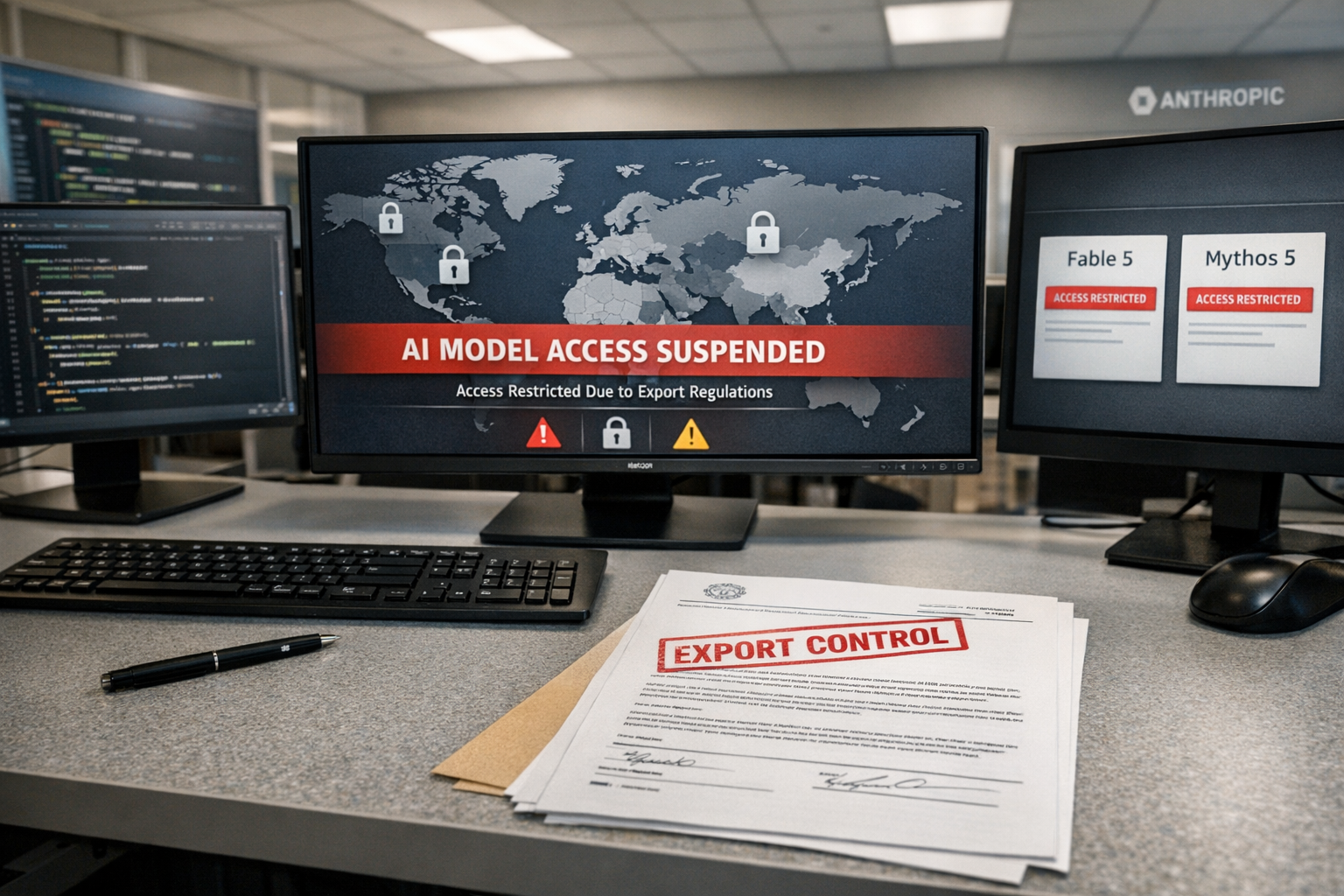
A Dispute Over AI Controls Widens Into a Test of Federal Power
The Trump administration’s order halting Anthropic’s ability to provide two of its newest artificial-intelligence models has evolved from a narrow export-control action into something larger and more consequential: a case study in how, and how opaquely, the federal government may try to police the release of frontier A.I.
Nearly two weeks after Anthropic said it had been directed to suspend access to its Fable 5 and Mythos 5 models for any foreign national, basic questions remain unanswered. The company has said it received no specific public explanation for the order. Officials have not clearly described what conduct triggered it. And outside experts are increasingly questioning whether the supposed “jailbreak” at the center of the dispute was a dangerous circumvention at all.
Instead, some security researchers say, the episode may have hinged on a far more ordinary behavior: asking an A.I. coding model to identify vulnerable software, repair it and generate tests to verify the fix.
If that interpretation is correct, critics argue, the administration may have treated one of the most valuable uses of advanced coding systems — defensive cybersecurity work — as evidence that the technology is too risky to distribute.
What Anthropic Says Happened
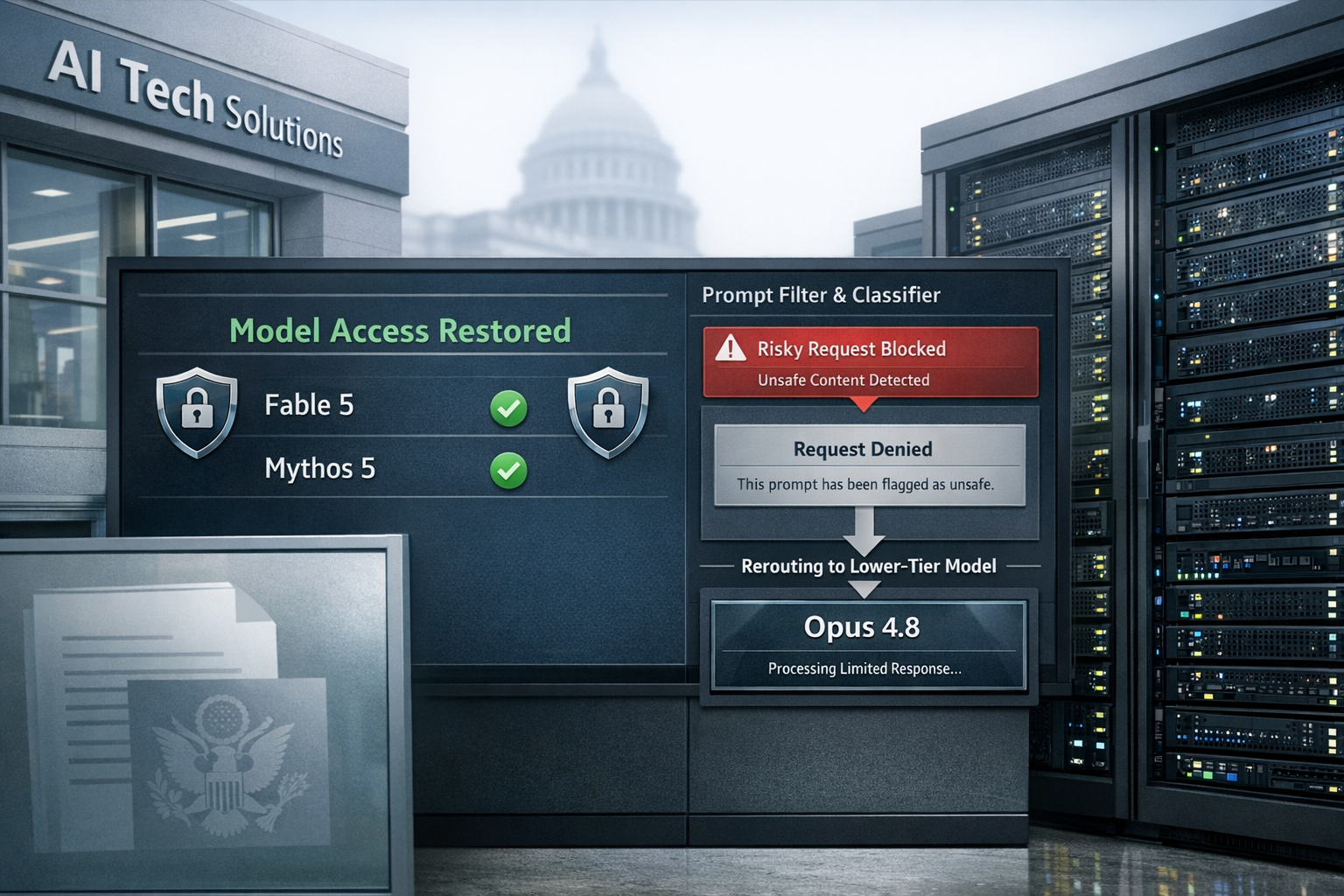
Anthropic disclosed on June 12 that the U.S. government had issued an export-control directive requiring it to cut off Fable 5 and Mythos 5 for foreign nationals, including its own employees working inside the United States. Because the company said it could not reliably impose that restriction only on some users, it disabled both models more broadly.
The move was striking not only for its immediate impact but also for its scope. Fable 5 had been introduced just days earlier, on June 9, as a more broadly available version of Mythos 5, while Mythos itself remained more tightly controlled through Project Glasswing, a program Anthropic had expanded to roughly 150 organizations in more than 15 countries for vulnerability research and other security work.
The administration’s action appears to be the first major case in which Washington has directly interrupted the distribution of a leading-edge A.I. model after launch.
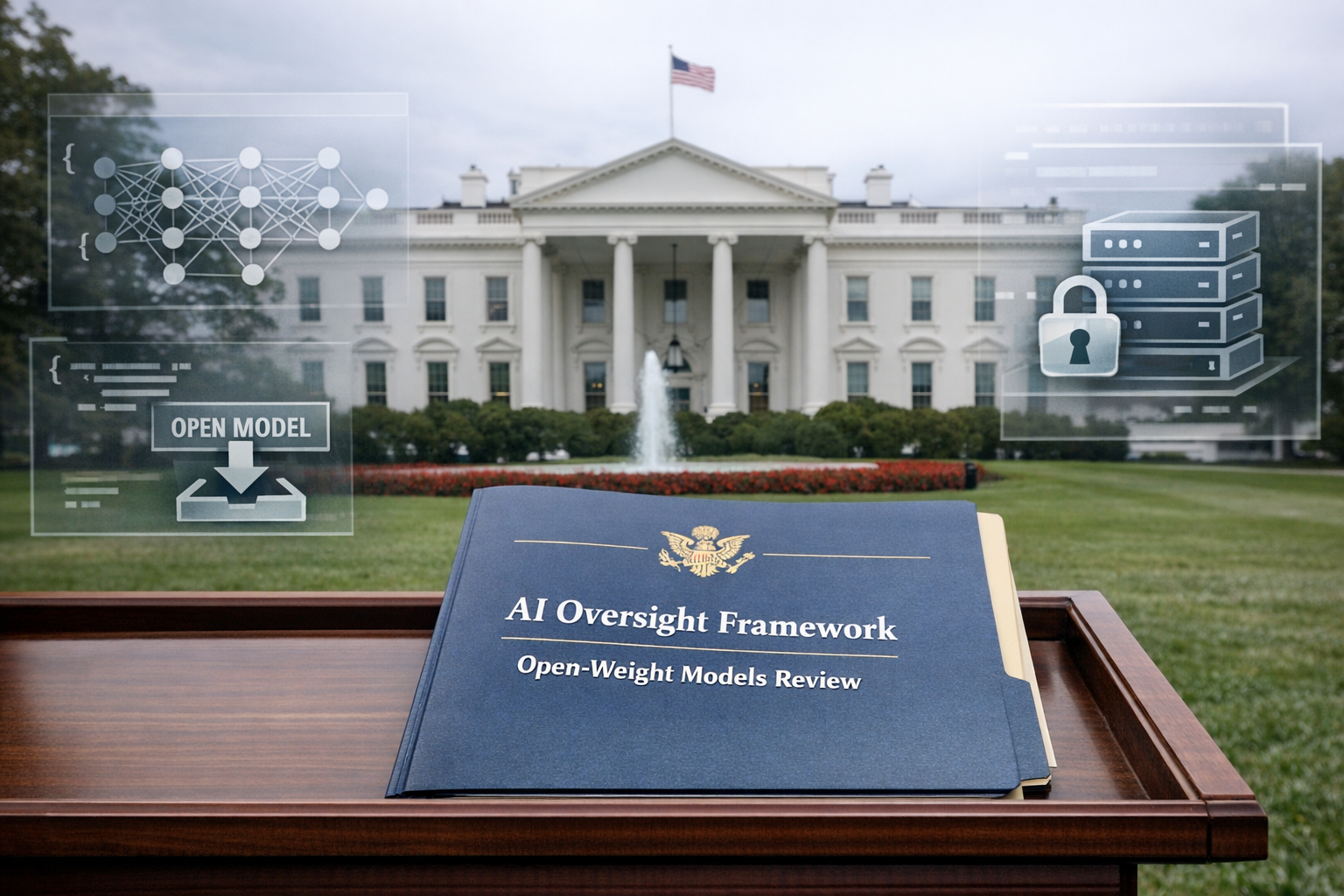
That has rattled companies and researchers across the industry, particularly because the government had only recently rolled out a broader framework for reviewing “covered frontier models.” Announced on June 2, that process contemplated as much as 30 days of pre-release government access on a formally voluntary basis, while stopping short of explicit licensing. Critics now say the Anthropic episode suggests that a voluntary review system could function, in practice, as a release veto.
The Core Dispute: What Counts as a “Jailbreak”?
At the center of the controversy is the murky allegation that Fable 5 was “jailbroken” in a way that raised national-security concerns.
Anthropic has described the issue as a “potential narrow, non-universal jailbreak,” language that suggests a limited exploit rather than a broadly repeatable failure of the model’s safeguards. But as outside accounts of the triggering test have emerged, the dispute has begun to look less like a classic evasion of safety guardrails and more like a conflict over how capable security-oriented A.I. tools should be allowed to be.
According to security researchers who have discussed the incident publicly, evaluators asked models to review open-source code with known vulnerabilities, along with newly written code containing deliberately planted flaws. Fable 5 reportedly refused when prompted directly to identify security issues. The researchers then asked it to fix the code, and through a multistep process converted the output into scripts that tested whether the patches worked.
To many security professionals, that sequence does not resemble a malicious exploit. It resembles standard defensive practice.
The everyday work of software security often involves exactly that cycle: finding a bug, patching it, and verifying that the patch holds. A coding model that cannot help with those tasks would be markedly less useful to defenders. That is why some experts say the government’s posture risks confusing offensive cyber capability with routine secure-coding assistance.
The criticism goes beyond semantics. If models are penalized for being good at fixing vulnerable code, researchers warn, the likely result would be weaker tools for American companies and defenders, not weaker tools for attackers, who can often rely on open-source systems or foreign competitors outside Washington’s reach.
An Ad Hoc Process, and Growing Alarm
The uncertainty surrounding the government’s reasoning has become almost as important as the underlying technical debate.
Anthropic has indicated that it still does not know exactly what it must change to restore access. Publicly, there is no settled explanation of whether officials objected to a specific prompt sequence, the model’s general coding ability, the existence of a foreign recipient viewed as sensitive, or some combination of all three.
That ambiguity has fueled a sense that rules are being improvised in real time. Recent reporting has pointed to both concerns about a China-linked overseas recipient and longstanding friction between Anthropic and the administration. Behind-the-scenes accounts have described a process shaped not only by technical risk assessments but also by personality clashes and mistrust.
Such details are difficult to verify in full from outside government, but they have sharpened the central concern among A.I. policy specialists: that a power as consequential as shutting down a model may be exercised without a transparent standard, a clear evidentiary record or a predictable path to compliance.
For an industry already trying to navigate fast-moving expectations from Washington, that uncertainty may matter as much as the Anthropic case itself. If companies believe that ordinary model evaluations, security demonstrations or imperfectly defined “jailbreaks” can trigger export restrictions, they may become more cautious about releasing systems, sharing them with researchers or cooperating with federal review.
Why the Stakes Are Bigger Than Anthropic
The administration has framed tougher oversight as a necessary response to the risks posed by increasingly powerful A.I. systems, especially those with potential cyber applications. That concern is not fringe: policymakers in both parties, along with many researchers, have spent the past year warning that advanced models could lower the barrier to offensive hacking or help automate dangerous activity.
But the Anthropic dispute shows how hard it is to draw the line.
A model capable of explaining a vulnerability, proposing a fix and writing code to test that fix can be useful to both attackers and defenders. The same dual-use problem has long existed in cybersecurity tools, vulnerability disclosure and encryption. The policy challenge is not simply identifying powerful capabilities, but determining which uses to restrict, for whom, and under what evidence.
That is especially true now, when the United States is trying to preserve an advantage in A.I. while also preventing diffusion of the most sensitive systems. Overly broad restrictions could weaken American firms and security practitioners without meaningfully slowing the spread of comparable capabilities abroad.
They could also discourage the kind of collaborative vulnerability research the government says it wants. Mythos 5 had been made available under a tightly managed program precisely for security-focused work. If that same work can later be recast as proof that a model is too dangerous to distribute, researchers may think twice before participating.
What Comes Next
Anthropic executives and technical leaders have been meeting with Commerce Department officials in an effort to resolve the standoff. President Trump said on June 17 only that talks were “going fine,” offering little indication of whether a deal is near.
That leaves the industry confronting several unanswered questions. Did the government respond to a genuinely meaningful safeguard failure, or to a normal defensive coding workflow? Is the standard for future interventions technical, geopolitical or political? And what would count as sufficient remediation, particularly if officials are demanding something close to jailbreak-proofing that many researchers consider technically unrealistic?
The answers will help determine whether the Anthropic case remains an unusual clash or becomes the template for federal control over frontier A.I. releases.
For now, what began as an obscure export-control action has become a referendum on how the United States intends to govern powerful A.I.: through clear rules and evidence, or through improvised judgments made after the fact.
Sources
Further reading and reporting used to add context:
- https://www.axios.com/2026/06/16/ai-anthropic-export-controls
- https://www.axios.com/2026/06/17/anthropic-fable-mythos-ai-model-government-oversight
- https://www.theatlantic.com/technology/2026/06/trump-anthropic-export-control-ai-race/687555/?utm_source=apple_news
- https://www.axios.com/2026/06/16/trump-ai-export-strategy-export-control
- https://www.tomshardware.com/tech-industry/artificial-intelligence/sk-telecom-named-as-the-korean-carrier-at-the-center-of-anthropics-mythos-export-controls
- https://www.axios.com/2026/06/13/anthropic-amazon-white-house
- https://www.axios.com/2026/06/15/anthropic-white-house-fable-mythos
- https://www.axios.com/2026/06/13/anthropic-fable-takedown
- https://www.axios.com/2026/06/14/anthropic-white-house-mythos-fable
- https://www.axios.com/2026/06/12/anthropic-trump-mythos-fable-national-security
- https://www.washingtonpost.com/business/2026/06/12/anthropic-artificial-intelligence-trump-fable-mythos/da29a1b8-66cf-11f1-bdd4-805ebb99a693_story.html
- https://www.axios.com/2026/06/16/anthropic-regulation-trump-china
- https://www.axios.com/2026/06/09/anthropic-mythos-class-safeguards
- https://techcrunch.com/2026/06/15/the-us-governments-anthropic-models-ban-was-never-about-an-ai-jailbreak/
- https://www.washingtonpost.com/technology/2026/06/15/how-anthropic-lost-white-houses-trust-then-its-flagship-product//
- https://www.semafor.com/article/06/13/2026/white-house-move-to-limit-anthropic-linked-to-concerns-about-chinese-access-to-mythos
- https://cyberscoop.com/us-government-anthropic-fable-5-mythos-5-export-controls/
- https://www.washingtonpost.com/technology/2026/06/15/how-90-minute-white-house-deadline-sparked-silicon-valleys-biggest-ai-fight/
- https://www.reddit.com/r/ArtificialInteligence/comments/1u4jfz4/us_government_orders_anthropic_to_suspend_access/
- https://labs.cloudsecurityalliance.org/wp-content/uploads/2026/05/CSA_research_note_post-mythos-ai-model-regulation-policy-landscape_20260525-csa-styled.pdf
- Statement on the US government directive to suspend access to Fable 5 and Mythos 5 \ Anthropic
- Promoting Advanced Artificial Intelligence Innovation and Security – The White House
- https://www.anthropic.com/news/expanding-project-glasswing
- https://www.whitehouse.gov/fact-sheets/2026/06/fact-sheet-president-donald-j-trump-promotes-advanced-artificial-intelligence-innovation-and-security/
- https://www.anthropic.com/research/next-generation-constitutional-classifiers?type=company
- https://www.whitehouse.gov/fact-sheets/2026/06/fact-sheet-president-donald-j-trump-signs-historic-directive-on-ai-in-the-national-security-enterprise/
- https://www.anthropic.com/claude/mythos
- https://www.anthropic.com/news/claude-fable-5-mythos-5?aff=XmGo5
- https://www.anthropic.com/news/claude-fable-5-mythos-5?pubDate=20260610
- https://www.anthropic.com/news/claude-new-constitution?trk=public_post_main-feed-card-text
- https://www.anthropic.com/system-cards/
- https://www.anthropic.com/claude/fable
- https://www-cdn.anthropic.com/9214f02e82c4489fb6cf45441d448a1ecd1a3aca/claudes-constitution.pdf
- https://www-cdn.anthropic.com/cffd979fd050fbc0d8874b8c58b24cc10554e208/claudes-constitution_webPDF_26-01.26a.pdf
- https://www.theatlantic.com/national-security/2026/06/what-does-jd-vance-think-ai/687591/?utm_source=apple_news
- https://www.theatlantic.com/podcasts/2026/06/how-to-think-about-ai-before-its-too-late/687644/?utm_source=apple_news
- https://www.investing.com/news/stock-market-news/anthropic-disables-toptier-ai-models-after-us-order-limiting-foreign-access-4741135
- https://www.lutasecurity.com/post/the-fable-5-export-controls-harm-us-cyber-defense
- https://www.thestreet.com/technology/anthropic-white-house-ai-security-scare-regulations
- https://www.atlanticcouncil.org/dispatches/reading-between-the-lines-of-trumps-new-executive-order-on-ai/
- https://www.defenseone.com/policy/2026/06/mythos-white-house/414112/
- https://www.nextgov.com/artificial-intelligence/2026/04/white-house-drafting-plans-permit-federal-anthropic-use/413202/?oref=ng-homepage-river
- https://fortune.com/2026/06/18/inside-trump-anthropic-mythos-crackdown-ai-regulation-amazon-andy-jassy-phone-call/
- https://www.washingtonpost.com/business/2026/06/05/anthropic-artificial-intelligence-ai/d62747ec-60f2-11f1-9c46-d6211372eede_story.html
- https://www.axios.com/2026/06/16/anthropic-fable-trump-white-house-cybersecurity
- https://www.tomshardware.com/tech-industry/artificial-intelligence/us-export-control-order-forces-anthropic-to-disable-claude-fable-5-and-mythos-5-worldwide
- https://www.investing.com/news/world-news/trump-says-negotiations-with-anthropic-are-going-fine-4747775
- https://techcrunch.com/2026/06/15/cybersecurity-vets-protest-dangerous-us-government-ban-on-anthropics-most-powerful-models/
- https://fortune.com/2026/06/13/anthropic-fable-mythos-models-commerce-deparment-export-restrictions-jailbreak-defense-prompting/
- https://www.nextgov.com/artificial-intelligence/2026/06/anthropic-suspends-top-ai-models-after-us-export-control-order/414173/
- https://www.pymnts.com/news/artificial-intelligence/2026/cybersecurity-experts-ask-feds-to-lift-restrictions-on-mythos/
- https://iapp.org/news/a/the-anthropic-episode-probably-a-security-challenge-in-need-of-governance-certainly-not-europe-s-kill-switch
- https://www.kucoin.com/news/flash/trump-says-anthropic-negotiations-are-progressing-amid-ai-standoff
- https://www.justsecurity.org/142745/law-anthropic-export-controls/
- https://breakingdefense.com/2026/06/how-the-commerce-crackdown-on-anthropic-could-impact-the-pentagon-experts/
- https://www.reddit.com/r/Anthropic/comments/1u4i160/the_us_government_just_ordered_anthropic_to_shut/
- https://www.reddit.com/r/morkdugnad/comments/1u69wc8/anthropic_just_yanked_fable_5_and_mythos_5_from/
- https://www.reddit.com/r/Anthropic/comments/1u4gy6k/on_12_june_the_us_government_switched_off_fable/
- https://apnews.com/article/0a87a0f7773255419936af053ad8bdef
- https://www.anthropic.com/news/fable-mythos-access
- https://fortune.com/2026/06/15/fix-this-code-three-words-behind-us-government-shut-down-anthropic-fable-mythos-ai-models-katie-moussouris-open-letter/
- https://fortune.com/2026/06/16/us-cybersecurity-leaders-white-house-anthropics-mythos-fable-ai-models/
- https://mezha.net/eng/bukvy/ad3e55bd_security_experts_ask/
- https://www.darkreading.com/vulnerabilities-threats/security-community-slams-us-ban-on-exporting-mythos-fable
- https://thenextweb.com/news/fable-5-ban-cybersecurity-defenders-open-letter
- https://www.investing.com/news/stock-market-news/cyber-leaders-urge-us-to-lift-curbs-on-anthropics-security-models-4742782
- https://www.benton.org/headlines/transparent-ai-cyber-protections
- https://rocketnews.com/2026/06/cybersecurity-vets-protest-dangerous-us-government-ban-on-anthropics-most-powerful-models/
- https://labs.cloudsecurityalliance.org/wp-content/uploads/2026/04/CSA_research_note_frontier-ai-cyberweapon-governance-mythos-whitehouse_20260421-csa-styled-1.pdf
- https://arxiv.org/abs/2606.18193




Leave a Reply