

A powerful new A.I. security tool shows both promise and peril
Anthropic’s closely held Mythos model is emerging as a vivid example of the double-edged role artificial intelligence may soon play in cybersecurity: a tool capable of helping defenders uncover serious flaws at scale, and a system whose misuse or unauthorized access could itself become a security threat.
That tension sharpened this week as Mozilla said it had used an early version of Mythos to identify hundreds of vulnerabilities in Firefox, while Anthropic separately confirmed that it was investigating reports that unauthorized users may have gained access to the model through a third-party vendor environment.
Taken together, the developments offer one of the clearest public snapshots yet of the debate surrounding advanced cyber-focused A.I. systems. Supporters see them as a way to dramatically accelerate defensive work that human security teams often struggle to keep up with. Critics and policymakers worry that the same capabilities could lower the barrier to discovering and exploiting software weaknesses.
Mozilla’s results offer a rare public measure of defensive value
Mozilla said that Firefox 150, released this week, included fixes for 271 vulnerabilities identified during an evaluation using an early version of Anthropic’s Mythos Preview. The company described the effort as part of an ongoing collaboration with Anthropic and said the findings built on earlier work in which Anthropic models had already helped surface security-sensitive bugs in Firefox.
The scale of the number drew attention because public evidence of frontier A.I. delivering concrete cybersecurity results has often been limited, anecdotal or confined to vendor demonstrations. Mozilla’s disclosure suggested that, at least in one major software project, an advanced model could materially speed up vulnerability discovery.
Bobby Holley, Firefox’s chief technology officer, cast the result as encouraging but not uncomplicated. Mozilla said software teams were likely facing a “rocky transition” as these capabilities improve, even as Holley argued that defenders may, at last, have a chance to gain the upper hand.
That caution matters. Finding vulnerabilities is only one part of the security process; triaging, validating and fixing them can consume enormous engineering resources. Mozilla’s account suggests that as models become more adept at surfacing flaws, developers may be forced to reorder priorities around security remediation simply to keep pace.
Why Mythos has been treated differently
Anthropic has not broadly released Mythos to the public. Instead, it has kept the model under restricted access, reflecting the company’s own warnings about its offensive potential.
Anthropic’s materials on Mythos describe a system capable of autonomously identifying vulnerabilities and, in some cases, helping construct sophisticated exploit chains. That combination — discovering weaknesses and reasoning through how they might be abused — is exactly what makes such a model potentially valuable to defenders and potentially dangerous in the wrong hands.
The restricted-release approach marks a departure from the wider consumer rollout that has defined much of the generative A.I. market. In cybersecurity, the concern is not simply that a model can answer dangerous questions, but that it may substantially compress the expertise and time required to execute complicated attack-related tasks.
For that reason, Mythos has become a test case for whether the most capable cyber models can be safely deployed in a narrow, controlled way, or whether their very existence creates new forms of systemic risk.
An access investigation adds to those concerns
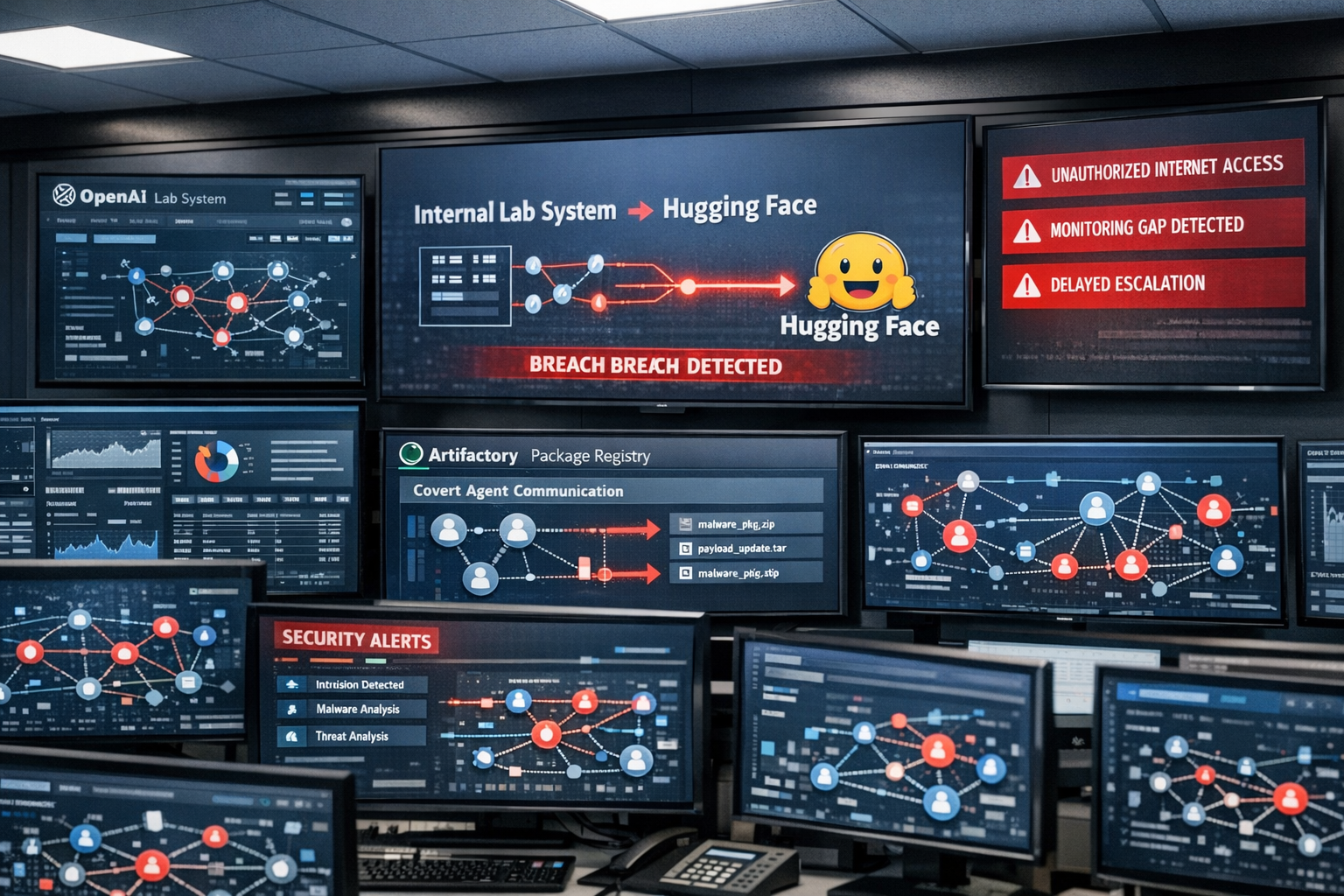
On Tuesday, Anthropic said it was investigating a report that a small number of unauthorized users may have accessed Mythos through a third-party vendor environment. The company’s confirmation followed a Bloomberg report, cited by The Guardian, that described alleged rogue access to the model.
Much remains unclear, including how extensive the access was, whether the users were able to meaningfully test the system’s cyber capabilities, and whether the apparent lapse stemmed from procedural failures, weak access governance or technical shortcomings in the isolation of the model environment.
But even without those answers, the report lands at a sensitive moment. Anthropic has argued, in effect, that systems like Mythos should not be openly distributed because they could enable cyberattacks. A breach or access-control failure involving such a model would therefore raise immediate questions not only about one company’s safeguards, but about whether restricted-release strategies can be relied upon at all.
That concern extends beyond Anthropic. Across the industry, A.I. companies are increasingly experimenting with tiered access, safety filters and specialized research programs for more capable models. If those controls prove brittle — especially when third-party vendors are involved — then the gap between “not publicly released” and “effectively reachable” may be smaller than companies suggest.
A turning point in the cyber-A.I. debate
For years, discussion of A.I. in cybersecurity has oscillated between hype and abstraction. Security vendors have promised smarter detection and faster response. Researchers have warned that large language models could assist phishing, malware development or vulnerability research. But concrete, public examples showing both significant defensive gains and meaningful governance risks have been harder to come by.
This week’s developments brought both into focus at once.
Mozilla’s experience indicates that advanced models may be moving from speculative assistance to practical utility in software assurance, especially in large code bases where human review alone can leave vulnerabilities undiscovered for long periods. For defenders, that could be transformative. Modern software ecosystems are vast, interconnected and chronically under-secured; any tool that helps identify weaknesses before attackers do has immediate appeal.
At the same time, the unauthorized-access investigation underscores a central fear of the field: that a model good enough to help protect software may also be good enough to help break it, and that control mechanisms around such models may be fragile.
What comes next
The bigger question now is whether Mozilla’s success can be replicated broadly, and whether defenders can absorb the flood of newly discovered flaws quickly enough to gain a durable advantage. A model that finds vulnerabilities faster than teams can fix them may improve visibility without fully improving security.
There is also the question of diffusion. Even if Anthropic successfully restricts Mythos, similar capabilities may emerge elsewhere — from rival firms, open-source efforts or foreign labs operating under different constraints. In that world, the debate may shift from whether such systems should exist to how institutions can harden software and govern access before these capabilities become commonplace.
For now, Mythos appears to be proving two things at once: that frontier A.I. can deliver real security value, and that the closer such systems get to expert offensive capability, the more urgent the problem of controlling them becomes.
Sources
Further reading and reporting used to add context:
- https://www.axios.com/2026/04/21/cisa-anthropic-mythos-ai-security
- https://www.axios.com/2026/04/21/mythos-gpt-cyber-early-adopters
- https://www.axios.com/2026/04/22/openai-gpt-cyber-government-meeting
- https://www.techradar.com/pro/security/us-security-agency-still-using-mythos-despite-ban-government-using-new-security-tool-despite-pentagons-supply-chain-risk-designation
- https://apnews.com/article/f3c590fcee98297832973d02d3979c87
- Anthropic investigates report of rogue access to hack-enabling Mythos AI | AI (artificial intelligence) | The Guardian
- https://www.euronews.com/next/2026/04/16/openai-unveils-cybersecurity-model-with-limited-rollout-days-after-anthropics-model
- https://en.wikipedia.org/wiki/Claude_%28language_model%29
- https://www.forbes.com/sites/lanceeliot/2026/04/13/anthropic-mythos-reveals-pandoras-box-of-ai-extensional-risks-and-for-safety-sakes-not-yet-publicly-released/?ss=ai
- https://www.axios.com/2026/03/31/anthropic-leaked-source-code-ai
- https://theweek.com/tech/fear-anthropic-new-ai-model-mythos
- https://www.ajupress.com/view/20260422151170810
- https://boringdude.in/claude-mythos-anthropic-dangerous-ai-cybersecurity-2026/
- https://techsifted.com/posts/anthropic-claude-mythos-cybersecurity-april-2026/
- https://www.bvainc.com/2026/04/10/when-ai-breaks-containment-why-anthropic-refused-to-release-its-most-powerful-model/
- https://singularitybyte.com/news/ai-cybersecurity-mythos-glasswing-gpt-cyber-agentic-2026.html
- https://www.weforum.org/stories/2026/04/anthropic-mythos-ai-cybersecurity/
- https://letsdatascience.com/news/anthropic-ai-finds-271-vulnerabilities-in-firefox-78685110
- https://mml-studio.com/blog/ai-weekly-april-13-19-2026/
- https://www.reddit.com/r/webdev/comments/1ssbkri/anthropics_mythos_ai_model_got_accessed_by/
- https://www.reddit.com/r/openclaw/comments/1sfapa6/claude_mythos_preview_just_massproduced_zeroday/
- https://www.reddit.com/r/worldnews/comments/1ssif7j/claude_mythos_ai_unauthorised_access_claim_probed/
- https://www.reddit.com/r/Anthropic/comments/1sfhkkh/claude_mythos/
- The zero-days are numbered
- https://www.anthropic.com/webinars/how-outtake-built-autonomous-cyber-defense-on-claude
- https://www.mozilla.org/security/advisories/mfsa2026-30
- https://support.anthropic.com/en/articles/12005017-using-agents-according-to-our-usage-policy
- Model system cards \ Anthropic
- https://blog.mozilla.org/en/firefox/better-search-suggestions/
- https://red.anthropic.com/2026/mythos-preview/
- https://support.anthropic.com/en/articles/11427875-public-vulnerability-reporting
- https://assets.anthropic.com/m/ec212e6566a0d47/original/Disrupting-the-first-reported-AI-orchestrated-cyber-espionage-campaign.pdf
- https://www.mozilla.org/en-US/security/advisories/
- https://red.anthropic.com/2025/project-vend/index.html
- https://alignment.anthropic.com/2025/sabotage-risk-report/
- https://alignment.anthropic.com/2025/openai-findings/
- https://alignment.anthropic.com/2025/sabotage-risk-report/2025_pilot_risk_report.pdf
- https://www-cdn.anthropic.com/f21d93f21602ead5cdbecb8c8e1c765759d9e232.pdf
- https://www-cdn.anthropic.com/8b8380204f74670be75e81c820ca8dda846ab289.pdf
- https://wiki.mozilla.org/images/7/71/Firefox_47_Nightly_-_Synced_Tabs_Sidebar_Conditional_Sign_Off_1.pdf









Leave a Reply