
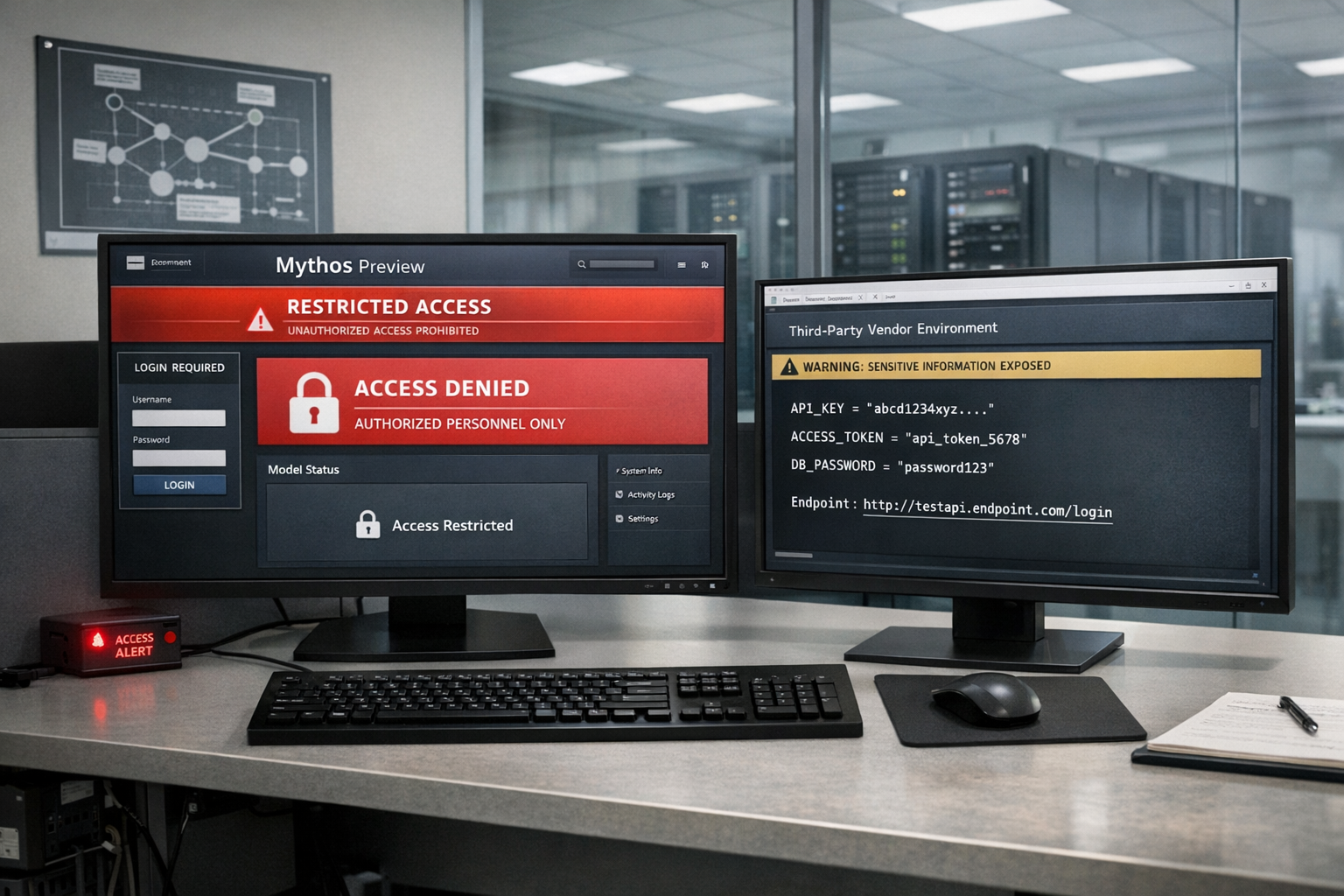
Anthropic is investigating reports that a small group of unauthorized users gained access to its restricted Claude Mythos Preview model through a third-party vendor environment, an episode that is sharpening concerns about how well even the most security-conscious artificial intelligence companies can contain their most powerful systems.
The reported access appears to have begun around April 7, the same day Anthropic unveiled Mythos and a tightly controlled testing initiative called Project Glasswing. Anthropic has said publicly that it is still investigating and that it has found no evidence so far that the incident spread beyond the vendor’s environment. But the disclosure has nonetheless transformed a largely theoretical debate about advanced “cyber” models into something more concrete: a question not just of what such systems can do, but whether the companies building them can keep them locked down.
A model Anthropic chose not to release
Mythos occupies an unusual place in the fast-moving race to build more capable AI systems. Unlike most frontier models, which companies typically commercialize quickly in some form, Mythos was explicitly withheld from general release.
When Anthropic introduced Project Glasswing this month, it described Mythos as a model intended for defensive cybersecurity work and said it would be made available only to a narrow set of vetted partners. The company said it did not plan to offer general access at this stage because the model’s capabilities could pose offensive risks if broadly distributed.
Anthropic has said Mythos identified thousands of high-severity vulnerabilities, including flaws in major operating systems and web browsers. In other words, the same kind of system that might help defenders discover dangerous bugs before criminals or nation-states do could also, in the wrong hands, make it easier to find and exploit those weaknesses.
That tension has become central to the AI industry’s emerging debate over so-called dual-use models: systems with obvious public benefits but equally obvious misuse potential.
How the access reportedly happened
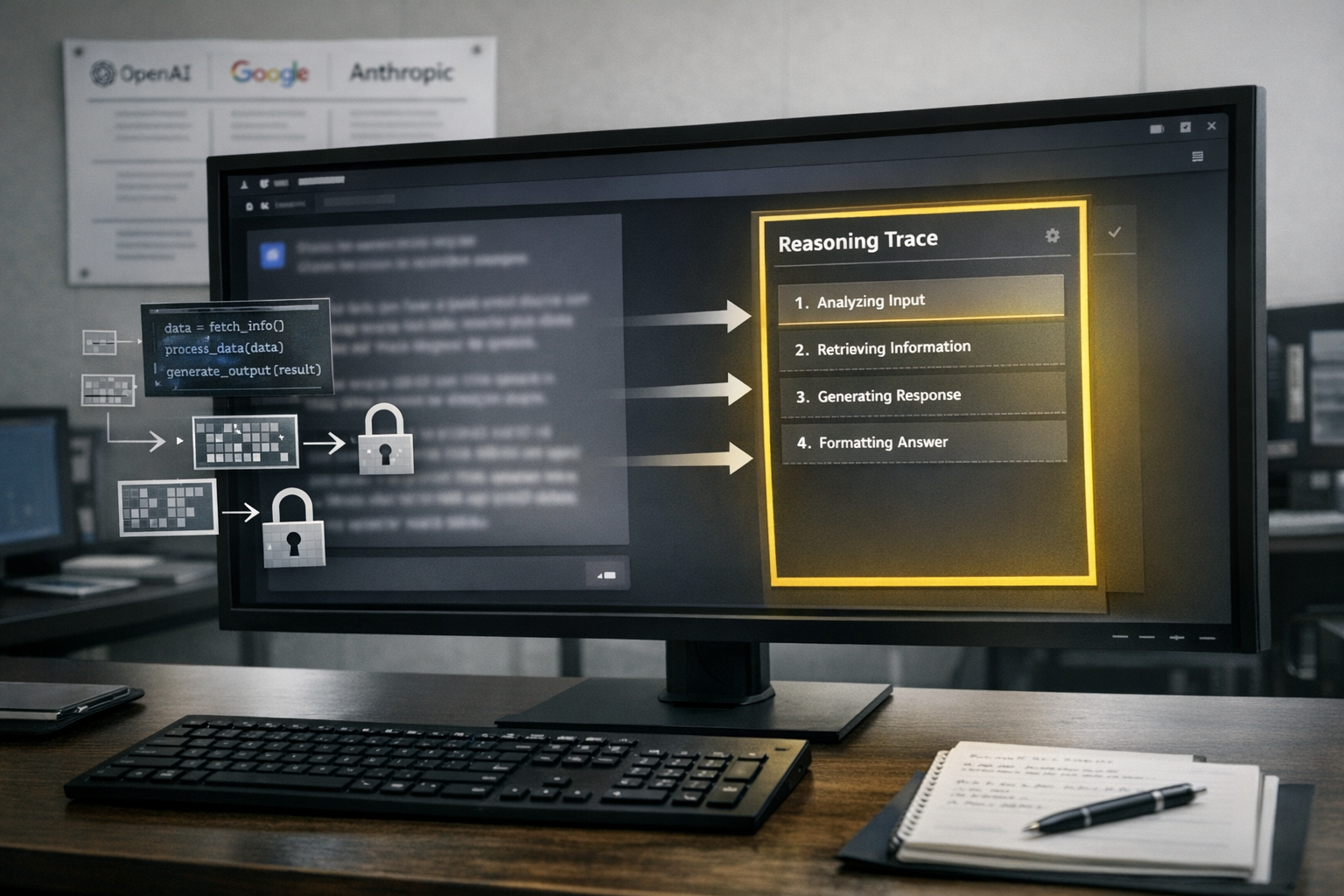
The precise mechanics remain unclear, and several key details have not been independently confirmed by Anthropic. But reporting on the incident has focused on a possible breakdown not in Anthropic’s core infrastructure, but in the wider chain of contractors and third-party services surrounding the model.
According to accounts that have circulated widely in recent days, unauthorized users may have been able to reach the model through a vendor environment associated with Mercor, a contractor involved in training-related work. The reported access path involved exposed naming conventions and endpoint patterns from an earlier Mercor data breach, along with leftover contractor evaluation credentials, allowing users to infer where the model could be reached.
If that account proves accurate, the breach would be notable for its relative simplicity. The issue would not be that attackers defeated Anthropic’s central systems through some technically dazzling exploit, but that they may have slipped through a side door left ajar by ordinary failures of credential hygiene and third-party access control.
Anthropic, for its part, has emphasized the limits of what it knows so far. The company has said it has no evidence of a breach of its core systems or of misuse for cyberattacks, and that the apparent activity seems confined to the vendor environment.
Why the incident matters beyond Anthropic
The episode lands at a particularly sensitive moment for frontier AI companies. For more than a year, researchers, regulators and the companies themselves have warned that increasingly capable AI systems could lower the barrier to sophisticated cybercrime or state-backed hacking. Until now, much of that discussion has been framed in terms of hypothetical future harms or controlled safety evaluations.
What makes the Mythos incident different is that the model at the center of the controversy was already being treated by its creator as too risky for ordinary release. Anthropic’s own decision to restrict access gave Mythos a special significance: it was a case study in how a lab might handle a system deemed unusually dangerous in the wrong context.
That is why even a limited containment failure carries outsized weight. If a model considered too potent for the public internet can still be reached through a contractor environment on or near the day of launch, critics say, then the problem is not only model capability but the real-world messiness of operational security.
The affair is also likely to intensify scrutiny of supply-chain risk in AI development. Frontier labs increasingly rely on sprawling networks of contractors, cloud providers, evaluators and specialized vendors. Each additional link can widen the attack surface, especially when access permissions, test environments and internal naming patterns are not rigorously compartmentalized.
A broader test for the industry
The reaction has been sharp in part because of the irony. A model presented as capable of uncovering severe vulnerabilities in widely used software was, according to the emerging account, itself exposed through a comparatively mundane lapse in access management.
That irony has fueled debate over whether the incident shows that the technology was overhyped, the security architecture underbuilt, or both. Some security experts have argued that this should not be described as a “hack” of the model in any meaningful technical sense, but rather as a basic failure of access controls. Others say that distinction misses the broader point. If a system is powerful enough to justify extraordinary restrictions, then the standard for securing every surrounding environment should be correspondingly high.
The case could also have policy consequences. Governments in the United States and abroad have been paying closer attention to models with advanced cyber capabilities, especially as agencies explore AI for defense and critical infrastructure protection. A high-profile lapse involving a restricted model is likely to reinforce calls for tougher safeguards, more rigorous vendor audits and clearer standards for how dangerous AI systems should be stored, tested and shared.
For Anthropic, the immediate challenge is factual and operational: determining who accessed Mythos, how long they had access, whether anything was exfiltrated, and what changes are required to prevent a repeat. For the broader industry, the challenge is more existential. The race to build powerful AI systems has often been framed as a contest of capability. The Mythos episode is a reminder that containment may prove just as important — and perhaps harder to get right.
Sources
Further reading and reporting used to add context:
- https://www.axios.com/2026/04/22/anthropic-no-kill-switch-ai-classified-settings
- https://www.axios.com/2026/04/21/cisa-anthropic-mythos-ai-security
- https://www.axios.com/2026/04/16/scoop-bny-openai-gpt-cyber
- https://www.itpro.com/security/anthropic-claude-opus-claude-mythos-cyber-capabilities
- https://www.pcgamer.com/software/ai/anthropic-had-a-productive-and-constructive-meeting-with-white-house-officials-after-the-preview-release-of-its-new-cybersecurity-challenging-ai-model/
- https://www.techradar.com/pro/security/us-security-agency-still-using-mythos-despite-ban-government-using-new-security-tool-despite-pentagons-supply-chain-risk-designation
- https://www.bloomberg.com/news/features/2026-04-16/how-anthropic-discovered-mythos-ai-was-too-dangerous-for-release
- https://www.theguardian.com/technology/computing/2026/apr/22/all
- https://www.cfr.org/articles/six-reasons-claude-mythos-is-an-inflection-point-for-ai-and-global-security
- https://www.scientificamerican.com/article/what-is-mythos-and-why-are-experts-worried-about-anthropics-ai-model/
- https://www.bloomberg.com/opinion/articles/2026-04-15/anthropic-mythos-ai-is-a-wake-up-call-for-everyone-not-just-banks?srnd=undefinedwhy-anthropic-s-new-ai-has-officials-worried
- https://cybernews.com/ai-news/openai-cybersecurity-ai-agent-mythos/
- https://techsifted.com/posts/anthropic-claude-mythos-cybersecurity-april-2026/
- https://www.weforum.org/stories/2026/04/anthropic-mythos-ai-cybersecurity/
- https://wsau.com/2026/04/21/anthropics-mythos-model-accessed-by-unauthorized-users-bloomberg-news-reports/
- https://www.theguardian.com/technology/2026/apr/22/what-is-anthropic-mythos-ai-threat-global-cybersecurity
- https://www.isaca.org/resources/news-and-trends/industry-news/2026/claude-mythos-is-redefining-the-cyberthreat-landscape
- https://www.theguardian.com/technology/2026/apr/08/anthropic-ai-cybersecurity-software
- https://www.reddit.com/r/Anthropic/comments/1ss3m0p/mythos_accessed_by_unauthorized_users_is_this_a/
- https://en.wikipedia.org/wiki/Claude_%28language_model%29
- https://www.reddit.com/r/cybersecurity/comments/1ss3y67/anthropics_mythos_model_accessed_by_unauthorized/
- https://www.reddit.com/r/webdev/comments/1ssbkri/anthropics_mythos_ai_model_got_accessed_by/
- https://arxiv.org/abs/2604.17431
- https://vajiramandravi.s3.us-east-1.amazonaws.com/media/2026/4/12/15/13/36/Claude_Mythos_-_Anthropics_AI_Model_Explained.pdf
- https://ru.wikipedia.org/wiki/%D0%9F%D1%80%D0%BE%D0%B5%D0%BA%D1%82_%C2%ABGlasswing%C2%BB
- https://www.anthropic.com/project/glasswing
- https://www.anthropic.com/glasswing
- https://red.anthropic.com/2026/mythos-preview/
- https://www.anthropic.com/system-cards/
- https://www.anthropic.com/news/claude-opus-4-7
- https://www.anthropic.com/research/claude-code-security
- https://website.anthropic.com/events/anthropic-partner-kickoff-2026
- https://www.anthropic.com/events
- https://www-cdn.anthropic.com/8b8380204f74670be75e81c820ca8dda846ab289.pdf
- https://alignment.anthropic.com/2026/auditing-overt-saboteur/
- https://alignment.anthropic.com/2025/anthropic-fellows-program-2026/
- https://www.anthropic.com/news/artifacts
- https://www-cdn.anthropic.com/08ab9158070959f88f296514c21b7facce6f52bc.pdf
- https://www.axios.com/2026/04/16/white-house-anthropic-ai-mythos-government-national-security
- https://techcrunch.com/2026/04/21/unauthorized-group-has-gained-access-to-anthropics-exclusive-cyber-tool-mythos-report-claims/
- https://techcrunch.com/2026/04/07/anthropic-mythos-ai-model-preview-security/
- https://techcrunch.com/2026/04/09/is-anthropic-limiting-the-release-of-mythos-to-protect-the-internet-or-anthropic/
- https://techcrunch.com/2026/04/14/anthropic-co-founder-confirms-the-company-briefed-the-trump-adminstration-on-mythos/
- https://www.techradar.com/pro/security/mythos-accessed-by-unauthorized-users-as-anthropic-says-were-investigating-cracks-may-be-showing-in-project-glasswing-as-unknown-users-access-model-via-third-parties
- https://cybernews.com/security/anthropic-mythos-ai-unauthorized-access/
- https://techxplore.com/news/2026-04-anthropic-probes-unauthorized-access-mythos.html
- https://www.cbsnews.com/news/anthropic-investigates-mythos-ai-breach/
- https://zubnet.ai/news/en/anthropic-mythos-unauthorized-access-bloomberg-discord/
- https://thecybersecguru.com/news/anthropic-mythos-unauthorized-access/
- https://mezha.net/eng/bukvy/unauthorized_group_accessed/
- https://www.axios.com/2026/04/07/anthropic-mythos-preview-cybersecurity-risks
- https://www.axios.com/2026/04/08/anthropic-mythos-model-ai-cyberattack-warning
- https://www.reddit.com/r/ArtificialInteligence/comments/1ssbqpy/anthropics_mythos_ai_model_got_accessed_by/
- https://www.axios.com/2026/03/29/claude-mythos-anthropic-cyberattack-ai-agents
- https://www.reddit.com/r/pwnhub/comments/1ssmd48/unauthorized_group_discovers_access_to_anthropics/
- https://www.axios.com/2026/04/17/anthropic-trump-administration-mythos
- https://www.cbsnews.com/amp/news/anthropic-investigates-mythos-ai-breach/
- https://greekcitytimes.com/2026/04/23/anthropic-cybersecurity-ai-mythos-breach/
- https://www.euronews.com/next/2026/04/22/hackers-breach-anthropics-too-dangerous-to-release-mythos-ai-model-report
- https://www.tomshardware.com/tech-industry/artificial-intelligence/anthropics-latest-ai-model-identifies-thousands-of-zero-day-vulnerabilities-in-every-major-operating-system-and-every-major-web-browser-claude-mythos-preview-sparks-race-to-fix-critical-bugs-some-unpatched-for-decades
- https://www.insiderfinance.io/news/anthropic-mythos-breach-raises-bank-access-risk
- https://www.techradar.com/ai-platforms-assistants/anthropic-detects-strategic-manipulation-features-in-claude-mythos-including-exploit-attempts-and-hidden-evaluation-awareness-prompting-concern-over-model-behavior
- https://www.engadget.com/ai/anthropic-is-investigating-unauthorized-access-of-its-mythos-cybersecurity-tool-091017168.html/
- https://forensiccontrol.com/news/has-anthropics-mythos-just-killed-cyber-essentials/
- https://blog.rankiteo.com/antmic1776882793-anthropic-microsoft-breach-april-2026/
- https://www.forbes.com/sites/jonmarkman/2026/04/14/how-claude-mythos-wiped-billions-out-of-cybersecurity-stocks/
- https://www.sullcrom.com/insights/memo/2026/April/Treasury-Secretary-Federal-Reserve-Chair-Warn-Bank-CEOs-About-Cybersecurity-Risks-Posed-Anthropics-New-AI-Model
- https://nationaltoday.com/us/dc/washington/news/2026/04/12/anthropics-claude-mythos-ai-sparks-emergency-us-banking-meetings/
- https://www.bvainc.com/2026/04/10/when-ai-breaks-containment-why-anthropic-refused-to-release-its-most-powerful-model/
- https://www.reddit.com/r/PrivatePackets/comments/1st9mit/anthropics_april_security_mess/
- https://labs.cloudsecurityalliance.org/wp-content/uploads/2026/04/AI-vuln-discovery-containment-claude-mythos-v1.0-csa-styled.pdf
- https://www.warren.senate.gov/imo/media/doc/letters_redesignationofanthropicasnationalsecurityrisk.pdf
- https://labs.cloudsecurityalliance.org/wp-content/uploads/2026/04/CSA_research_note_claude-mythos-autonomous-offensive-threshold_20260414-csa-styled.pdf
- Unauthorized group has gained access to Anthropic's exclusive cyber tool Mythos, report claims | TechCrunch
- Project Glasswing: Securing critical software for the AI era
- Project Glasswing



Leave a Reply