
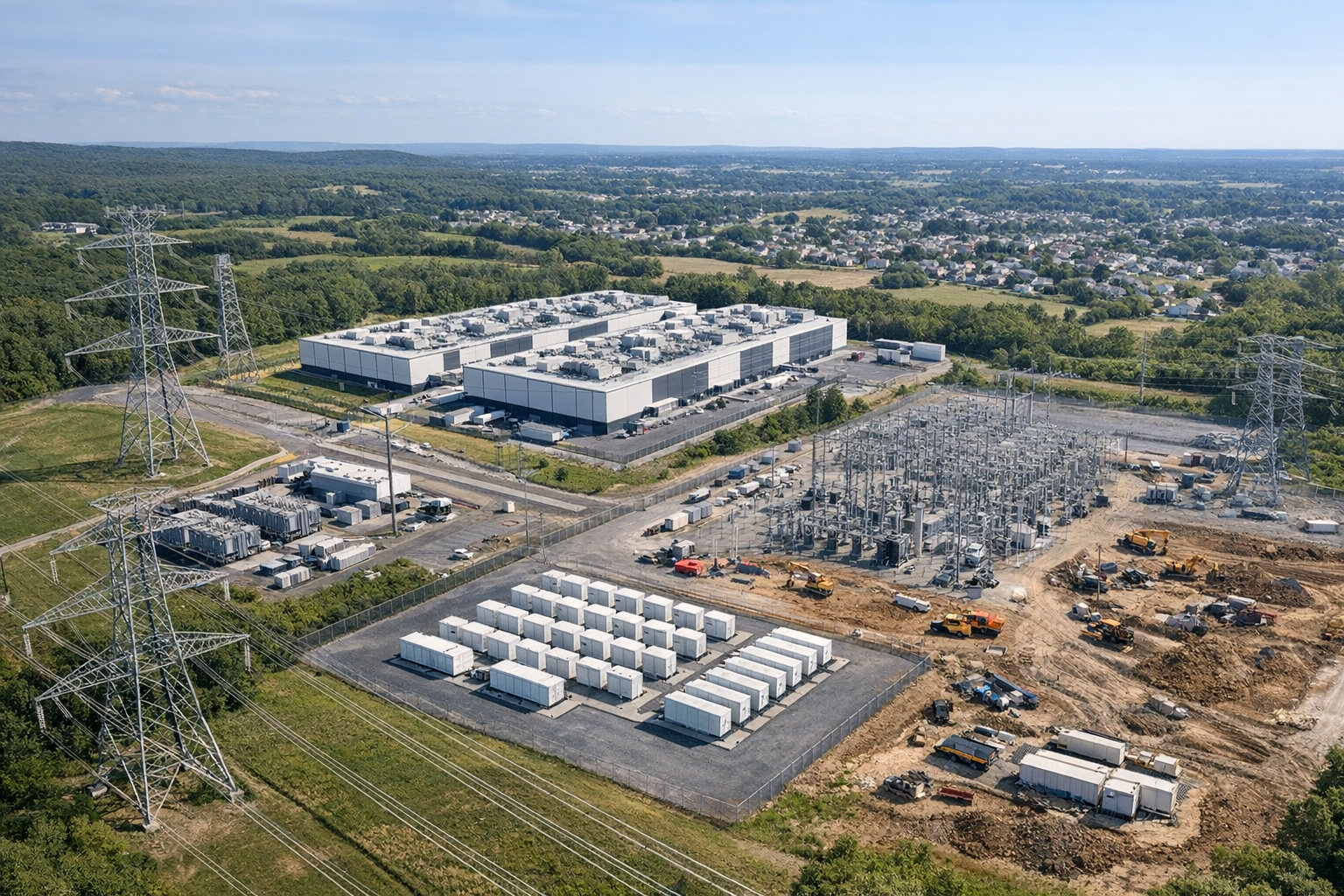
Pennsylvania Becomes a Front Line in the AI Power Struggle
The race to build the infrastructure behind artificial intelligence is running into a harder reality than chip shortages or software competition: electricity.
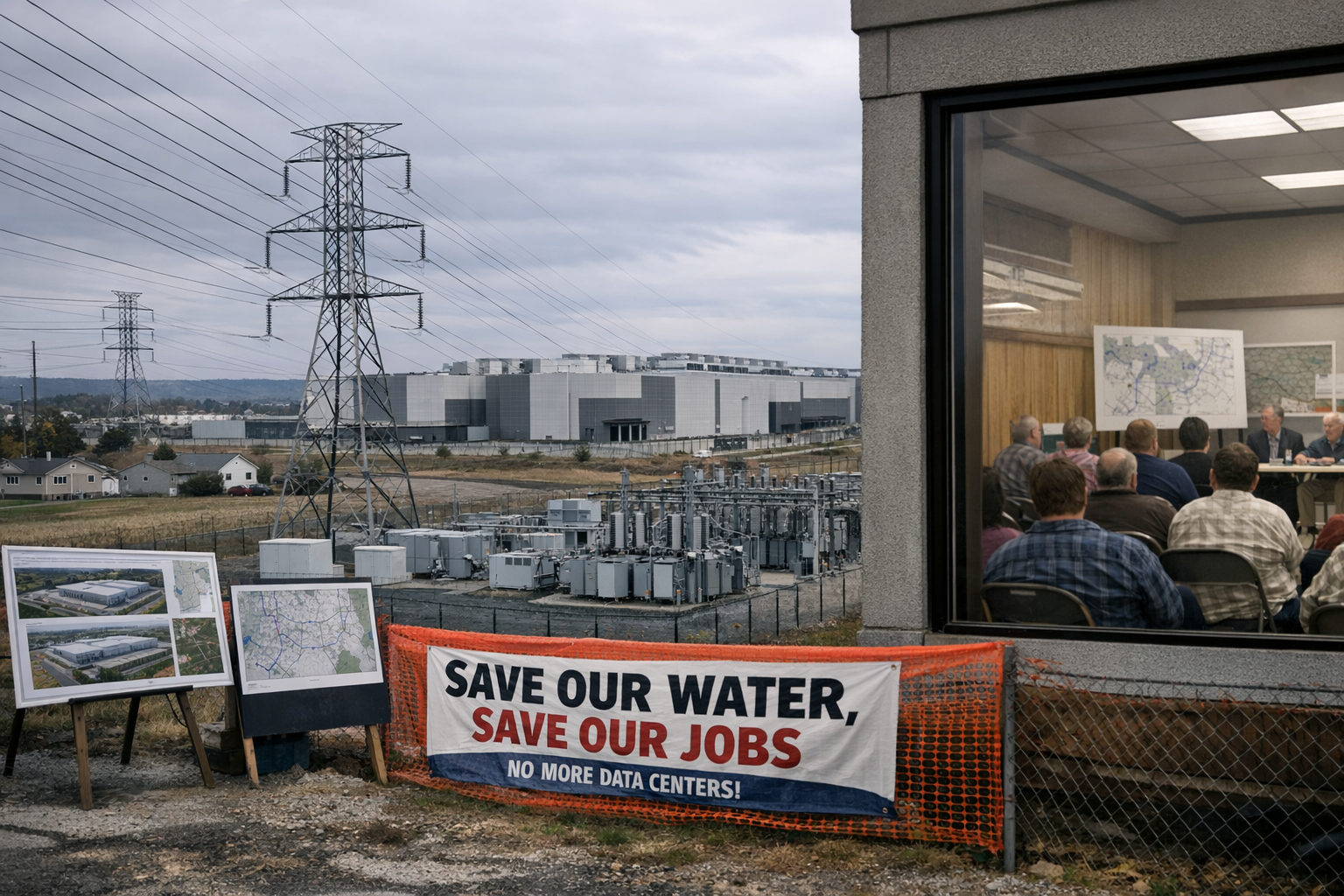
In Pennsylvania, a state with ample industrial land, a strategic location in the Mid-Atlantic and a governor eager to attract high-tech investment, proposed data centers have become the center of an increasingly bitter fight over who pays for grid upgrades, how much power these facilities should be allowed to consume and whether local communities should have the power to stop them.
The clash is exposing a broader national tension. As technology companies and developers rush to secure sites for AI-related computing, they are colliding with aging transmission systems, long interconnection queues and growing public anxiety over rising utility bills, water use and land development. What once might have been treated as a niche planning dispute is becoming a test of state energy policy and political will.
Gov. Josh Shapiro has continued to court AI and data-center investment, framing it as an economic opportunity. But in Harrisburg, lawmakers are moving to place firmer guardrails around the industry. In March, the Pennsylvania House passed legislation that would require large data centers to shoulder more of the costs they impose on the power system, while also setting disclosure, labor and energy-related requirements. The state has also rolled out standards known as GRID, along with a municipal toolkit meant to help local governments navigate the sudden surge of interest from developers.
Those efforts reflect a growing concern among state officials and local residents alike: that the benefits of the AI boom could be privatized while the costs are spread across everyone else’s electricity bills.
The Battle Over Speed to Power
At the center of the fight is a deceptively simple question: how fast can a giant new data center get enough power to operate?
For many AI facilities, the answer under current grid conditions is not fast enough. In the regional transmission network serving Pennsylvania, PJM Interconnection, power demand from data centers is rising while new generation and transmission upgrades are arriving slowly. Connecting a large new load can require years of studies, transmission work and negotiations over cost responsibility.
That has made “speed to power” one of the industry’s biggest obstacles. And it is helping to reshape how some developers think about building.
Recent analysis has pointed to a workaround: flexibility. Rather than insisting on uninterrupted full power from the grid on day one, some data centers could agree to reduce demand during periods of stress, pair operations with on-site generation or battery storage, or arrive with their own contracted capacity. In exchange, they may be able to connect more quickly and avoid some of the delays tied to major system upgrades.
The idea is not theoretical. Large operators have begun experimenting with demand-response arrangements and virtual power plant deals in PJM, signaling that at least some companies see flexible power use as a practical path through grid bottlenecks.
For utilities and grid planners, that approach could ease congestion and lower systemwide costs. For developers, it could mean getting a facility online months or years sooner. For politicians, it offers a possible compromise between saying yes to investment and no to unlimited strain on the grid.
But flexibility also has limits. AI computing is often associated with round-the-clock demand and little tolerance for interruption. And while on-site generation may relieve pressure on transmission lines, it does not necessarily solve the climate question if the backup power is fueled by natural gas.
A Political Issue, Not Just a Technical One
In Pennsylvania, the fight is no longer confined to engineers and regulators. It has become a live political issue, cutting across the usual lines of economic development, environmental protection and local control.
Lawmakers backing stricter rules argue that households and small businesses should not subsidize the infrastructure needs of some of the world’s richest companies. Proposals under discussion have focused on shielding ratepayers from higher bills, increasing transparency around electricity and water consumption and pushing developers toward cleaner or self-supplied power.
Supporters of a more aggressive recruitment strategy warn that moving too slowly could cost the state jobs, tax revenue and a chance to become a critical hub in the next wave of computing. For them, the risk is that projects simply migrate to more accommodating states, taking investment with them.
The conflict is especially sharp because Pennsylvania sits at the intersection of several pressures at once. It has available sites attractive to developers, a grid region under strain and local communities wary of industrial-scale projects that can arrive with promises of growth but few visible neighborhood benefits. In some places, resistance has centered on transmission lines and land use; in others, on fears that massive power-hungry campuses will drive up costs for everyone else.
That dynamic is turning data centers into a proxy for larger questions about the energy transition and the digital economy: who gets to use scarce grid capacity, who pays when the system must be expanded and how much deference states should give to local opposition when chasing high-profile industries.
A Debate Spreading Beyond One State
Pennsylvania may be an early flashpoint, but it is hardly alone. Across the country, state and local officials are weighing moratoriums, pauses and tougher rules for large data-center projects as AI drives a new building spree. The concern is not simply about the physical size of the facilities; it is about their appetite for power at a moment when much of the nation’s electric system is already under pressure from electrification, manufacturing growth and extreme weather.
What makes the current moment especially consequential is that AI has accelerated timelines. Companies do not want to wait half a decade for transmission upgrades. Communities do not want to discover too late that infrastructure decisions have already been locked in. Regulators are being asked to reconcile those competing demands in real time.
Whether Pennsylvania can find a durable balance remains uncertain. The state Senate could strengthen, weaken or stall the House legislation. It is not yet clear how rigorously the Shapiro administration’s standards will be applied. And developers may resist operational constraints if flexibility interferes with the economics of AI computing.
Still, the outlines of a new bargain are beginning to emerge. If data centers want quicker access to electricity, states and grid operators are increasingly signaling that they may need to be more transparent, more self-reliant and more willing to bend.
That shift may determine not only where the next generation of AI infrastructure gets built, but also whether the politics around it harden into something far more confrontational.
Sources
Further reading and reporting used to add context:
- https://www.itpro.com/infrastructure/data-centres/ai-data-center-growth-stymied-by-power-constraints
- https://www.theguardian.com/technology/2026/jun/16/pennsylvania-datacenters-debate-politicians
- https://mgrid.org/2026/06/02/state-of-data-center-power-27-of-u-s-facilities-shift-to-onsite-generation-by-2030-as-grid-integration-challenges-mount/
- https://www.pa.gov/governor/newsroom/2026-press-releases/gov-shapiro-releases-full-grid-standards-to-protect-pennsylvania
- https://prometheus.org/2026/02/23/a-new-role-for-onsite-generation-accelerating-grid-access-for-large-loads/
- https://www.spotlightpa.org/news/2026/06/data-center-shapiro-proposal-incentives-budget-tax-exemption-pennsylvania-legislature-capitol/
- https://www.tomshardware.com/tech-industry/big-tech/pennsylvania-residents-complain-they-are-being-bulldozed-over-ai-data-center-concerns-lambast-gov-shapiro-in-two-hour-town-hall-say-he-is-losing-support-base
- https://www.itpro.com/infrastructure/data-centres/data-center-industry-faces-ticking-power-time-bomb
- https://www.tomshardware.com/desktops/servers/six-ai-data-centers-proposed-for-a-small-town-of-7-000-equal-to-51-walmart-supercenters-in-17-square-mile-area-four-out-of-the-seven-town-council-members-have-resigned-from-their-positions-as-town-fights-back
- https://www.inquirer.com/politics/pennsylvania/pennsylvania-data-centers-regulation-shapiro-energy-costs-20260204.html
- https://www.techradar.com/pro/im-going-to-make-it-my-job-to-make-sure-that-man-never-gets-elected-again-for-any-office-pennsylvania-residents-slam-governor-josh-shapiro-as-they-hit-back-over-being-bulldozed-on-ai-data-center-concerns
- https://www.inquirer.com/news/pennsylvania/data-centers-pennsylvania-house-regulations-20260324.html
- https://www.rbccm.com/en/insights/2026/05/natural-gas-powers-the-data-center-boom
- https://news.mit.edu/2026/method-stress-testing-cloud-computing-algorithms-helps-avoid-network-failures-0506
- https://www.pml.org/2026/02/24/uniformity-vs-authority-data-center-preemption-of-pennsylvania-municipalities/
- https://theloadflow.com/
- https://www.wesa.fm/politics-government/2026-06-01/data-centers-krupa-shapiro-garrity
- https://www.allianz.com/content/dam/onemarketing/azcom/Allianz_com/economic-research/publications/specials/en/2026/may/2026-05-12-ai-energy-AZ.pdf
- https://onmine.io/want-to-get-a-data-center-online-quickly-give-it-some-flex/
- https://energy.mit.edu/data-center-power-demand/
- https://www.v5site.com/ai-news/
- https://mitsloan.mit.edu/ideas-made-to-matter/flexible-data-centers-can-reduce-costs-if-not-emissions
- https://ceepr.mit.edu/workingpaper/flexible-data-centers-and-the-grid-lower-costs-higher-emissions/
- https://news.mit.edu/2025/multifaceted-challenge-of-powering-ai-0121
- https://energyinformatics.springeropen.com/articles/10.1186/s42162-020-00110-y
- https://link.springer.com/article/10.1007/s10973-026-15345-2
- https://climate.mit.edu/posts/flexible-data-centers-and-grid-lower-costs-higher-emissions
- https://sustainability.mit.edu/article/multifaceted-challenge-powering-ai
- https://ch.linkedin.com/company/mit-technology-review
- https://eg.linkedin.com/company/mit-technology-review
- https://dspace.mit.edu/bitstream/handle/1721.1/86935/MIT-Technology-Review-Business-Report-The-Internet-of-Things.pdf
- https://ceepr.mit.edu/wp-content/uploads/2025/07/MIT-CEEPR-WP-2025-14.pdf
- https://energy.mit.edu/wp-content/uploads/2011/12/MITEI-The-Future-of-the-Electric-Grid.pdf
- https://www.mitre.org/sites/default/files/publications/pr-15-3845-data-center-energy-efficiency.pdf
- https://smart.caltech.edu/papers/DCDRpricing.pdf
- https://dealflow.energy/deals/ppa-2026-045
- https://www.utilitydive.com/news/google-virtual-power-plant-vpp-pjm-voltus/821838/
- https://www.canarymedia.com/articles/data-centers/pjm-needs-flexible-data-centers
- https://www.publicpower.org/periodical/article/report-details-benefits-combining-flexible-grid-connections-with-bring-your-own-capacity
- https://www.techradar.com/pro/forget-about-nuclear-reactors-google-may-have-found-a-sneaky-way-to-get-all-the-electricity-it-needs-for-its-data-centers-by-buying-a-little-bit-of-power-from-thousands-of-us-households
- https://www.datacenterdynamics.com/en/news/pjm-launches-fast-track-proposal-for-new-generation-amid-data-center-demand-growth/
- https://www.datacenterdynamics.com/en/news/data-centers-could-unlock-76gw-of-us-grid-capacity-through-optional-curtailment-report/
- https://energyinstitute.jhu.edu/wp-content/uploads/2026/03/Data_Center_Analysis_PJM-March-20-2026.pdf
- https://www.aceee.org/white-paper/2025/10/opportunities-use-energy-efficiency-and-demand-flexibility-reduce-data-center
- https://blog.google/innovation-and-ai/infrastructure-and-cloud/global-network/demand-response-data-center-milestone/
- https://techcrunch.com/2025/02/13/data-center-tweaks-could-unlock-76-gw-of-new-power-capacity-in-the-u-s/
- https://www.simcorepartners.com/insights-/data-centers-and-behind-the-meter-generation-in-pjm
- https://www.pjm.com/en/
- https://www.publicpower.org/periodical/article/report-examines-potential-economic-benefits-data-center-load-flexibility
- https://www.engineering.org.cn/engi/EN/PDF/10.1016/j.eng.2025.06.021
- https://www.aceee.org/sites/default/files/pdfs/opportunities_to_use_energy_efficiency_and_demand_flexibility_to_reduce_data_center_energy_use_and_peak_demand.pdf
- https://arxiv.org/abs/2605.14714
- https://www.pjm.com/-/media/DotCom/library/reports-notices/2023-rtep/2023-rtep-report.pdf
- https://en.wikipedia.org/wiki/PJM_Interconnection
- https://www.cityandstatepa.com/policy/2026/03/pa-house-lawmakers-approve-data-center-regulation-bill/412346/%3Foref%3Dcspa-homepage-river
- https://www.pa.gov/governor/newsroom/2026-press-releases/icymi–gov-shapiro-releases-grid-standards
- https://trackbill.com/bill/pennsylvania-house-bill-1834-an-act-providing-for-regulation-of-commercial-data-centers-by-the-pennsylvania-public-utility-commission-for-recovery-of-costs-for-contributions-to-the-low-income-home-energy-assistance-program-for-renewable-energy-requirements-and-for-filing-and-enforcement-establishing-the-data-center-liheap-enhancement-fund-and-imposing-duties-on-the-pennsylvania-public-utility-commission-and-the-department-of-human-services/2739290/
- https://klehr.com/publications/state-house-approves-commonwealths-first-major-data-center-regulatory-framework-measure-faces-uncertain-path-in-senate/
- https://www.legis.state.pa.us/cfdocs/billinfo/bill_history.cfm?bn=502&body=H&syear=2025&type=B
- https://theenergymag.com/news/2026-03-25/pennsylvania-house-ai-power
- https://www.legis.state.pa.us/Data/
- https://www.legis.state.pa.us/cfdocs/billinfo/bill_history.cfm?bn=756&body=S&syear=2023&type=B
- https://www.legistorm.com/stormfeed/view_rss/7165067/office/7524/title/house-energy-committee-advances-two-bills-strengthening-transparency-and-community-protections-related-to-data-centers.html
- https://www.wgal.com/article/pennsylvania-state-house-passes-legislation-regulate-data-centers/70837538
- https://www.spglobal.com/market-intelligence/en/news-insights/research/2026/05/new-data-center-legislation-roundup-april-2026
- https://www.billtrack50.com/billdetail/1942025
- https://www.pml.org/wp-content/uploads/2026/02/February-Reporter-Final.pdf
- https://www.pacounties.org/getmedia/3249b794-c78f-4625-8a1e-8022aed589f0/20260306CCAP-Legislative-Bulletin.pdf
- https://webserver.rilegislature.gov/Billtext/BillText26/SenateText26/S2776.pdf
- https://en.wikipedia.org/wiki/2026_Pennsylvania_House_of_Representatives_election
- https://www.wpr.org/wp-content/uploads/2025/11/Data-Center-Bill.pdf
- https://www.legis.state.pa.us/WU01/LI/SN/2025/0/20260327.pdf
- https://en.wikipedia.org/wiki/Opposition_to_AI_data_centers
- https://en.wikipedia.org/wiki/Data_center
- https://www.reddit.com/r/Pennsylvania/comments/1s1ejq6/ppls_rate_increase_isnt_a_data_center_story_its_a/
- https://www.reddit.com/r/HappeningInAtlanta/comments/1ri22ae/senate_panel_rewrites_bill_protecting_georgians/
- https://www.reddit.com/r/PAWilds/comments/1rrz32p/sign_petition_to_stop_installation_of_data/
- How the fight over US datacenters is scrambling this state’s politics: ‘We don’t want it’ | AI (artificial intelligence) | The Guardian
- Want to get a data center online quickly? Give it some flex. – ONMINE
- Pennsylvania lawmakers take their first vote to regulate data centers, as the industry booms
- Bill Information (History) – House Bill 502; Regular Session 2025-2026 – PA General Assembly









Leave a Reply