
A New Front in the AI Jobs Debate
Bill Gates has reignited one of the thorniest questions in the artificial intelligence boom: not simply which jobs the technology will change, but whether some work should be protected from automation altogether.
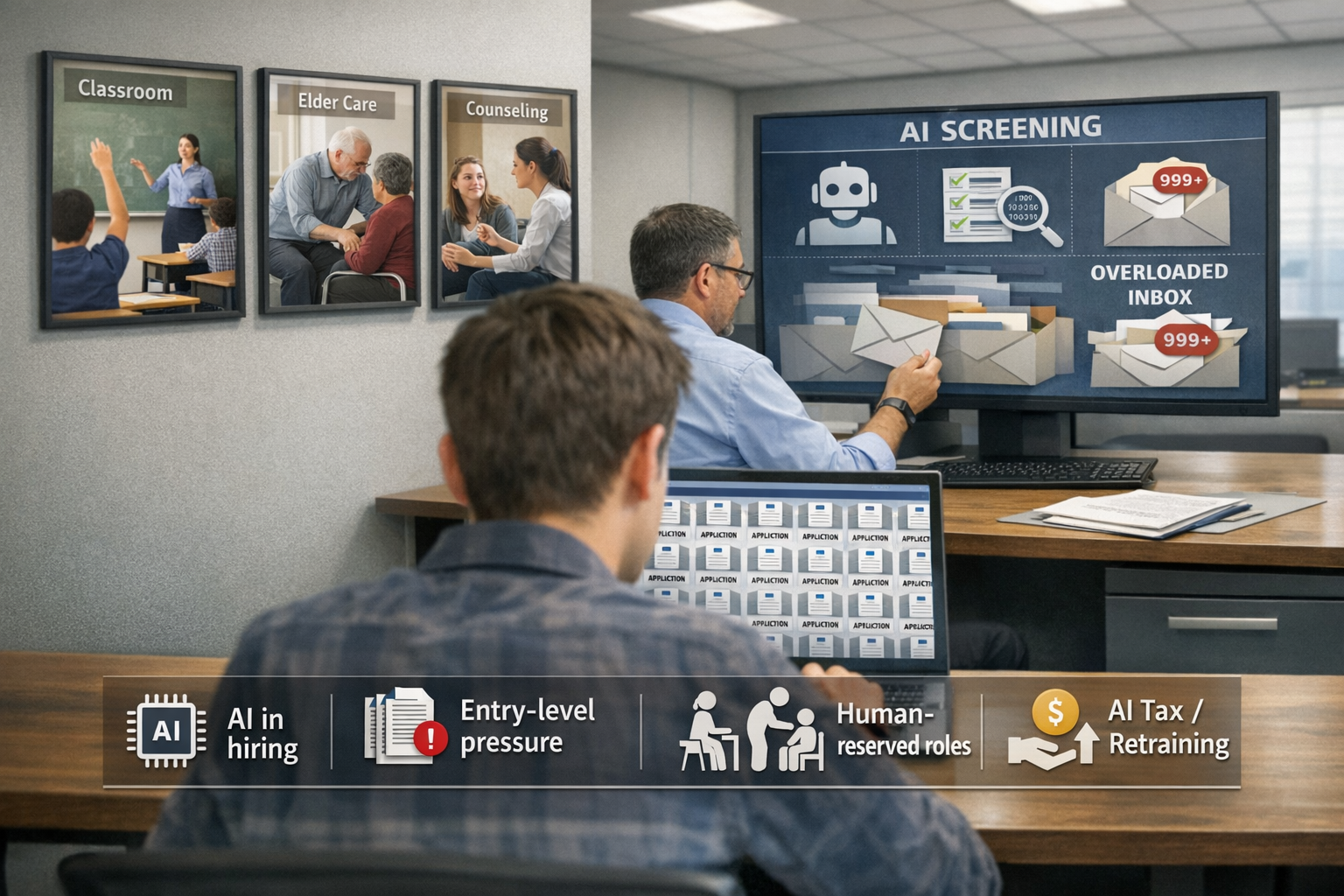
In a lengthy essay published this week, the Microsoft co-founder argued that governments are dangerously unprepared for the labor effects of AI and warned that, without intervention, the economy could end up with “far fewer” jobs. He proposed that some occupations be kept “human reserved,” borrowing a concept akin to nature preserves, where society deliberately shields certain roles from full technological replacement even if machines become capable of doing them.
The idea marks a notable escalation in the public debate over AI and work. For much of the past several years, executives and policymakers have described artificial intelligence as a tool that would reshape jobs more than eliminate them. Gates’s intervention pushes the conversation into more politically fraught territory: whether governments should decide that some tasks, especially those involving care, judgment and trust, ought to remain primarily in human hands.
He also tied that argument to policy proposals that have hovered at the edge of mainstream discussion, including taxing AI systems or robots to help finance retraining and stronger social safety nets.
From Productivity Tool to Labor Shock
Gates’s warning arrives as signs of strain are becoming harder to ignore, especially for workers at the start of their careers.
Research cited by Stanford has suggested that the pressure is showing up first in occupations that are highly exposed to AI, particularly among younger workers, even if the broader economy has not yet experienced sweeping, economywide job destruction. The evidence does not prove that AI alone is causing the deterioration; a softer white-collar job market has also weighed on hiring. But the pattern has added urgency to concerns that the disruption may be real long before official statistics capture it cleanly.
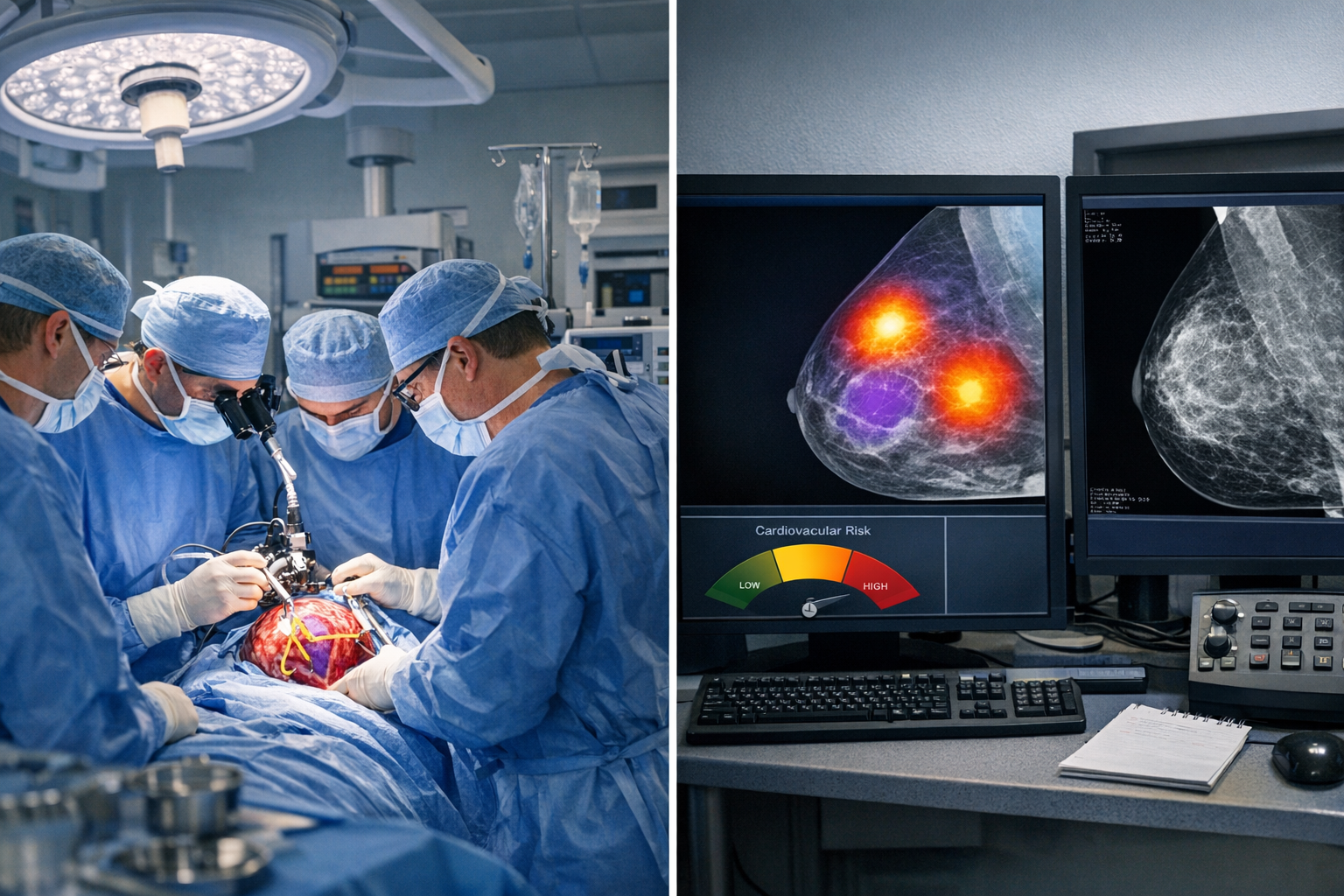
In his essay, Gates argued that the transition is likely to unfold over roughly a decade, not over generations as past industrial shifts often did. He suggested that AI’s reach would extend well beyond chatbots and office software into law, customer service, medicine, programming, manufacturing and, eventually, some physical labor.
That breadth is one reason his comments have landed so forcefully. If AI were confined to specialized technical uses, labor markets might adapt more gradually. But the prospect of systems that can draft legal documents, answer customers, write code, summarize medical information and automate administrative work has raised fears that the first rung of many professional ladders is already being weakened.
Hiring Itself Is Becoming an AI Battleground
The disruption is not limited to work after someone gets hired. It is also reshaping the process of finding a job.
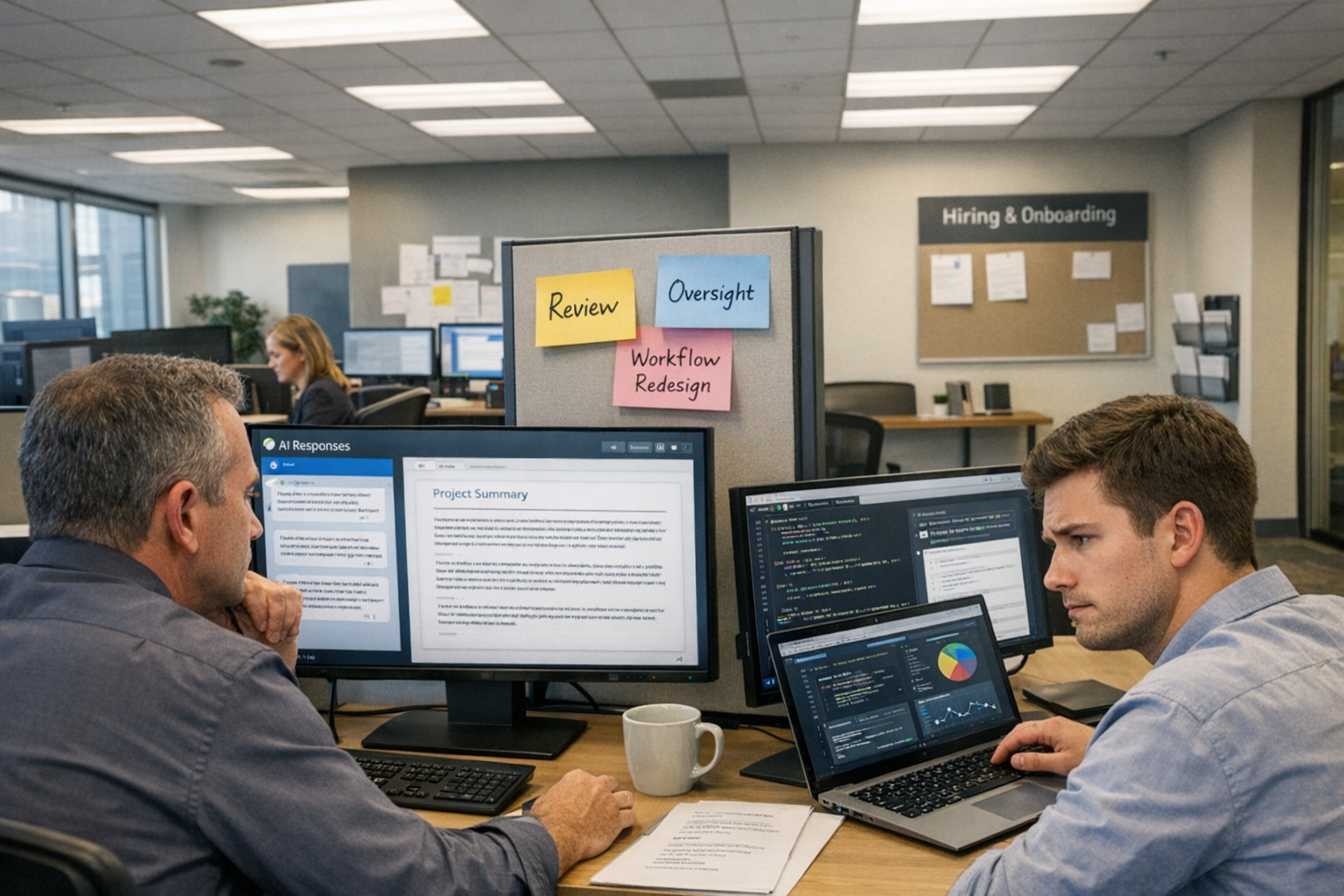
Employers are increasingly confronting floods of applications made easier by “one-click” platforms and AI-assisted résumé writing. Recruiters say the combination has swamped hiring systems, making it harder to identify serious candidates and easier for job seekers to submit large numbers of polished but generic applications. Some companies have responded by adding deliberate friction to the hiring process, requiring extra steps or more tailored submissions in hopes of filtering out automated mass applying.
That shift has created a paradox of the AI labor market: even as workers fear being screened out by algorithms, employers are struggling with an opposite problem — too much machine-assisted access to the application process. The result is a hiring system that many on both sides increasingly view as broken.
The problem matters because entry-level roles have traditionally served as training grounds. If companies automate junior tasks while simultaneously making it harder for applicants to break through the noise, younger workers can end up squeezed at both ends: fewer openings and a more chaotic route into the ones that remain.
A Turn Toward the Tangible
Against that backdrop, some younger workers are looking away from the digital economy entirely.
In Britain and elsewhere, reports have pointed to rising interest in traditional crafts and manual trades — bookbinding, metalwork, boatbuilding and other forms of skilled physical labor that are seen as less vulnerable to immediate automation. For some, the attraction is economic. For others, it is philosophical: a desire for work that is tangible, embodied and difficult to replicate with software.
The move reflects a broader recalculation of what counts as a secure career. For years, university graduates were told that knowledge work offered stability and upward mobility. Now many of the occupations once considered safe — junior legal work, entry-level programming, basic design, administrative support — are among the first being tested by generative AI.
That does not mean craft work is immune to technological change, nor that a mass return to manual labor is realistic. But the trend underscores a growing loss of confidence in the old promise that digital skills automatically guarantee resilience.
Which Jobs Should Stay Human?
Gates pointed to fields like caregiving, education and mental health as areas where human involvement should remain central, even if AI becomes technically competent. The argument is not only about employment levels; it is also about social trust.
A society may decide that a child should be taught by a human teacher, an elderly patient cared for by a human aide or a person in crisis counseled by a human professional, not because software is incapable, but because the relationship itself carries moral weight. In that view, certain forms of work are not interchangeable with efficient output.
Still, Gates’s proposal raises difficult practical questions. Who decides which jobs qualify as “human reserved”? Would such rules apply by sector, by task or by setting? Could one country preserve human-intensive roles if rivals allow full automation and gain a cost advantage? And if governments tax AI heavily enough to fund retraining or wage support, would that slow innovation or simply spread its gains more broadly?
Those questions remain unresolved. Gates’s essay offers a framework more than a detailed blueprint. But by making the case that labor displacement should not be treated as just another market adjustment, he has shifted the emphasis from adaptation alone to active preservation.
Why the Debate Is Changing Now
What makes this moment different is that the argument is no longer abstract.
AI’s most visible effects are beginning to show up not in futuristic factories but in ordinary white-collar pathways: internships, junior analyst roles, customer support desks, paralegal work, coding assignments and the clogged online portals where people compete for jobs. The labor shock, if that is what it becomes, may begin with career starts rather than career endings.
That is one reason Gates’s intervention has resonated. Coming from a longtime champion of technological progress, the warning carries a particular weight. He is not arguing that AI should be halted. He is arguing that the default assumption — that society can let automation run its course and sort out the fallout later — is no longer credible.
Whether policymakers embrace that view is another matter. Governments have moved slowly on earlier digital disruptions, from social media harms to gig-economy labor rules. Preparing for AI would require them to act sooner, define public values more explicitly and confront an uncomfortable question at the center of the new economy: if machines can do more of the work, what does society owe the people they displace?
Sources
Further reading and reporting used to add context:
- https://www.theatlantic.com/podcasts/2026/08/bill-gates-dangers-ai/688418/?utm_source=apple_news
- Bill Gates sounds alarm on an AI transition
- https://www.axios.com/2026/08/26/bill-gates-wants-to-keep-some-jobs-off-limits-to-ai
- https://www.axios.com/newsletters/axios-ai-plus-365d67d8-1136-400a-ab11-c21dc12058c5
- https://www.tomshardware.com/tech-industry/artificial-intelligence/bill-gates-calls-for-some-jobs-to-be-human-reserved-suggests-taxing-ai-tokens-and-robots-billionaire-says-that-ai-era-will-be-one-of-the-most-turbulent-times-in-human-history
- https://www.axios.com/newsletters/axios-am-535ea6e1-13f1-4885-a12a-cac87b114a16
- https://www.theguardian.com/technology/2026/aug/26/bill-gates-human-reserved-jobs-ai-takeover
- https://www.theguardian.com/technology/computing/2026/aug/26/all
- https://www.technologyreview.es/article/bill-gates-afirma-que-hemos-superado-los-umbrales-de-peligro-de-la-ia-y-ahora-que
- https://zglg.work/en/ai/news/2026-08-26-bill-gates-says-we-have-passed-ai-s-danger-thresholds-now-what
- https://vff.ai/article/2026/08/26/bill-gates-says-we-ve-passed-ai-s-danger-thresholds-now-what
- https://www.washingtonpost.com/technology/2026/08/26/bill-gates-says-he-worried-ai-will-harm-workers-kids-society/
- https://prismix.dev/news/19637493f6c5
- https://vexowire.com/bill-gates-says-weve-passed-ais-danger-thresholds-now-what/
- https://aiunderstanding.org/news/bill-gates-says-ai-has-crossed-multiple-danger-thresholds-mit-technology-review-re
- https://www.aichatdaily.com/ai-analysis/bill-gates-says-ai-crossed-danger-thresholds-we
- https://www.reddit.com/r/technology/comments/1vyvgjm/bill_gates_says_weve_passed_ais_danger_thresholds/
- https://fortune.com/2026/08/26/bill-gates-ai-warning-risks-benefit-world-leaders/
- https://glonce.com/bill-gates-says-ai-has-crossed-its-danger/
- https://www.reddit.com/r/antiai/comments/1vyw261/bill_gates_calls_for_human_reserved_jobs_in_face/
- https://www.reddit.com/r/BasicIncome/comments/1vz2cs4/bill_gates_calls_for_humanreserved_jobs_in_face/
- https://www.reddit.com/r/technology/comments/1vyugeo/bill_gates_warns_ai_is_more_dangerous_than_big/
- https://www.govinfo.gov/content/pkg/CREC-2026-02-25/pdf/CREC-2026-02-25-senate.pdf
- https://www.reddit.com/r/politics/comments/1vyswm8/bill_gates_warns_ai_is_more_dangerous_than_big/
- https://www.gatesnotes.com/work/make-ai-work-for-everyone
- https://www.gatesnotes.com/work/save-lives/reader/a-turbulent-ai-era-and-critical-choices-to-make?fit=clip&fm=jpg&h=488&q=75&w=488
- The choices we make about AI now are critical | Bill Gates
- https://www.gatesnotes.com/work/make-ai-work-for-everyone/lightbox/make-ai-work-for-everyone-trailer-video
- https://www.gatesnotes.com/work/make-ai-work-for-everyone/reader/ai-agents?fit=clip&fm=jpg&h=488&q=75&w=488
- https://www.gatesnotes.com/work/make-ai-work-for-everyone/reader/codescope
- https://www.gatesnotes.com/meet-bill/provide-quality-education/reader
- https://www.gatesnotes.com/work/accelerate-energy-innovation/reader/the-year-ahead-2026
- https://www.gatesnotes.com/meet-bill/Meet-bill-home-topic/reader
- https://www.gatesnotes.com/home/home-page-topic/reader/the-coming-wave
- https://www.gatesnotes.com/The-risks-of-AI-are-real-but-manageable?mod=djemCIO
- https://www.gatesnotes.com/media/AL2018/PDFs/2018AnnualLetter-EN.pdf
- https://www.gatesnotes.com/the-age-of-ai-has-begun-chapter-00
- https://assets.gatesnotes.com/8a5ac0b3-6095-00af-c50a-89056fbe4642/01321ade-4ecf-4675-9f39-63310c1c9429/The-Year-Ahead-2024.pdf
- https://assets.gatesnotes.com/8a5ac0b3-6095-00af-c50a-89056fbe4642/95e1c178-f6f3-4203-9d9f-46fa4a8a64b5/Unconfuse-Me-with-Bill-Gates-episode-2-TGN-transcript.pdf
- https://assets.gatesnotes.com/8a5ac0b3-6095-00af-c50a-89056fbe4642/f0d6c3f0-00cc-4ab6-93cc-7f1d7fd3246e/Unconfuse-Me-with-Bill-Gates-episode-6-TGN-transcript.pdf
- https://assets.gatesnotes.com/8a5ac0b3-6095-00af-c50a-89056fbe4642/16caf759-692d-493a-a363-fa0fcb87bb39/Unconfuse-Me-with-Bill-Gates-episode-5-TGN-Transcript.pdf
- https://www.wired.com/story/applying-for-a-job-is-too-damn-easy/
- https://www.theguardian.com/money/2026/aug/27/ai-proof-jobs-traditional-crafts
- https://www.reddit.com/r/theguardian/comments/1vzukf2/aiproof_younger_workers_desert_the_digital_world/
- https://www.theguardian.com/technology/series/reworked
- https://www.reddit.com/r/GUARDIANauto/comments/1vzupdg/uk_aiproof_younger_workers_desert_the_digital/
- https://www.theguardian.com/technology/2026/aug/12/ai-job-destruction
- https://www.80.74.31.215.sslip.io/technology/technology%2Btone/letters
- https://www.theguardian.com/technology/2026/feb/11/big-ai-job-swap-white-collar-workers-ditching-their-careers
- https://www.theguardian.com/technology/ng-interactive/2026/apr/25/gen-z-entrepreneurs-business-ai
- https://article-scraper-next.vercel.app/articles/9570
- https://temperaturezero.com/2026/08/25/alabama-probes-openais-agent-as-agentic-ai-hits-trust-wall/
- No Widespread Displacement, but the AI Employment Gap for Young Workers Has Widened to 19% – Stanford Digital Economy Lab
- https://epaper.thedailyguardian.com/media/2025-08/tdg_27_august.pdf
- https://www.mdpi.com/2071-1050/18/16/8456
- https://ai-update.co.uk/2026/08/14/unemployed-young-people-to-join-ai-boot-camps-to-get-job-ready-the-guardian/
- https://epaper.thedailyguardian.com/media/2025-08/tdg_21_august.pdf
- https://epaper.thedailyguardian.com/media/2025-10/tdg_03_october.pdf
- https://epaper.thedailyguardian.com/media/2025-02/20-feb-tdg.pdf
- https://epaper.thedailyguardian.com/media/2025-04/tdg_10042025.pdf





Leave a Reply