
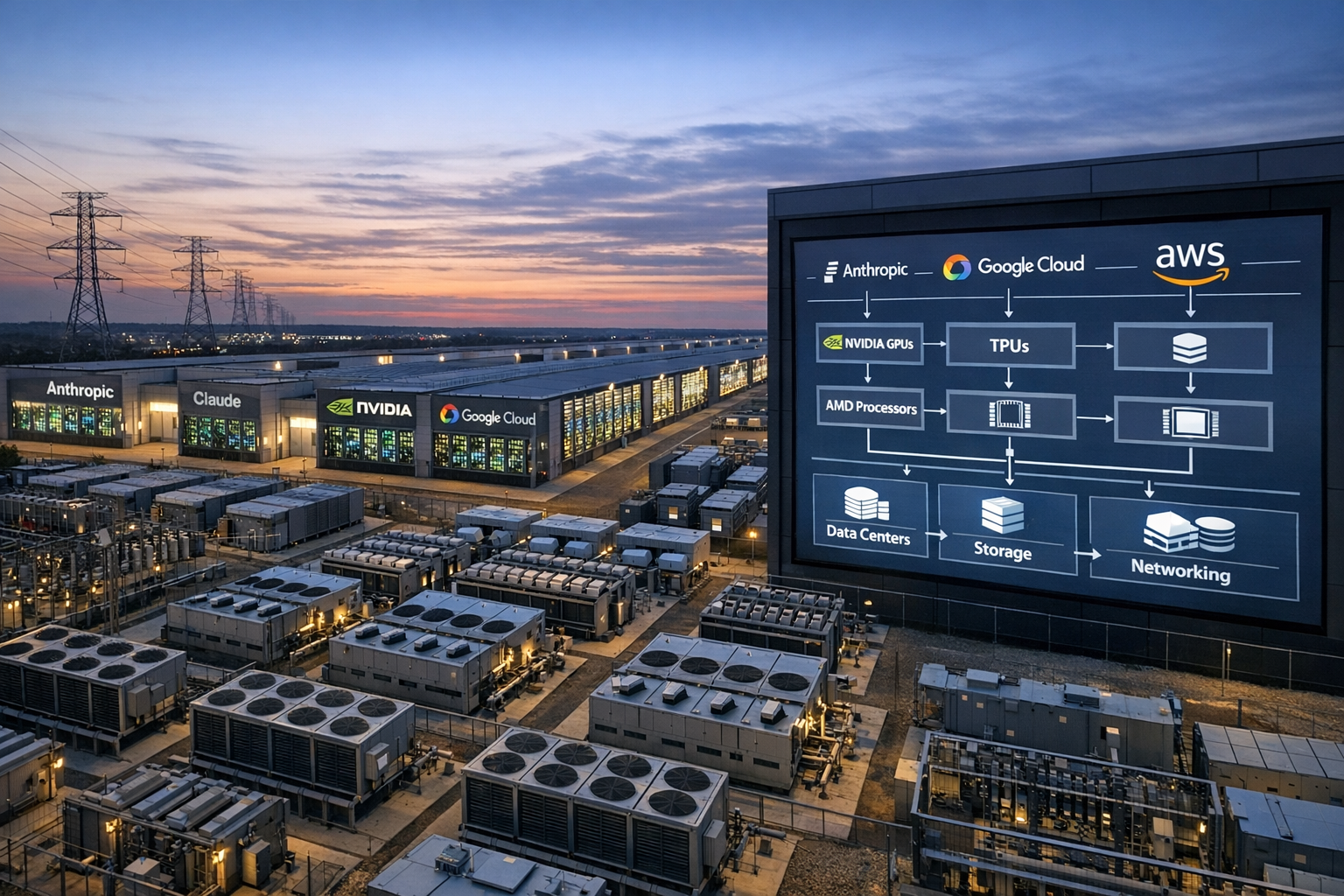
Anthropic, one of the leading makers of generative artificial intelligence systems, is moving aggressively to secure the raw ingredient that increasingly determines who can compete in the industry: access to vast amounts of computing power.
In a striking new arrangement announced this week, Anthropic said it would use the full computing capacity of Colossus 1, a Memphis data center operated through SpaceXAI, giving the company access to more than 220,000 Nvidia graphics processors and more than 300 megawatts of new capacity expected to come online within a month. Anthropic said the expansion would immediately support higher availability for Claude, its flagship AI assistant, including looser usage caps for Claude Code and higher API limits for its Opus models.
The agreement is unusual not only because of its scale, but because it pairs Anthropic with Elon Musk’s orbit of companies at a moment when the AI industry’s rivalries have grown increasingly sharp. Yet the deal also reflects a new reality in artificial intelligence: when advanced chips, electricity and data-center space are scarce, practical access to infrastructure can matter more than corporate alignments.
At nearly the same time, reports emerged that Anthropic had also made an enormous longer-term commitment to Google Cloud. Reuters, citing The Information, reported that Anthropic had agreed to spend about $200 billion over five years on Google Cloud services and chips. Anthropic declined to comment on that figure, leaving the precise size of the commitment unconfirmed. But if the number is accurate, it would rank among the most consequential cloud purchasing agreements in the history of the industry.
Taken together, the two developments suggest that Anthropic is no longer merely expanding its computing footprint. It is trying to lock down a multi-year, multi-supplier infrastructure base on a scale once associated more with utilities and telecom networks than with software companies.
The New AI Bottleneck
For much of the past few years, the AI race was defined publicly by model releases, benchmark scores and consumer-facing chatbots. Behind the scenes, however, the contest has increasingly become one over power procurement, chip allocation and the speed at which companies can bring new data centers online.
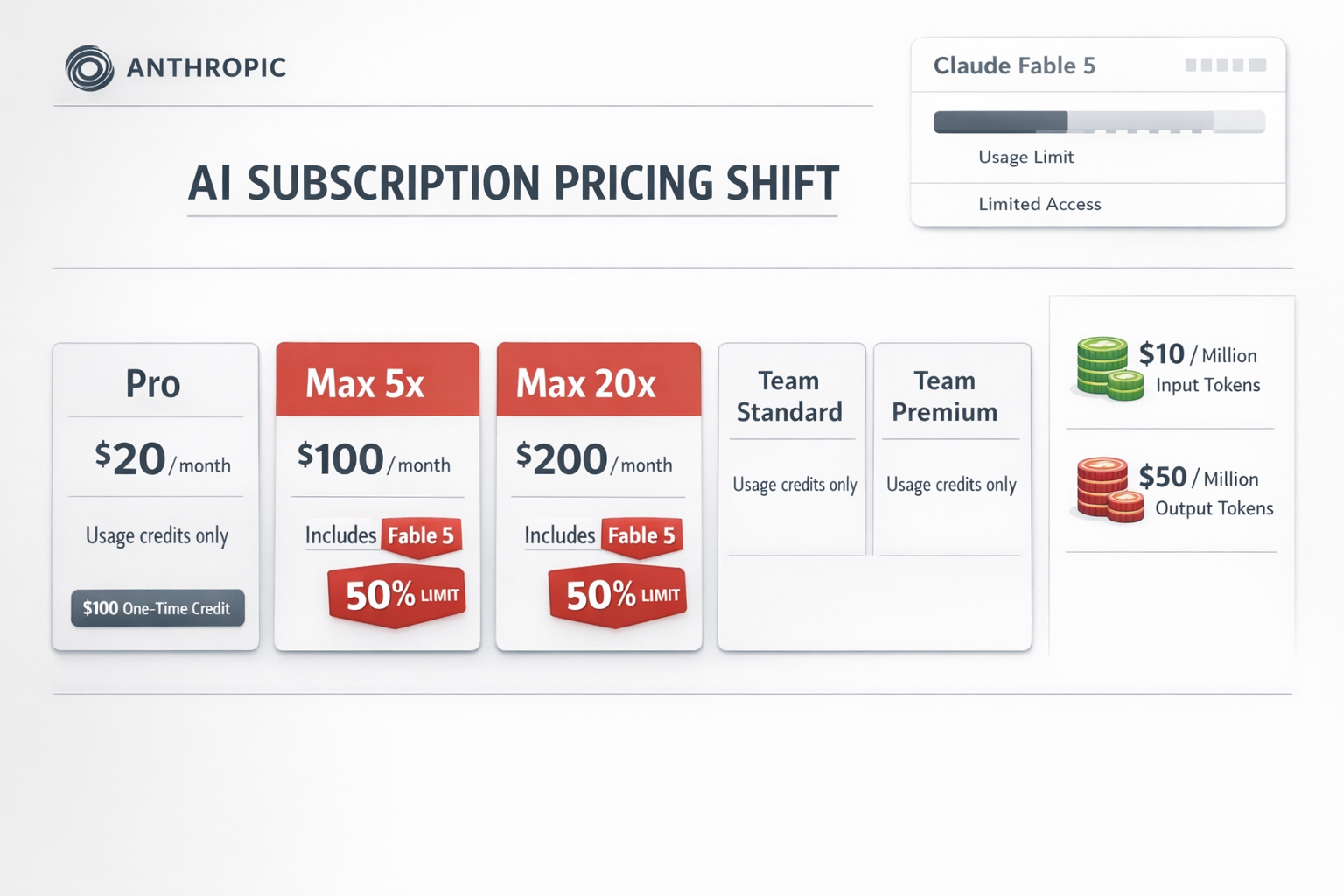
That shift helps explain why Anthropic tied the Colossus 1 deal directly to customer experience. Rather than framing the arrangement solely as a research expansion, the company said the added capacity would allow it to lift or relax usage restrictions that had become familiar to heavy Claude users. Anthropic doubled certain five-hour rate limits for Claude Code for paying users, removed peak-hour reductions for some plans and raised API limits for Opus, moves meant to reassure developers and enterprise customers that the service can handle rising demand.
The changes amount to a public acknowledgment of what many AI companies have faced privately: even popular products can be constrained by compute shortages. In that sense, more chips do not simply promise future breakthroughs; they can also mean fewer bottlenecks for customers using today’s systems.
A Multi-Cloud, Multi-Chip Strategy
The SpaceXAI agreement fits into a broader pattern. Anthropic has spent the past year assembling a diversified supply chain across the largest cloud and hardware ecosystems, a strategy that appears intended to reduce dependence on any single provider while ensuring access to multiple kinds of AI accelerators.
In April, Anthropic announced a compute expansion with Google and Broadcom that it said would deliver multiple gigawatts of TPU capacity beginning in 2027. That followed an earlier Google Cloud expansion announced in October 2025, described at the time as worth tens of billions of dollars and expected to bring well over one gigawatt online in 2026.
The company has also deepened its relationship with Amazon. In April, Anthropic said Amazon Web Services would provide up to five gigawatts of capacity over time, with nearly one gigawatt expected online by the end of 2026. Amazon has been a major Anthropic investor, and the two companies have worked closely on custom AI infrastructure, including AWS’s Trainium chips.
The result is an increasingly unusual compute portfolio: Nvidia GPUs through the new Colossus arrangement, Google TPUs through Google, and Trainium through Amazon. For Anthropic, the mix offers more than redundancy. It provides bargaining leverage, technical flexibility and a hedge against shortages in any one supply chain.
Why the SpaceXAI Deal Stands Out
What drew the most attention this week was not just the size of the Colossus 1 deployment, but the pairing itself.
The AI industry has become accustomed to unusual partnerships, but the involvement of Musk-linked infrastructure still came as a surprise to many observers, given prior tensions and public criticism surrounding rival AI companies. In ordinary times, such frictions might have made a deal less likely. In the current market, they may matter less than whether a partner can deliver chips, power and speed.
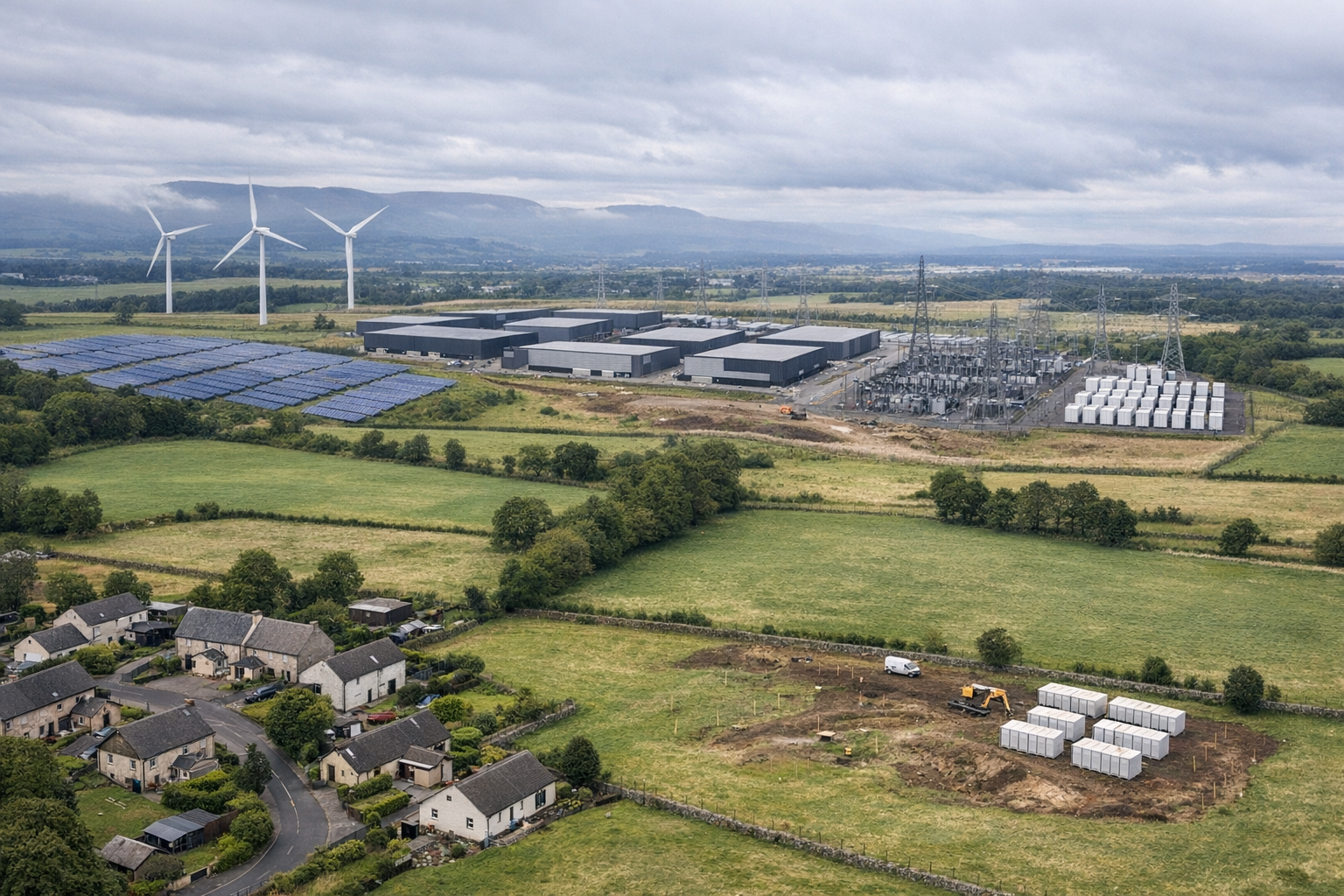
That is especially true because Colossus 1 appears to offer something the market values above all else: near-term availability at enormous scale. Anthropic said more than 300 megawatts of capacity would come online for it within a month, an unusually compressed timetable for such a large deployment. In a sector where construction delays, grid constraints and equipment lead times can stretch for months or years, speed is itself a competitive advantage.
The partnership may also signal a growing second business for infrastructure-heavy AI players: selling access to excess or rapidly built compute capacity to rivals. If so, the line between competitor and supplier may continue to blur.
The Financial Question
If the reported Google Cloud commitment is even roughly correct, it raises a larger question hanging over the entire AI boom: can the leading labs generate enough revenue to justify the infrastructure obligations they are taking on?
Anthropic and its peers have argued that demand from businesses and developers is growing rapidly and that more capable AI systems will support much larger markets over time. Investors have largely embraced that thesis, funneling enormous sums into model makers and the clouds that support them.
But these commitments are increasingly so large that they begin to resemble industrial bets on future economic transformation. Reuters noted that cloud backlogs are becoming concentrated among a small number of AI companies, underscoring how much the industry’s capital spending now depends on a handful of labs continuing to grow at extraordinary rates.
For Anthropic, the calculation is straightforward in principle, if daunting in practice: secure enough capacity now to avoid being boxed out later. If Claude continues to gain traction in coding, enterprise workflows and API usage, abundant infrastructure could become a decisive advantage. If growth falls short, the company could find itself carrying obligations that are breathtaking even by big-tech standards.
Why It Matters Now
The immediate significance of this week’s announcements is practical. More compute should mean fewer service limits and more room for Anthropic to train and run larger models. For developers and corporate customers, that can translate into a more reliable Claude platform at a moment when AI tools are being woven into daily software and business operations.
But the broader significance is structural. The frontier of AI is increasingly being shaped not just by breakthroughs in algorithms, but by who can secure electricity, land, chips, networking equipment and construction capacity first. The contest is starting to look less like a conventional software race and more like an infrastructure arms race.
Anthropic’s latest moves suggest the company understands that shift clearly. By tying itself to Google, Amazon and now SpaceXAI, it is building not just a model business, but a supply network meant to sustain one. In the next phase of artificial intelligence, that may prove just as important as the models themselves.
Sources
Further reading and reporting used to add context:
- https://www.axios.com/2026/05/06/anthropic-spacex-elon-musk-compute
- https://www.tomshardware.com/tech-industry/artificial-intelligence/google-microsoft-and-xai-agree-to-let-us-govenment-test-ai-models-before-public-release
- https://www.tomshardware.com/tech-industry/big-tech/big-techs-ai-spending-plans-reach-725-billion
- Anthropic commits to spending $200 billion on Google’s cloud and chips, the Information reports By Reuters
- https://www.sitepoint.com/claude-code-rate-limits-explained/
- https://www.investing.com/news/stock-market-news/anthropic-unveils-dreaming-feature-to-help-its-ai-agents-selfimprove-4664442
- https://docs.anthropic.com/en/api/rate-limits
- https://www.streetinsider.com/Reuters/Anthropic%2Bstrikes%2BSpaceX%2Bdata%2Bcenter%2Bdeal%2Bas%2Bit%2Bplows%2Bahead%2Bon%2BAI%2Bcoding/26442032.html
- https://cincodias.elpais.com/companias/2026-05-06/spacex-el-grupo-de-elon-musk-cierra-una-alianza-con-anthropic-para-entrenar-la-ia.html/
- https://support.anthropic.com/en/articles/11647753-understanding-usage-and-length-limits
- https://cincodias.elpais.com/companias/2026-05-06/spacex-el-grupo-de-elon-musk-cierra-una-alianza-con-anthropic-para-entrenar-la-ia.html
- https://docs.claude.com/en/api/rate-limits
- https://siliconangle.com/2026/05/06/anthropic-use-spacexs-colossus-1-supercomputer-inference/
- https://www.malaymail.com/amp/news/money/2026/05/07/spacex-lands-major-ai-data-centre-deal-with-anthropic-in-high-stakes-computing-push/219031
- https://www.tomshardware.com/tech-industry/artificial-intelligence/anthropic-signs-deal-with-google-cloud-to-expand-tpu-chip-capacity-ai-company-expects-to-have-over-1gw-of-processing-power-in-2026
- https://www.techtimes.com/articles/316390/20260506/claude-code-doubles-rate-limits-following-anthropics-massive-deal-spacex.htm
- Anthropic expands partnership with Google and Broadcom for multiple gigawatts of next-generation compute \ Anthropic
- https://www.reddit.com/r/InterstellarKinetics/comments/1t5iqoh/breaking_anthropic_just_secured_220000_nvidia/
- https://en.wikipedia.org/wiki/Colossus_%28supercomputer%29
- https://www.reddit.com/r/SpaceXNews/comments/1t5x6my/spacexxai_has_just_announced_that_it_has_signed/
- https://en.wikipedia.org/wiki/XAI_%28company%29
- https://en.wikipedia.org/wiki/Anthropic
- https://www.reddit.com/r/ClaudeCode/comments/1t5l7io/anthropic_just_partnered_with_spacex_and_doubled/
- https://www.anthropic.com/events/anthropic-at-google-cloud-next-2026
- https://www.anthropic.com/news?prog_id=13
- https://www.anthropic.com/news/expanding-our-use-of-google-cloud-tpus-and-services
- https://www.anthropic.com/events/anthropic-partner-kickoff-2026
- https://www.anthropic.com/news/anthropic-infosys
- https://www.anthropic.com/news/microsoft-nvidia-anthropic-announce-strategic-partnerships?_bhlid=c9644e886e4d77ab0f0f1d24c1bd8886def0b6db
- https://blog.google/intl/zh-tw/products/cloud/ironwood-tpus-and-new-axion-based-vms-for-your-ai-workloads/
- https://www.anthropic.com/news/acquires-vercept?ftag=MSF0951a18
- https://www.anthropic.com/news/anthropic-nec?lang=ko
- https://blog.google/innovation-and-ai/products/google-ai-updates-october-2025/
- https://www-cdn.anthropic.com/files/4zrzovbb/website/bf04581e4f329735fd90634f6a1962c13c0bd351.pdf
- https://www-cdn.anthropic.com/38a1fb9db81446402a70bc45d104327aab12f3fe.pdf
- https://www-cdn.anthropic.com/08eca2757081e850ed2ad490e5253e940240ca4f.pdf
- https://resources.anthropic.com/hubfs/The%202026%20State%20of%20AI%20Agents%20Report.pdf
- https://www-cdn.anthropic.com/7449887b6715e3a35f362b1301e5b5d8a6b116e5.pdf
- https://assets.anthropic.com/m/4e20a4ab6512e217/original/anthropic-response-to-ostp-rfi-march-2025-final-final-sunmision-v3.pdf
- New Compute Partnership with Anthropic | xAI
- https://technews.tw/2026/05/07/colossus-1/
- https://www.semafor.com/article/05/06/2026/anthropics-tie-up-with-elon-musk-paves-way-for-space-data-centers
- https://www.kucoin.com/news/flash/xai-leases-core-training-cluster-to-anthropic-sparking-industry-speculation
- https://br.investing.com/news/technology-news/spacex-dara-a-anthropic-acesso-a-supercomputador-colossus-1926083
- https://thenextweb.com/news/anthropic-claude-code-rate-limits-spacex-colossus-1
- https://www.shacknews.com/article/149030/anthropic-spacex-compute-deal?amphtml=1
- https://wsau.com/2026/05/06/spacex-to-give-anthropic-access-to-its-massive-ai-supercomputer/
- https://www.moneydj.com/kmdj/news/newsviewer.aspx?a=81dde947-59dd-4520-a737-6fd530ec7678
- https://www.swissinfo.ch/spa/anthropic-anuncia-un-acuerdo-con-spacex-de-musk-para-acceder-a-su-supercomputadora-de-ia/91376301
- https://magicshot.ai/news/anthropic-spacex-colossus-compute-deal/
- https://gbm.com/media/noticia/spacex-concedera-a-anthropic-acceso-a-su-gigantesco-supercomputador-de-ia/
- https://www.reddit.com/r/grAIve/comments/1t5o2jf/anthropic_leases_spacex_colossus1_for_220k_gpus/
- https://www.reddit.com/r/artificial/comments/1t5l92i/anthropic_just_partnered_with_spacex_and_doubled/
- https://www.reddit.com/r/space/comments/1t5joco/anthropic_spacex_announce_compute_deal_that/
- https://www.reddit.com/r/AI_Agents/comments/1t5lbxv/if_rate_limits_were_killing_your_agent_loops/
- https://www.reddit.com/r/TradeVerseNetwork/comments/1t5smac/gemini_trading_ai_bombshell_xai_anthropic_just/
- https://support.anthropic.com/en/articles/8241175-how-do-i-increase-my-usage-limits
- https://support.anthropic.com/en/articles/11014257-about-claude-s-max-plan-usage/
- https://www.anthropic.com/news/anthropic-amazon-compute
- https://support.anthropic.com/en/articles/8241175-how-do-i-increase-my-message-limit
- https://support.anthropic.com/en/articles/12005970-extra-usage-for-claude-for-work-team-and-enterprise-plans
- https://support.anthropic.com/en/articles/8324991-about-claude-s-pro-plan-usage/
- https://www.anthropic.com/news/max-plan?subjects=announcements
- https://www.anthropic.com/news/expanding-our-use-of-google-cloud-tpus-and-services?darkschemeovr=1
- https://www.anthropic.com/news
- https://www-cdn.anthropic.com/096d94c1a91c6480806d8f24b2344c7e2a4bc666.pdf?_bhlid=b359045e58dccad88336496acf75db9a45428907
- https://www-cdn.anthropic.com/096d94c1a91c6480806d8f24b2344c7e2a4bc666.pdf
- Anthropic and Amazon expand collaboration for up to 5 gigawatts of new compute




Leave a Reply