
The AI Boom’s New Darlings Are the Companies Making the Machines
The stock market’s enthusiasm for artificial intelligence is taking on a sharper, more industrial edge.
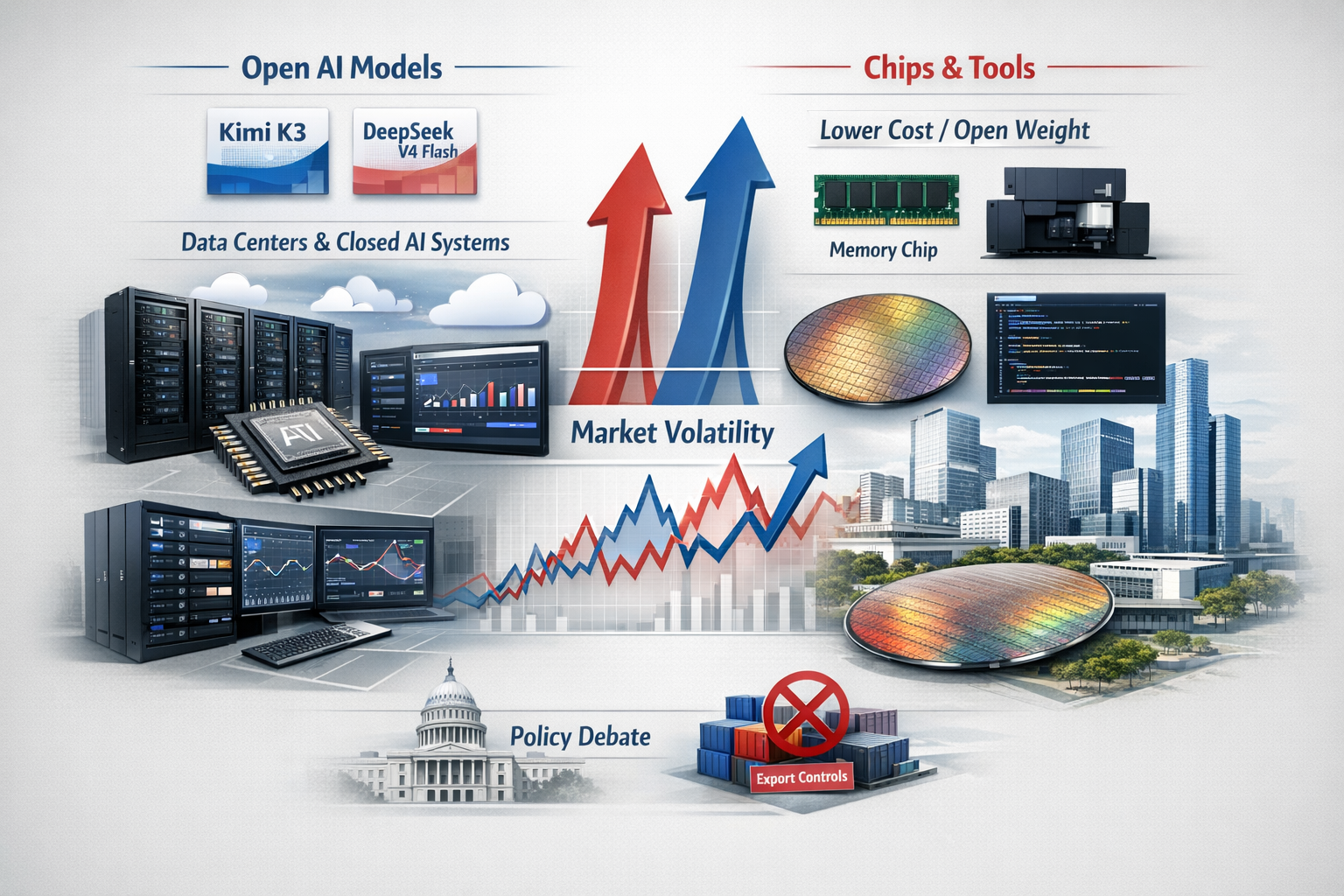
After more than a year in which software developers and platform companies dominated the AI narrative, investors are increasingly piling into the semiconductor and memory-chip makers that supply the physical infrastructure behind the boom. In the first half of 2026, shares of several chipmakers — particularly in Asia — surged far faster than many large software stocks, reflecting a growing conviction on Wall Street and in global markets that the clearest near-term winners in AI may be the companies selling scarce computing power, not just the ones promising transformative applications.
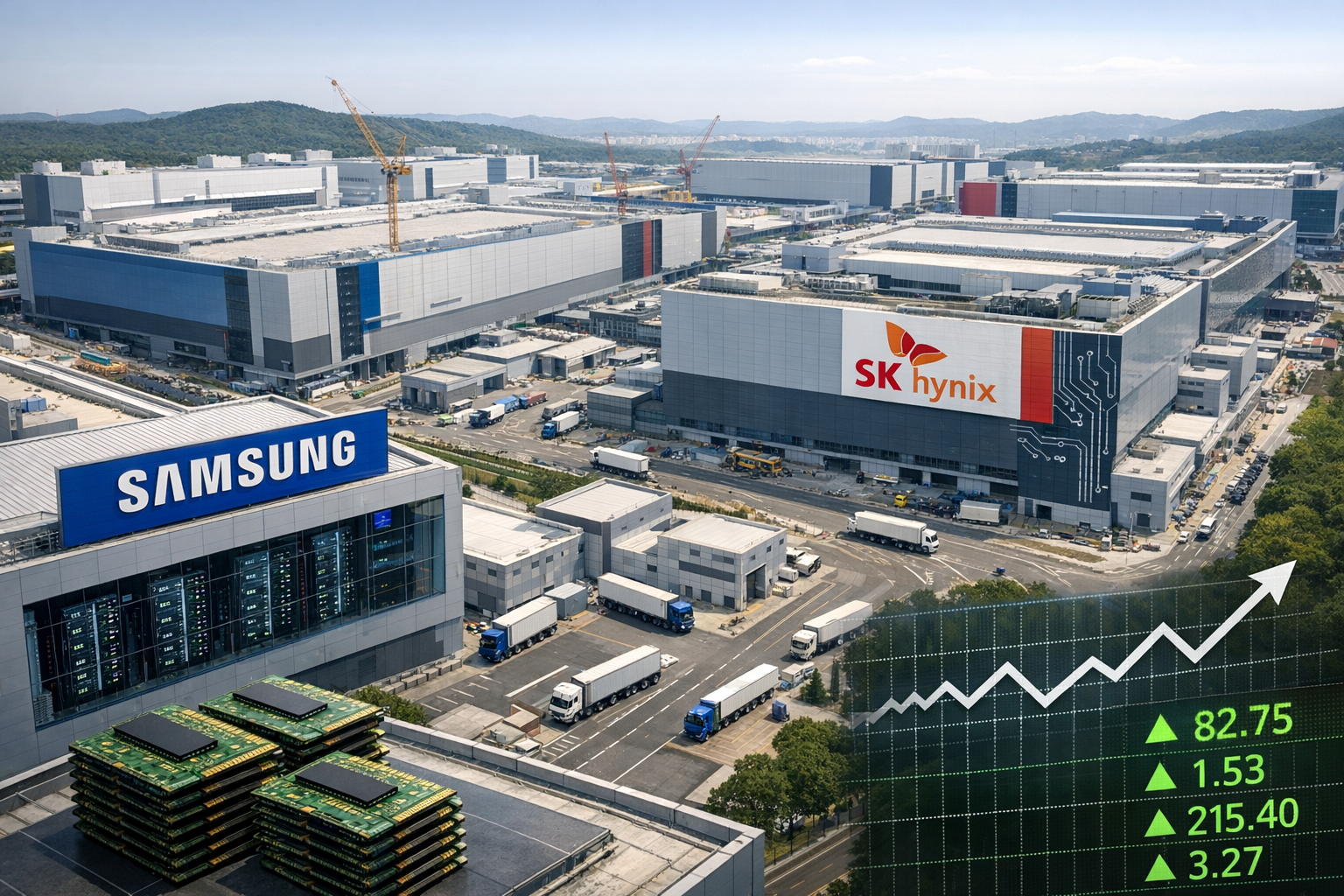
That shift came into especially clear view this week, when Samsung Electronics and SK hynix said they would invest a combined 800 trillion won, or roughly $518 billion, in a vast new South Korean chipmaking hub. The scale of the commitment underscored both the intensity of demand and the degree to which memory and advanced packaging have become central battlegrounds in the AI economy.
The move also highlights a basic reality of the current AI frenzy: the bottleneck is no longer merely software talent or product imagination. It is hardware.
A Market Chasing Scarcity
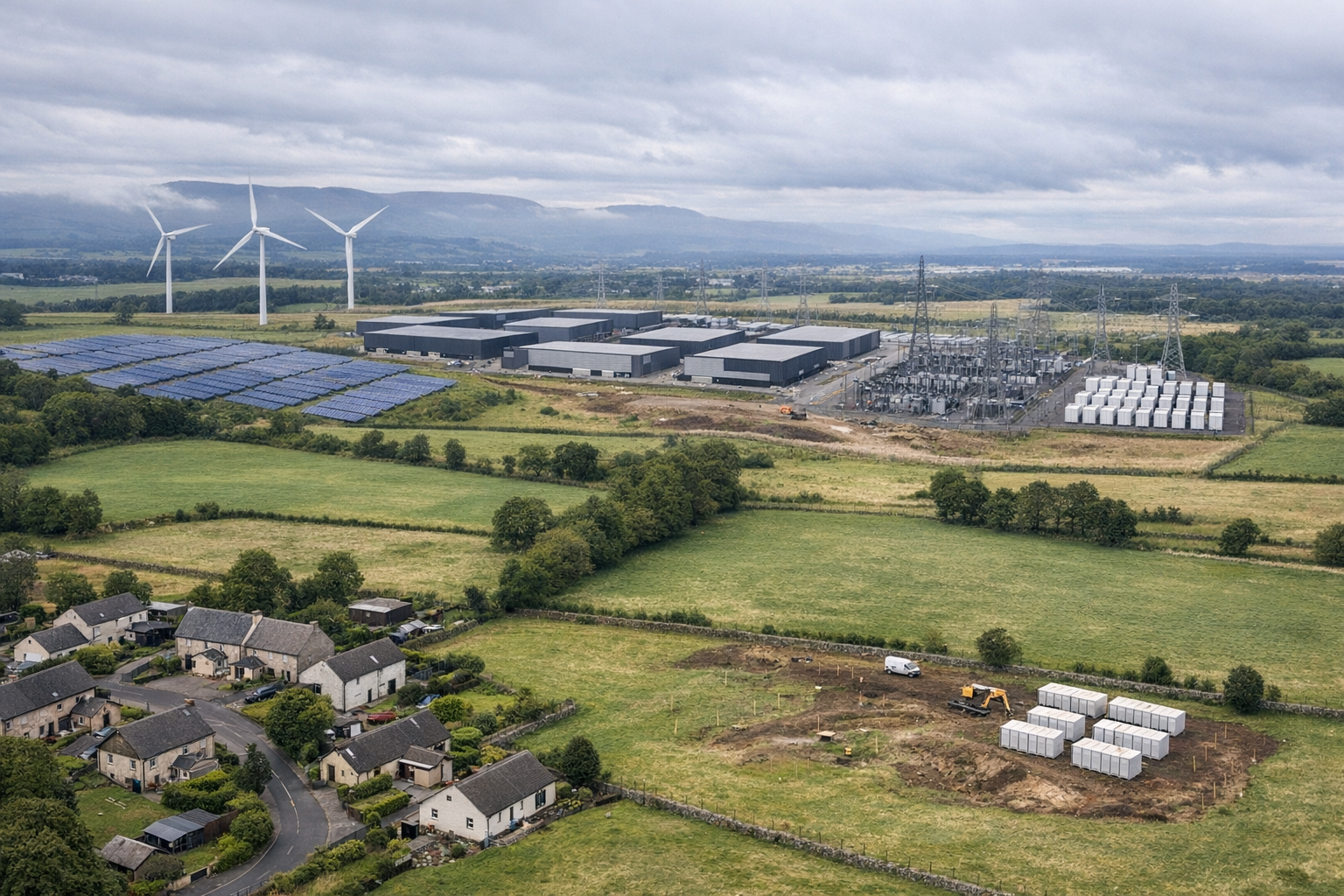
As large cloud providers race to build out data centers for generative AI and large language models, demand has cascaded through the semiconductor supply chain. Companies producing high-bandwidth memory, advanced logic chips and the packaging needed to connect them have become some of the most sought-after names in equity markets.
That is particularly true in memory, where high-bandwidth memory, or HBM, has become indispensable for training and running the most advanced AI models. Analysts have described HBM as one of the industry’s tightest choke points, with supply for 2026 effectively spoken for. Samsung has said demand for server memory is expected to remain strong through the second half of the year as hyperscalers expand AI services, helping explain why investors have rewarded companies with exposure to that market.
Samsung and SK hynix together already dominate the global HBM business, controlling the vast majority of supply. Their decision to pour hundreds of billions of dollars into new fabrication and packaging capacity is a wager that the AI build-out will remain intense enough to justify one of the most ambitious industrial expansions in years.
It is not just company executives making that bet. Investors are, too.
Across markets, chip stocks have become a principal engine of index gains. In parts of Asia-Pacific, semiconductor names have helped lift broader benchmarks, even as enthusiasm for some software companies has cooled. The market’s center of gravity has been moving away from the broad promise of AI and toward the narrower question of who controls the scarce inputs required to make it work.
Bubble Warnings Grow Louder
But as money floods into the trade, warnings about excess are becoming harder to ignore.
Analysts at J.P. Morgan have said AI momentum is still grounded in real earnings growth and heavy spending on computing infrastructure. Yet the bank has also warned that the market is showing signs of investor exuberance, with gains becoming concentrated in a relatively small number of companies and products.
That concentration is visible at several levels. A small group of AI-linked companies now accounts for an outsize share of profits in the S&P 500. Semiconductor stocks have become increasingly dominant in benchmark performance. And leveraged exchange-traded funds tied to chip shares have amplified the market’s sensitivity to moves in a handful of names.
Those dynamics have prompted comparisons, however uneasy, to earlier speculative episodes in technology markets. Some market watchers see technical patterns in the semiconductor rally that recall the late stages of the dot-com era: soaring valuations, fear of missing out and a belief that, even if the story is overextended, it may still have further to run.
That tension now defines the AI trade. Bulls argue that unlike many past bubbles, today’s spending boom is backed by visible revenue, long corporate order books and relentless capital expenditures by the world’s largest technology companies. Skeptics counter that those same conditions can produce overbuilding, overownership and abrupt reversals once supply catches up or demand disappoints.
Why South Korea Matters
Few places capture that tension better than South Korea.
The country sits at the center of the global memory-chip business, and its national champions are now among the clearest beneficiaries of AI’s infrastructure build-out. Their latest investment plans, supported by the South Korean government, are not simply corporate announcements; they are strategic signals about where the next phase of AI competition is likely to be fought.
Making advanced AI hardware is neither quick nor cheap. The newest chipmaking tools can cost hundreds of millions of dollars apiece, and the manufacturing systems required to produce cutting-edge semiconductors are staggeringly complex. Building capacity for memory, fabrication and advanced packaging can take years, which means today’s investment decisions are based on forecasts about demand deep into the future.
That helps explain why the market has become so fixated on chipmakers. If AI demand remains robust, suppliers with scarce capacity could enjoy unusually strong pricing power and profits for longer than investors once expected. Some analysts have projected steep continued increases in memory prices through 2027, reinforcing the sense that this segment of the industry remains undersupplied.
Yet that same lag also makes the sector vulnerable. If dozens of companies and governments simultaneously expand production on the assumption that AI demand will keep accelerating, the industry could eventually run into the same problem that has plagued semiconductors before: overcapacity arriving just as the cycle turns.
The Risk Is No Longer Confined to Tech Specialists
What makes this moment more consequential is that the AI-chip rally is no longer just a niche bet for hedge funds and sector specialists.
The same handful of AI and semiconductor stocks increasingly anchor retirement portfolios, index funds and exchange-traded funds around the world. Ordinary savers may not realize how much exposure they have to the trade, but in many markets their pension and superannuation holdings are now deeply tied to the fortunes of the largest technology and chip companies.
That broad ownership has two effects. It helps sustain the rally, because passive investment flows continue to reward the biggest winners. But it also raises the stakes of any sharp reversal, since a downturn would not be confined to speculative corners of the market.
For now, investors appear willing to keep leaning in. The earnings are real, the demand is tangible and the hardware shortage is not imagined. But the deeper the market’s faith becomes in a narrow set of companies supplying the AI revolution, the more difficult it becomes to disentangle durable industrial change from classic speculative behavior.
The result is a market increasingly defined by a paradox: the infrastructure underpinning artificial intelligence may be indispensable, and still be priced for perfection.
Sources
Further reading and reporting used to add context:
- https://apnews.com/article/22352d95c7a821c5f4548b2d1a4ebde8
- https://www.tomshardware.com/tech-industry/sk-hynix-passes-samsung-as-south-koreas-most-valuable-company-on-hbm-demand
- https://www.tomshardware.com/tech-industry/sk-hynix-files-to-raise-up-to-29-billion-in-nasdaq-listing
- https://www.theguardian.com/business/2026/jun/29/shares-in-chipmakers-underpinning-ai-boom-surge-in-first-half-of-2026
- https://www.techtimes.com/articles/318252/20260611/even-tsmc-says-asmls-newest-machine-too-expensive-400-million-chip-bottleneck.htm
- https://www.emergingtechnation.com/blog/asml-high-na-euv-mass-production-ai-chips
- https://www.tomshardware.com/tech-industry/semiconductors/asml-lithograpy-roadmap-examined-from-duv-to-hyper-na
- https://www.traeai.com/articles/de1c28fa-1ed6-4e2d-b673-3cf36bfadcc5
- https://rin.pw/the-400-million-machine-powering-the-future-of-chipmaking/
- https://biz.chosun.com/en/en-finance/2026/06/08/OBSNBDQI5VGUBI6IEN3NESDDWE/?outputType=amp
- https://www.theguardian.com/world/2026/jun/03/south-korea-ai-boom-tech-companies-trillion-dollar-club-kospi-
- https://am.jpmorgan.com/wr/en/asset-management/liq/insights/market-insights/market-updates/on-the-minds-of-investors/ai-investing-broadening-opportunity-and-the-monetization-test/
- https://www.coindesk.com/markets/2026/06/29/south-korea-s-usd518-billion-ai-chip-push-shows-crypto-is-still-losing-the-capital-race
- https://www.jefferies.com/insights/the-big-picture/is-the-ai-investment-cycle-shifting-toward-memory-suppliers/
- https://www.theguardian.com/business/2026/jun/27/ai-bubble-crash-tech-firms-stock-markets
- https://www.tomshardware.com/tech-industry/artificial-intelligence/samsung-and-sk-hynix-warn-ai-driven-memory-shortages-could-last-until-2027-and-beyond-as-hbm-demand-explodes-customers-already-reserving-supply-years-ahead-while-the-wider-dram-market-begins-to-tighten
- https://arxiv.org/abs/2604.12062
- https://news.samsung.com/global/samsung-unveils-hbm4e-showcasing-comprehensive-ai-solutions-nvidia-partnership-and-vision-at-nvidia-gtc-2026
- https://news.samsung.com/global/samsung-achieves-another-industry-first-virtualized-ran-milestone-accelerating-ai-native-6g-ready-networks
- https://semiconductor.samsung.com/news-events/tech-blog/the-nexus-for-silicon-intelligence-connecting-semiconductor-innovation-in-the-ai-era/
- https://am.jpmorgan.com/us/en/asset-management/institutional/insights/market-insights/market-updates/on-the-minds-of-investors/is-ai-running-out-of-compute/
- https://am.jpmorgan.com/sg/en/asset-management/adv/insights/market-insights/mid-year-outlook-2026/global-ai-investment-opportunities-and-risk-concerns-about-concentration-again/
- https://semiconductor.samsung.com/news-events/tech-blog/architecting-the-ai-era-samsung-electronics-and-nvidia-define-the-future-at-gtc-2026/
- https://semiconductor.samsung.com/news-events/tech-blog/samsung-showcases-agentic-ai-driven-semiconductor-engineering-innovation-at-nvidia-gtc-2026/
- https://news.samsung.com/global/samsung-and-amd-expand-strategic-collaboration-on-next-generation-ai-memory-solutions
- https://news.samsung.com/kr/%EC%82%BC%EC%84%B1%EC%A0%84%EC%9E%90-2026%EB%85%84-1%EB%B6%84%EA%B8%B0-%EC%8B%A4%EC%A0%81-%EB%B0%9C%ED%91%9C
- https://news.samsung.com/be/samsung-electronics-announces-first-quarter-2026-results
- https://news.skhynix.com/press-center/press-release/
- https://www.samsung.com/global/sustainability/media/pdf/Samsung_Electronics_Sustainability_Report_2026_ENG.pdf
- https://images.samsung.com/is/content/samsung/assets/global/ir/docs/2026_1Q_conference_eng.pdf
- https://privatebank.jpmorgan.com/content/dam/jpm-pb-aem/global/en/documents/outlook2026/JPMorganOutlook2026PromiseandPressure.pdf?page=45
- https://images.samsung.com/is/content/samsung/assets/global/ir/docs/2025_4Q_Interim_Report.pdf
- Shares in chipmakers underpinning AI boom rocket in first half of 2026 | Technology sector | The Guardian
- AI Investing: Broadening Opportunity and the Monetization Test | J.P. Morgan Asset Management
- Samsung Electronics Announces First Quarter 2026 Results – Samsung Newsroom België
- The AI bubble has further to run despite the looming crash | Phillip Inman | The Guardian





Leave a Reply