
A New Front in the Culture Wars of Entertainment
The entertainment industry’s battle over artificial intelligence is no longer confined to lab demos and speculative panel discussions. In the past week, some of the world’s biggest music and media companies have moved to embed generative tools directly into the products audiences use and the pipelines that studios rely on, accelerating a shift that many artists fear could reorder the economics — and the meaning — of creative work.
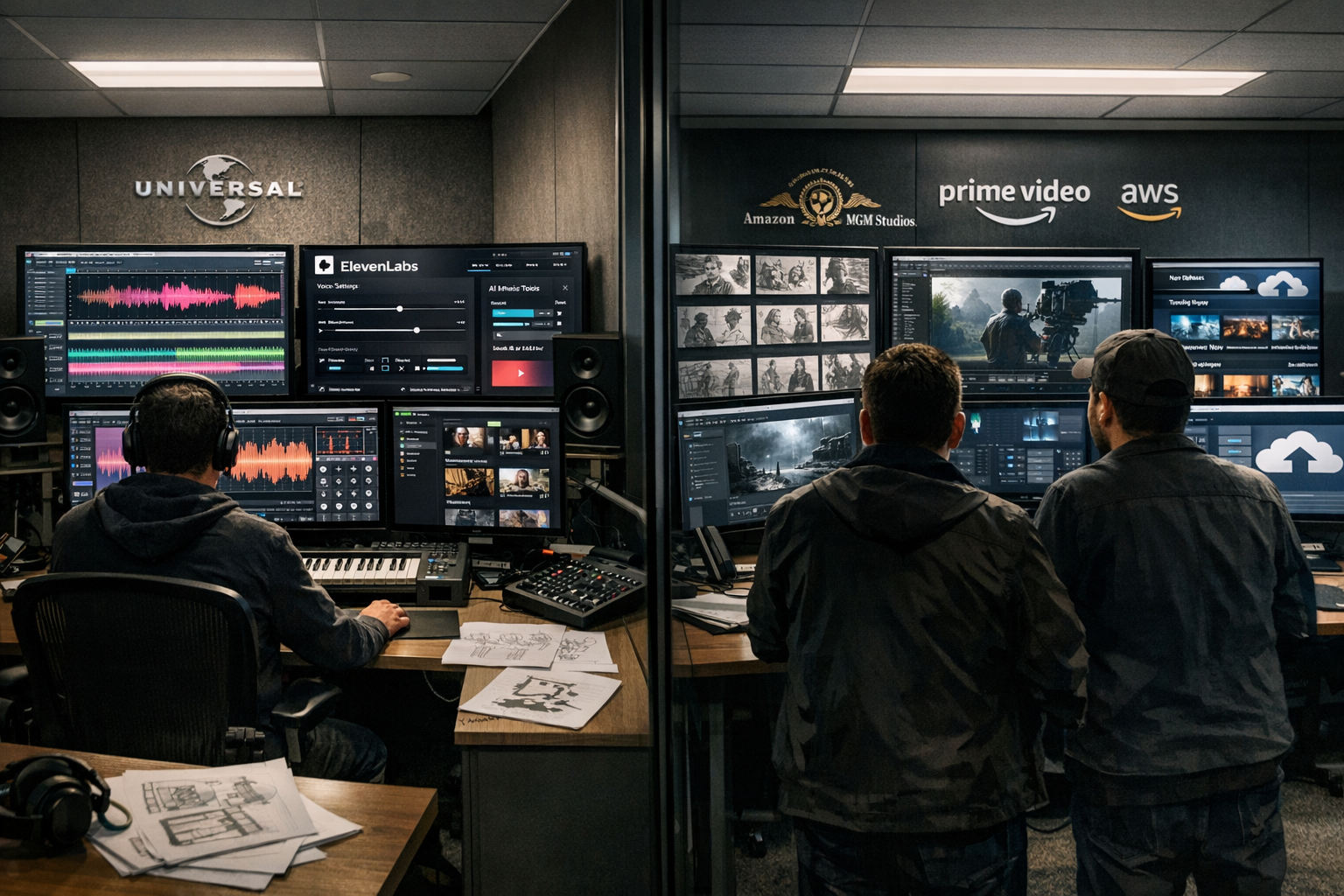
Spotify, working with Universal Music Group, has announced a licensed A.I. feature that will allow premium subscribers to create song covers and remixes using music from participating artists. ElevenLabs, the voice-synthesis company that has rapidly expanded into audio creation, introduced a new music model promising more precise song construction and smoother jumps across genres. And Amazon MGM Studios, together with Amazon Web Services, said it had built an in-house A.I. production system and had already greenlit three animated series for Prime Video made through that process.
Taken together, the announcements mark a decisive turn: A.I. is moving from side experiment to mainstream entertainment infrastructure.
That, in turn, is intensifying a fight over legitimacy. Companies are presenting these systems as controlled, licensed and artist-friendly. Many musicians, filmmakers and visual artists see something else: a technology poised to cheapen labor, blur authorship and flood culture with work that may be legal but still feels hollow.
From Streaming Tool to Studio Pipeline
Spotify’s defense of its new remix feature has been telling. The company’s chief executive has argued that licensed generative music offers a safer alternative to piracy and to the unregulated flood of imitation tracks often dismissed as A.I. “slop.” By striking the deal with Universal, Spotify and the label are trying to frame A.I. creation not as theft but as participation — a way for fans to play with songs inside a paid, authorized system governed by consent, credit and compensation.
The move reflects a broader industry instinct: if generative music is coming, major rights holders would rather build the tollbooth than watch the traffic pass them by.
But important questions remain unanswered. Spotify has yet to fully explain how those remixes and covers will be labeled, how prominently they will be surfaced, whether they will compete with official releases for listeners’ attention, and exactly how money will be divided when a fan-made A.I. track becomes popular. Those details matter because they will help determine whether the tool functions as a novelty, a marketing device or a new layer of competition in an already unforgiving streaming economy.
ElevenLabs’ latest release points in a similar direction, though from the technology side rather than the distribution side. Its Music v2 model is pitched as more musically coherent and more controllable, allowing users to rebuild only portions of a track, shift styles mid-song and assemble compositions section by section. The company has emphasized licensed data and commercial usability, part of a wider effort by A.I. firms to reassure customers and investors that their outputs are not just impressive but usable in business.
For music companies, that promise is seductive. A tool that can generate polished, editable tracks across genres could lower costs for advertising, gaming, social media and background scoring. For artists, it also raises the prospect of a market increasingly filled with inexpensive machine-made substitutes.
Hollywood Tests the Assembly Line
In film and television, Amazon’s announcement may be the clearest sign yet that the major studios are beginning to operationalize A.I., not simply experiment with it. The company said Amazon MGM Studios and AWS had created “Project Nara,” an internal production platform, and paired it with a creators’ fund that offers filmmakers financing and access to the company’s tools. Three A.I.-assisted animated series are already in production for Prime Video, with teams given five weeks to produce pilots.
That is a remarkable compression of the traditional development cycle, and one that is likely to alarm writers, storyboard artists, animators and production crews who have already spent years watching studios search for ways to make more content faster and more cheaply.
Amazon has not disclosed key details, including the scale of the funding, the economics of the productions or how much human labor is still involved at each step. But the broader signal is unmistakable. A studio is no longer merely licensing outside software or dabbling in effects. It is building an in-house system tied directly to commissioning and distribution.
If Spotify’s move suggests a future in which streaming services host authorized A.I. music creation, Amazon’s suggests a future in which media conglomerates own the stack from model to screen.
Cannes and the Fault Line Running Through Film
The industry’s divisions were on open display this month at Cannes, where artificial intelligence emerged as one of the festival’s sharpest fault lines. Some filmmakers described it as another tool in cinema’s long technological history, a new instrument to expand what directors and editors can do. Darren Aronofsky, who has embraced generative-A.I. projects through his studio venture, cast the technology in those terms: as an expansion of the cinematic toolbox.
Others recoiled. Guillermo del Toro, among the most prominent skeptics, has spoken in starkly moral and artistic terms about the technology, giving voice to a fear shared by many filmmakers that A.I. does not merely assist expression but dilutes the very human struggle from which art emerges.
That disagreement is no longer abstract. It now intersects with budgets, staffing, rights negotiations and release strategies. The same technology that one director sees as liberating another sees as corrosive. And as the tools improve, the argument is becoming less about whether they can make convincing work and more about whether the industry should want them to.
The Artists’ Complaint: Not Just About Quality
The backlash is often caricatured by executives as resistance to innovation, but artists’ objections run deeper than aesthetic distaste. Critics argue that generative systems are built on contested foundations: training data gathered without meaningful permission, styles reproduced without attribution, and outputs that can mimic creativity while sidestepping the conditions that make a career in the arts possible.
For many working artists, the fear is not simply that A.I. work is derivative. It is that derivative work, made cheaply and at scale, will crowd out human-made work in the marketplaces where attention and income are already scarce.
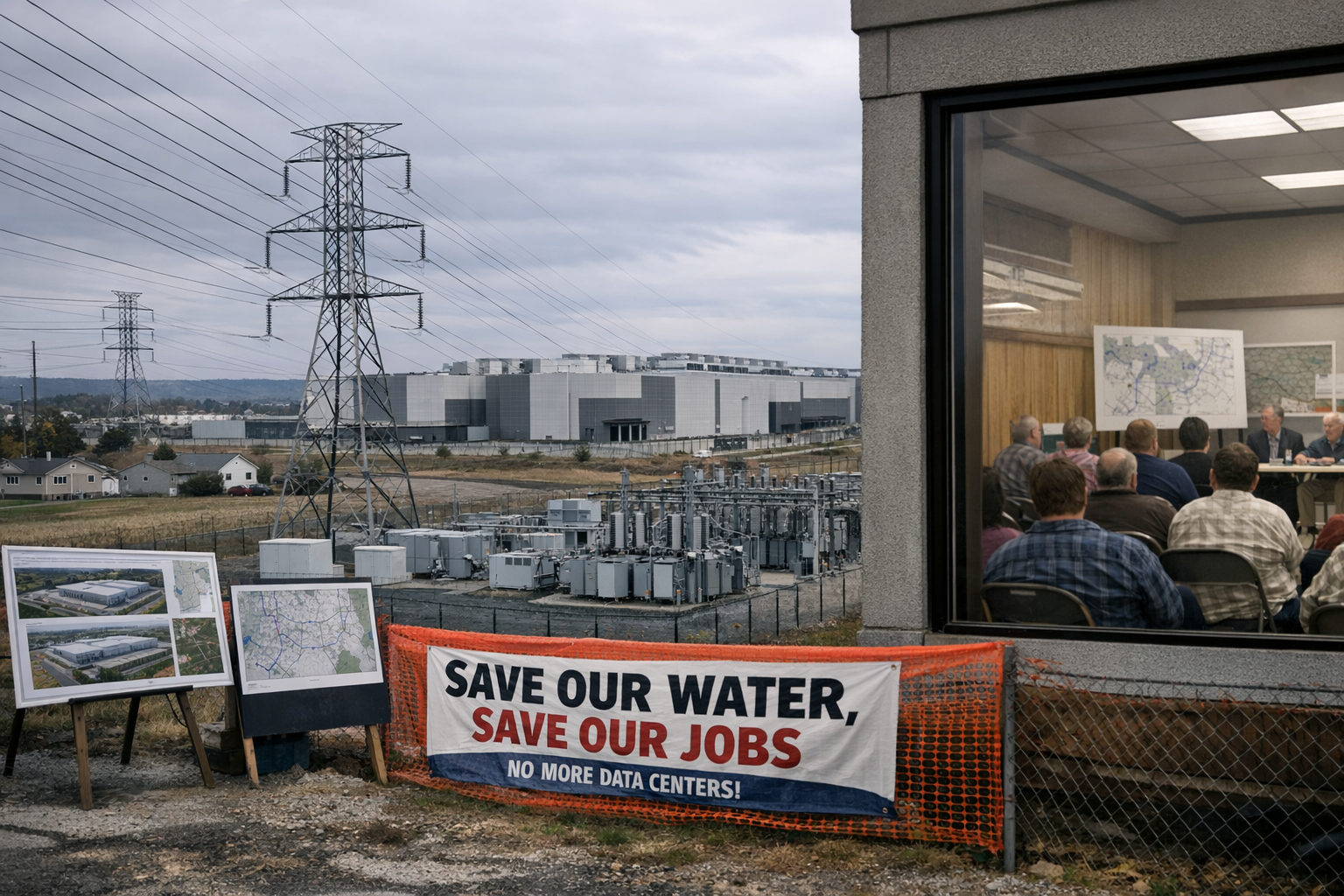
That sentiment has been especially strong among visual artists and musicians who describe A.I.-generated culture as sterile, extractive and environmentally costly, given the energy and water demands of data centers. Their complaint is not only that machines make inferior art, but that companies are trying to normalize a production model that devalues the human labor audiences claim to cherish.
The industry’s answer has been to stress licensing and control. Spotify and Universal are presenting their arrangement as permission-based. ElevenLabs is emphasizing commercially cleared material. Studios increasingly speak of “assistive” rather than autonomous A.I. Yet those assurances do not resolve the core dispute, because the argument is no longer just about legality. It is about value: who deserves credit, who gets paid, and whether convenience should outweigh craft.
Why This Moment Matters
What makes this week’s developments significant is not any single launch. It is the convergence. Music generation is being folded into a major streaming platform. A.I. audio tools are being marketed for polished, professional use. A Hollywood studio is building internal infrastructure around machine-assisted production and attaching it to a distribution outlet with global reach.
In other words, the debate has entered the phase where institutions, not just startups, are making bets.
That matters because once A.I. is embedded in mainstream entertainment systems, it becomes harder to treat as an optional experiment. It starts shaping bargaining power. It affects what gets greenlit, how quickly it gets made, and what standards audiences come to accept. It may also alter labor negotiations across music and film, where unions and rights holders are already pressing for stronger rules on consent, disclosure and compensation.
Whether audiences will fully embrace these tools remains uncertain. So does the question of whether A.I.-generated songs and shows can sustain attention beyond curiosity and novelty. The market still lacks settled norms for transparency in training data, originality standards and royalty allocation when a machine-generated output closely resembles professional entertainment.
But the direction of travel is becoming clear. The contest is no longer over whether artificial intelligence belongs in the creative industries. It is over who gets to define the terms of its legitimacy before the systems become too entrenched to resist.
Sources
Further reading and reporting used to add context:
- https://www.musicradar.com/music-tech/firmly-artist-centric-rooted-in-responsible-ai-and-will-drive-growth-for-the-entire-ecosystem-spotify-and-universal-to-collaborate-on-new-ai-music-creation-system-that-will-enable-fans-to-generate-remixes-and-covers-for-all-to-hear
- https://www.pcgamer.com/software/ai/theres-a-lot-of-rogue-attempts-at-this-amid-ai-music-remixing-plans-spotify-chief-says-he-wants-the-company-to-be-the-one-thats-legal-and-the-one-thats-controlled/
- https://www.pcgamer.com/software/ai/what-were-building-is-grounded-in-consent-credit-and-compensation-for-the-artists-and-songwriters-that-take-part-planned-spotify-ai-tool-can-generate-remixes-and-covers/
- https://www.t3.com/entertainment/streaming/spotify-update-coming-thats-bound-to-court-even-more-controversy
- https://elevenlabs.io/blog/introducing-music-v2
- https://techcrunch.com/2026/05/27/elevenlabss-new-music-generation-model-can-switch-genres-mid-track/
- Spotify boss defends move to AI music, saying it is better than ‘slop’ | Spotify | The Guardian
- ‘We’re expanding the cinematic toolbox’: AI fault lines on show at Cannes | AI (artificial intelligence) | The Guardian
- SPOTIFY AND UNIVERSAL MUSIC GROUP ANNOUNCE LANDMARK LICENSING AGREEMENTS FOR FAN-MADE COVERS AND REMIXES – UMG
- https://elevenlabs.io/es/blog/introducing-music-v2
- https://letsdatascience.com/news/amazon-greenlights-genai-animated-series-launches-fund-a462aa9b
- https://www.gamevicio.com/noticias/2026/05/project-nara-amazon-mgm-tres-series-animadas/
- https://gigazine.net/gsc_news/en/20260528-elevenlabs-introducing-music-v2-ai/
- https://www.gizbot.com/apps/news/spotify-wants-you-to-remix-songs-with-ai-new-roadmap-fan-made-covers-interactive-music-tools-014-125755.html
- https://www.heise.de/en/news/Spotify-announces-AI-generated-remixes-and-podcasts-11303780.html
- https://news.tvbs.com.tw/tech/3215478
- https://cincodias.elpais.com/smartlife/lifestyle/2026-05-22/spotify-prepara-una-funcion-para-crear-remixes-con-ia-de-tus-canciones-favoritas.html
- https://en.wikipedia.org/wiki/2026_Cannes_Film_Festival
- https://www.reddit.com/r/ElevenLabs/comments/1toc32p/introducing_music_v2/
- https://en.wikipedia.org/wiki/Darren_Aronofsky
- https://www.reddit.com/r/Music_Playlist_YT/comments/1tk4hf2/0522_daily_music_briefs_top_story_the_main_event/
- https://en.wikipedia.org/wiki/The_Unknown_%282026_film%29
- https://www.reddit.com/r/nagcoza/comments/1tpvmy5/ai_animated_series_coming_to_amazon/
- https://en.wikipedia.org/wiki/Alive_%282026_film%29
- https://au.variety.com/2026/biz/global/amazon-mgm-studios-genai-creators-fund-greenlights-series-36993/
- https://ground.news/article/amazon-mgm-studios-embraces-ai-greenlights-three-series-for-prime-video-under-new-genai-creators-fund
- https://gigazine.net/news/20260528-amazon-mgm-studios-genai-creators-fund/
- https://techcrunch.com/2026/04/16/luma-launches-ai-powered-production-studio-with-faith-focused-wonder-project
- https://www.aionthelot.com/schedule
- https://www.headliner.nl/artikelen/prime-video-geeft-groen-licht-drie-animatieseries-via-nieuw-genai-creators-fund-22285
- https://www.headliner.nl/artikelen/amazon-mgm-studios-lanceert-genai-creators-fund-ai-versterkte-tv-film-22617
- https://www.headliner.nl/artikelen/amazon-lanceert-genai-creators-fund-ai-gedreven-cinematografische-projecten-22609
- https://mediagazer.com/260527/p17
- https://en.wikipedia.org/wiki/Kevin_%28TV_series%29
- https://en.wikipedia.org/wiki/The_Mighty_Nein
- https://en.wikipedia.org/wiki/Masters_of_the_Universe_%282026_film%29
- https://en.wikipedia.org/wiki/Secret_Level
- https://en.wikipedia.org/wiki/Blade_Runner_2099
- https://en.wikipedia.org/wiki/List_of_Amazon_Prime_Video_original_programming
- https://www.reddit.com/r/aiwars/comments/1tpjiqt/amazon_is_all_in_on_ai_they_are_making_3_ai/
- https://www.reddit.com/r/antiai/comments/1tpjicf/amazon_is_all_in_on_ai_they_are_making_3_ai/
- https://www.reddit.com/r/cartoons/comments/1tpff7n/amazon_genai_animation_push_unveils_first/
- https://www.reddit.com/r/Wellthatsucks/comments/1tpinui/why_do_this/
- https://aws.amazon.com/about-aws/whats-new/2026/05/amazon-quick-generates-analyses-from-natural-language-prompts/
- https://www.aboutamazon.com/news/entertainment/amazon-is-launching-a-fund-for-emerging-creators-on-its-live-radio-app-amp//
- https://aws.amazon.com/events/sap-2026/
- https://www.aboutamazon.com/news/entertainment/amazon-mgm-studios-films/
- https://aws.amazon.com/media/nab-2026/
- https://advertising.amazon.com/en-us/library/news/amazon-upfront-2026-recap-announcements/
- https://www.aboutamazon.com/news/company-news/amazon-and-mgm-have-signed-an-agreement-for-amazon-to-acquire-mgm/
- https://www.aboutamazon.com/news/aws/amazon-nova-artificial-intelligence-bedrock-aws?linkId=691373426
- https://aws.amazon.com/gametech/events/gdc2026/
- https://www.aboutamazon.com/news/entertainment/mgm-joins-prime-video-and-amazon-studios
- https://aws.amazon.com/blogs/media/aws-brings-ai-powered-scale-to-storytellers-at-nab-2026/
- https://aws.amazon.com/blogs/aws/aws-weekly-roundup-whats-next-with-aws-2026-amazon-quick-openai-partnership-and-more-may-4-2026/
- https://assets.aboutamazon.com/8c/8a/aa9820ea419f82fb4bf1c6d56581/azs-econdoc-r8.pdf
- https://assets.aboutamazon.com/f3/d3/f9c962d0485da12fee5c726a4e4e/amazon-community-impact-report-2024-national-capital-region.pdf
- https://assets.aboutamazon.com/63/43/62105833442ba3cb7f1eea3df5a6/amazoninvestment-new-york-2025.pdf
- https://assets.aboutamazon.com/97/93/94b145a549f883b2bff4e6351dc3/rapportdimpactamazoncanada2023.pdf







Leave a Reply