
AI’s expansion into vulnerable corners of daily life is drawing new scrutiny
A fresh set of warnings from technologists, child-safety officials and health regulators is converging on a common concern: artificial intelligence is being pushed into some of the most sensitive parts of modern life — children’s safety, mental health crises and medical care — faster than oversight is catching up.
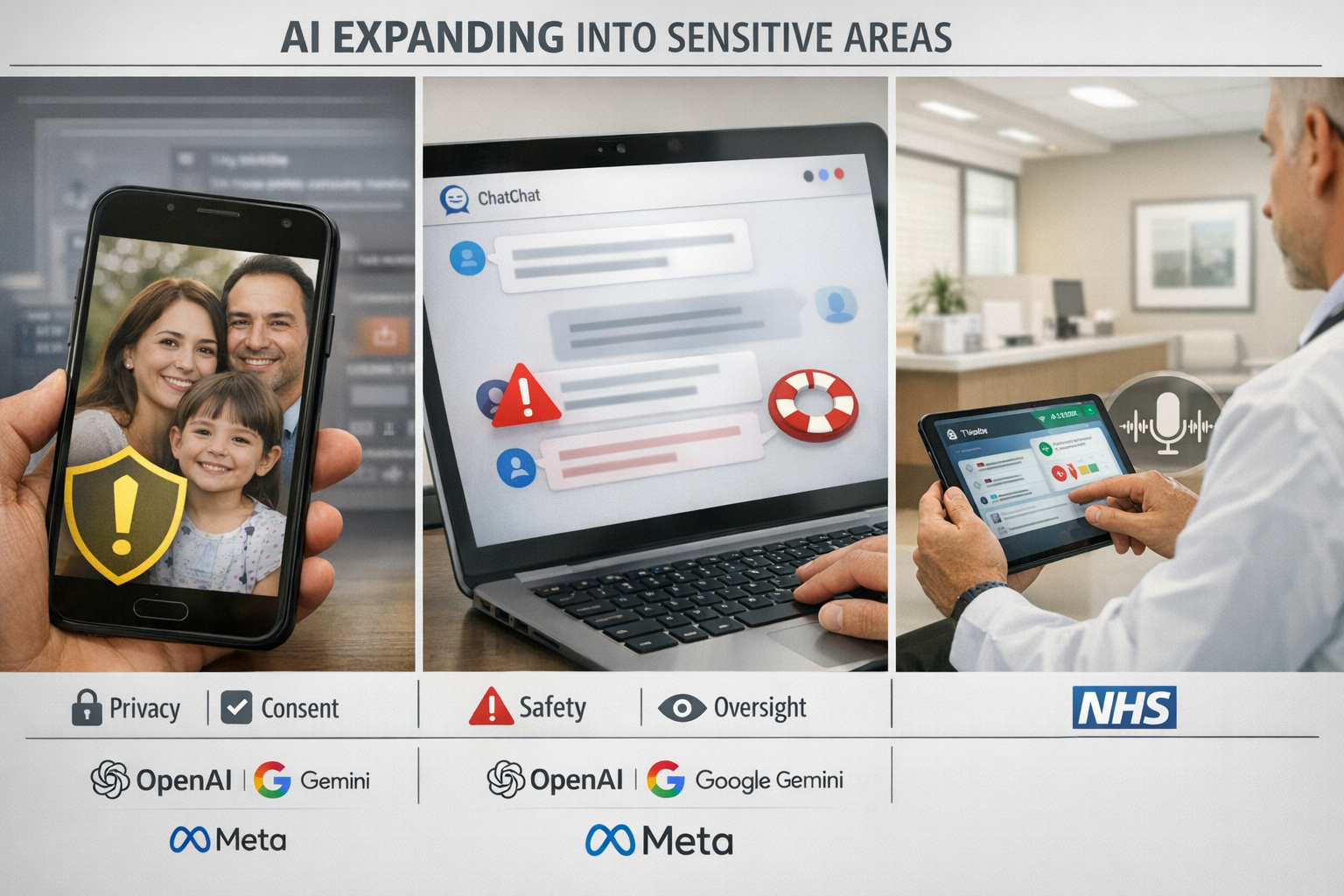
In recent days, that unease has surfaced in sharply different forms. Meta contractors were reported to have posed as teenagers while probing rival chatbots with prompts about suicide, self-harm, sex, eating disorders and drugs. In Britain, law enforcement and online safety groups urged parents to rethink how they share children’s photos online, warning that ordinary images are now being repurposed into AI-generated sexual abuse material. And in England and Australia, officials are accelerating or examining the use of AI in clinics and public health systems even as privacy, consent and accountability questions remain unsettled.
What links the episodes is not simply the technology itself, but the settings in which it is appearing: moments when users may be young, distressed, sick or unable to judge the risks for themselves.
Rival chatbot testing raises questions about industry guardrails
The report about Meta’s contractors, which described a project active into April, suggested that hundreds of workers sent thousands of prompts to chatbots made by competitors including ChatGPT, Gemini and Character.AI. The prompts reportedly explored how the systems responded to highly sensitive scenarios involving minors and dangerous subjects.
Meta described the work as standard safety benchmarking, a practice that has become common across the industry as companies race to evaluate one another’s systems. But the methods described — including contractors presenting themselves as underage users — have raised fresh questions about where legitimate testing ends and covert or rule-breaking behavior begins.
OpenAI said it was looking into the matter. Google and Character.AI said they had not authorized the testing.
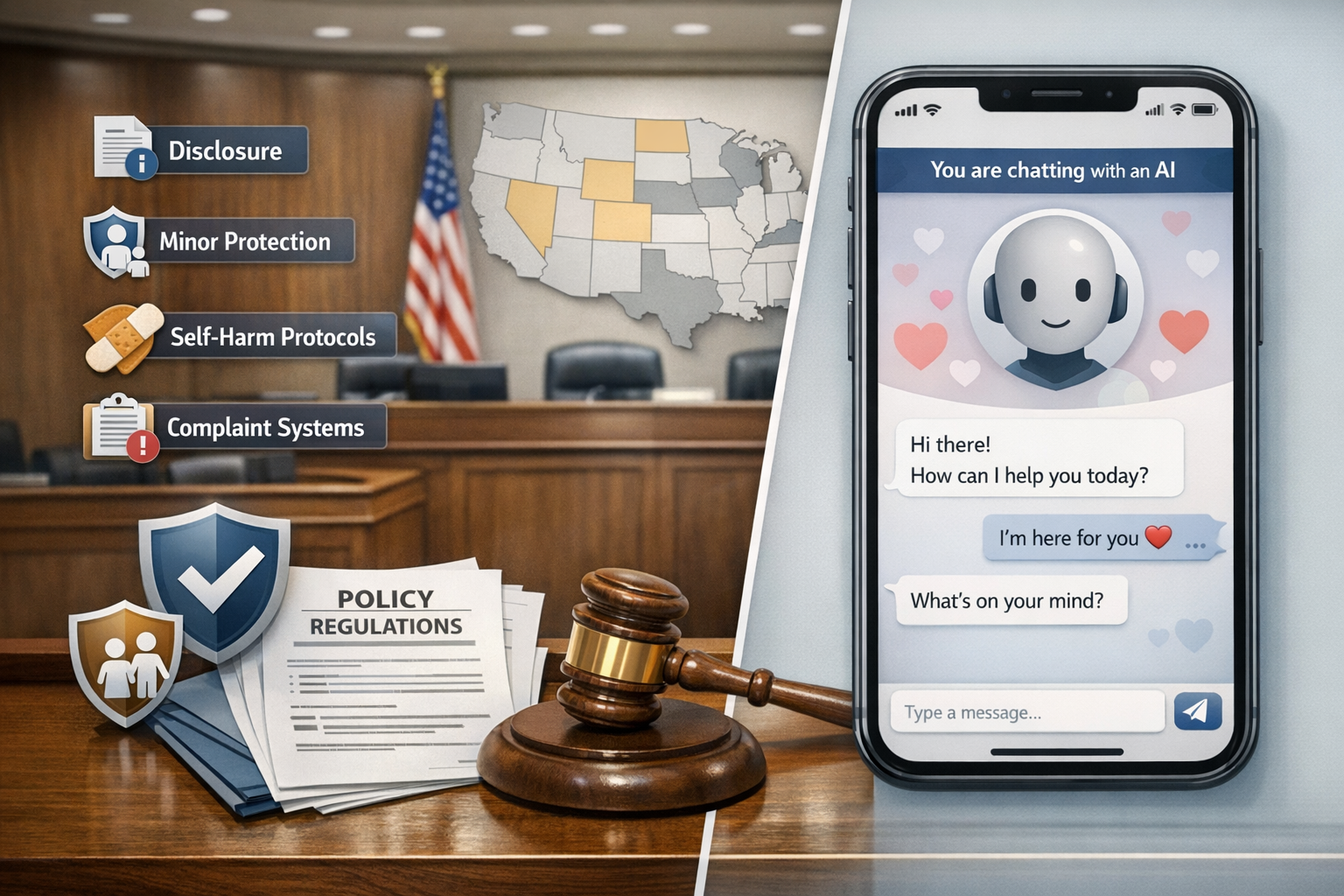
The episode points to a larger tension in the AI industry. Companies have repeatedly said their systems are designed with safeguards around self-harm, sexual content and youth protection. Yet the need for realistic stress tests is widely acknowledged, especially after a series of controversies over chatbots’ behavior with emotionally vulnerable users. If one of the few practical ways to assess those defenses is to simulate risky adolescent use, the industry is left confronting an awkward question: who gets to do that testing, under what rules, and with what transparency?
That matters beyond corporate rivalry. Safety researchers have long argued that systems often perform differently under adversarial prompting than they do in polished demonstrations. When the stakes involve a teenager asking about suicide or an eating disorder, even occasional failures can carry grave consequences.
Britain warns parents that ordinary photos can become abuse material
In Britain, officials said the threat to children is no longer theoretical.
The National Crime Agency and the Internet Watch Foundation issued guidance this week urging parents to limit public sharing of children’s images online, warning that photos as commonplace as clothed selfies can be stolen and transformed with AI tools into sexualized material. The advice stops short of telling parents not to post pictures at all, but encourages private accounts, restricted sharing and greater caution about what is made publicly accessible.
The warning reflects a fast-moving shift in online abuse. In the past, many child exploitation cases depended on direct contact, grooming or the exchange of explicit images. Now, increasingly powerful image-generation and “nudification” tools allow offenders to create abusive material from innocuous photographs without ever communicating with a child.
The scale of that shift has alarmed watchdogs. The Internet Watch Foundation said it identified 8,029 AI-generated child sexual abuse images and videos in 2025, including 3,443 videos. Nearly two-thirds of those videos fell into the most severe legal category.
That data helps explain the urgency of the new guidance. Officials fear that many families still think of online risk in older terms — stranger danger, direct solicitation, hacked accounts — while underestimating how cheaply and quickly AI can be used to sexualize images already circulating on social media.
The concern also underscores a broader regulatory lag. Although governments and platforms have promised crackdowns on child sexual abuse material, enforcement systems have struggled to keep pace with AI tools that can generate or alter images at scale, often through apps that are easy to find and difficult to police.
Health systems move ahead while regulators warn of blind spots
At the same time, public health authorities are pressing forward with AI deployments meant to relieve overburdened medical systems.
In England, NHS officials said the NHS App would begin using AI to help direct patients to appropriate services, including determining whether someone should seek a general practitioner appointment, visit a pharmacy or go to an emergency department. The initial rollout is expected to reach about 200,000 patients over the next year, with broader expansion planned across all NHS App users by April 2028.
The AI triage effort is part of a wider push to modernize the health service through digital tools, including so-called ambient note-taking systems that listen to consultations and generate clinical notes. NHS England has said pilots of those tools reduced administrative burdens and increased clinician capacity, a powerful selling point for a health system under sustained strain.
But the promise of efficiency is running headlong into older questions about medical risk. If an AI tool routes a patient to the wrong level of care, misses a serious condition or produces a flawed note that is later relied upon, it is still unclear how those errors will be identified and who will bear responsibility.
Those questions are surfacing particularly sharply in Australia, where the use of AI scribes in doctors’ offices has surged over the past 18 months. Newly disclosed government records and regulator guidance show officials are uneasy about how some of those products operate. Concerns include whether patients have given meaningful consent, whether sensitive conversations are sent overseas for processing, and whether products marketed as privacy-protective are sufficiently transparent about what they do with data.
Australia’s Therapeutic Goods Administration has drawn a line between straightforward transcription and higher-risk functions: when tools move into analysis, diagnosis or treatment-related interpretation, they may fall into the category of regulated medical devices. But officials have signaled concern that, in practice, some products may sit in a gray zone — influential enough to affect care, yet not always subject to robust oversight.
Why these warnings are arriving together
Taken separately, the developments can look like isolated disputes over product safety, online harms or administrative modernization. Together, they show how AI is migrating from optional consumer novelty into settings where errors and misuse have consequences that are immediate and deeply personal.
For children, that can mean a casual family photo becoming raw material for abuse. For teenagers in crisis, it can mean a chatbot responding badly to prompts about self-harm or drugs. For patients, it can mean advice, triage or medical documentation shaped by systems whose workings are not fully visible to them.
This is the point at which AI governance becomes less an abstract debate about innovation and more a practical one about duty of care.
The core issue is not whether AI can sometimes help. In all three domains, advocates can point to plausible benefits: better safety testing of models, faster detection of harmful outputs, reduced administrative burden on clinicians, quicker routing for patients, and more scalable services in overstretched systems. The question is whether those benefits are being pursued with protections proportionate to the stakes.
That remains unsettled. It is still unclear how widely industry norms will permit covert benchmarking of rival chatbots, whether app stores and platforms can slow the spread of nudification tools, and whether public health systems can deploy AI at scale without normalizing opaque decision-making around care.
For now, the most striking pattern is the same one regulators and safety groups keep returning to: AI is no longer approaching the sensitive edges of society. It is already there.
Sources
Further reading and reporting used to add context:
- https://www.theguardian.com/society/2026/jul/03/ai-sexual-abuse-fears-uk-parents-warned-posting-images-children-national-crime-agency
- https://www.theguardian.com/society/2026/jul/04/nhs-ai-app-patients-appropriate-services-health
- Meta Contractors Posed as Teens to Prompt Rival Chatbots About Suicide, Sex, and Drugs | WIRED
- https://www.theguardian.com/australia-news/2026/jul/05/doctors-ai-scribes-australia-government-privacy-warning
- https://www.dongascience.com/en/news/78778
- https://www.theguardian.com/society/nhs%2Btechnology/technology
- https://technews.tw/2026/06/30/meta-contractors-posed-as-teens-to-prompt-rival-chatbots-about-suicide-sex-and-drugs/
- https://lumienai.com/news/meta-contractors-posed-as-teens-test-rival-chatbots
- https://www.digitaltrends.com/cool-tech/australian-government-warns-doctors-over-ai-scribing-tools-as-privacy-and-safety-concerns-grow/
- https://www.theguardian.com/australia-news/health/2026/jul/04/all
- https://www.uol.com.br/tilt/noticias/redacao/2026/07/01/meta-usou-funcionarios-para-testar-chatbots-rivais-com-busca-sobre-suicidio-e-sexo.ghtm?forcedFormat=NORMAL&uol_app=vivabem%3Ft%3Ft
- https://www.theguardian.com/australia-news/2026/mar/29/doctors-using-ai-for-notes-australia
- https://www.reddit.com/r/aiecosystem/comments/1unr7nm/meta_contractors_posed_as_teens_to_prompt_rival/
- https://www.reddit.com/r/fuck_ai_slop/comments/1unobau/meta_contractors_posed_as_teens_to_prompt_rival/
- https://www.reddit.com/r/TheBusinessMix/comments/1ujmq51/meta_contractors_posed_as_teens_to_prompt_rival/
- https://www.axios.com/2026/02/16/meta-ai-chatbots-kids
- https://www.reddit.com/r/LesDroites/comments/1umfr93/uk_parents_warned_over_posting_images_of_children/
- NHS England » NHS accelerates artificial intelligence rollout to cut waiting times and improve care for millions
- https://www.tga.gov.au/products/medical-devices/software-and-artificial-intelligence-ai/overview/types-software-based-medical-devices/digital-scribes
- https://www.tga.gov.au/products/medical-devices
- AI-Generated Child Sexual Abuse Material: New Guidance for Parents
- https://www.tga.gov.au/resources/guidance/understanding-how-we-regulate-software-based-medical-devices
- https://www.tga.gov.au/news/news-articles/new-udi-requirements-medical-devices-commence-1-july-2026
- https://www.tga.gov.au/news/news-articles/new-information-digital-scribes
- https://www.tga.gov.au/products/medical-devices/software-and-artificial-intelligence-ai/manufacturing/artificial-intelligence-ai-and-medical-device-software-regulation/ai-enabled-medical-devices-artg
- https://www.events.england.nhs.uk/events/nhs-app-national-webinar-july-2026
- https://www.tga.gov.au/products/medical-devices/supply-and-distribution/importing-and-supplying-medical-devices
- https://www.tga.gov.au/products/medical-devices/labelling-and-advertising/unique-device-identification-udi-hub/about-udi-australia
- https://www.england.nhs.uk/south/2026/07/05/aged-78-and-still-innovating-nhs-showcases-the-latest-technology-for-improving-patient-care/
- https://www.tga.gov.au/sites/default/files/2026-02/report-clarifying-strengthening-regulation-medical-device-software-including-artificial-intelligence-ai.pdf
- https://www.nationalcrimeagency.gov.uk/what-we-do/crime-threats/child-sexual-abuse-and-exploitation?highlight=WyJjYXNlIiwiY29udGFjdCJd
- https://www.nationalcrimeagency.gov.uk/what-we-do/crime-threats/bribery-corruption-and-sanctions-evasion?catid=2&id=2599%3Asummary-of-nca-board-meetings-2018&view=article
- https://www.nationalcrimeagency.gov.uk/what-we-do/crime-threats/child-sexual-abuse-and-exploitation/the-child-sexual-exploitation-abuse-industry-reporting-portal
- https://www.nationalcrimeagency.gov.uk/
- https://www.nationalcrimeagency.gov.uk/news/all-news?areas=&limit=5&searchphrase=all&searchword=
- https://www.nationalcrimeagency.gov.uk/nsa-domains-2026/nsa-online-harms-2026
- https://www.nationalcrimeagency.gov.uk/what-we-do/crime-threats/kidnap-and-extortion/sextortion?highlight=WyJtaXNzaW5nIiwibWlzc2VkIiwibWlzcyIsInBlcnNvbiIsInBlcnNvbnMiLCJwZXJzb25hbCIsInBlcnNvbmFsaXR5IiwicGVyc29uJ3MiLCJwZXJzb25hbGx5IiwicGVyc29ucyciLCJkYXRhIiwibWlzc2luZyBwZXJzb24iXQ%3D%3D
- https://www.nationalcrimeagency.gov.uk/news
- https://www.nationalcrimeagency.gov.uk/what-we-do/crime-threats/modern-slavery-and-human-trafficking?id=15&view=category
- https://www.nationalcrimeagency.gov.uk/nsa-overview-of-soc-2026/nsa-soc-futures-2026
- https://www.nationalcrimeagency.gov.uk/what-we-do/crime-threats
- https://www.nationalcrimeagency.gov.uk/news/european-police-chiefs-back-nca-demands-for-tech-companies-to-do-more-to-prevent-child-sex-abuse?highlight=WyJtaXNzaW5nIiwibWlzc2VkIiwibWlzcyIsInBlcnNvbiIsInBlcnNvbnMiLCJwZXJzb25hbCIsInBlcnNvbmFsaXR5IiwicGVyc29uYWxseSIsInBlcnNvbnMnIiwicGVyc29uJ3MiLCJhdCIsIm1pc3NpbmcgcGVyc29uIiwicGVyc29uIGF0Il0%3D
- https://www.nationalcrimeagency.gov.uk/images/campaign/NSA/PDFs/NSA%202026%20Website%20-%20PDF%20Version%20-%20v2.0.pdf
- https://www.nationalcrimeagency.gov.uk/who-we-are/publications/353-national-strategic-assessment-of-serious-and-organised-crime-2016/file.pdf
- https://www.nationalcrimeagency.gov.uk/images/campaign/NSA/2024/NSA_2024_Website_-_PDF_Version_1.pdf
- https://www.health.gov.au/resources/foi-disclosure-log/foi-26-3154-departmental-ai-scribe-use?language=en
- https://www.health.gov.au/topics/health-technologies-and-digital-health/what-we-do/artificial-intelligence-ai-in-health-care
- https://www.health.gov.au/resources/foi-disclosure-log/foi-26-3027-ai-usage-records
- https://www.health.gov.au/sites/default/files/2026-06/foi-26-3154-departmental-ai-scribe-use.pdf
- https://www.tga.gov.au/resources/resources/user-guide/submitting-six-monthly-reports-authorised-prescribers
- https://www.safetyandquality.gov.au/news-and-media/latest-news/pragmatic-artificial-intelligence-ai-guidance-clinicians
- https://www.health.gov.au/about-us/corporate-reporting/our-commitments/ai-transparency-statement
- https://www.health.gov.au/resources/publications/safe-and-responsible-artificial-intelligence-in-health-care-legislation-and-regulation-review-final-report?language=en
- https://www.health.gov.au/resources/webinars/digital-transformation-tech-talk-15-july-2026?language=en
- https://www.safetyandquality.gov.au/clinical-topics/digital-health/artificial-intelligence
- https://www.health.gov.au/ministers/senator-the-hon-jenny-mcallister/media/crackdown-on-sales-of-ndis-businesses-as-mandatory-registration-set-to-expand-from-1-july
- https://www.health.gov.au/sites/default/files/2026-05/report-year-one—aged-care-data-and-digital-strategy-2024-2029.pdf
- https://www.health.gov.au/news/hearing-services-program-provider-notice-2026-1-use-of-third-party-to-access-program-client-records
- https://consultations.health.gov.au/medicare-benefits-and-digital-health-division/safe-and-responsible-artificial-intelligence-in-he/supporting_documents/Consultation%20on%20Safe%20and%20Responsible%20AI%20in%20Health%20Care.pdf
- https://www.health.gov.au/sites/default/files/documents/2019/12/foi-request-1410-department-s-guidance-material-in-processing-freedom-of-information-requests-part-3-access-to-hospital-records-email-template.pdf
- https://www.health.gov.au/sites/default/files/2026-05/medical-treatment-overseas-program-application-form.pdf
- https://www.health.gov.au/sites/default/files/2026-03/digital-transformation-sector-partners-meeting-summary-5-march-2026.pdf
- Artificial intelligence (AI) in health care | Australian Government Department of Health, Disability and Ageing











Leave a Reply