
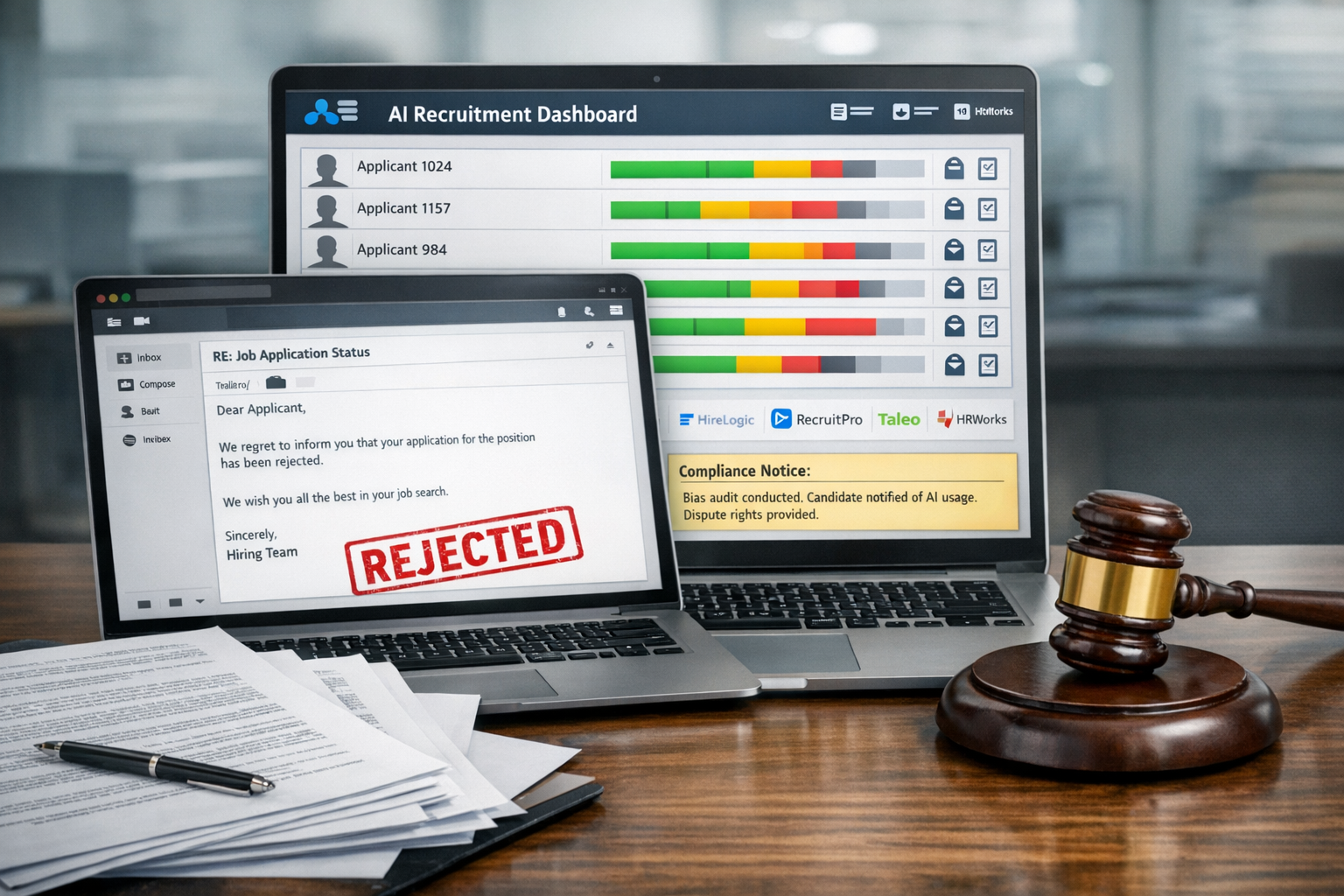
The legal fight over artificial intelligence in hiring is entering a new phase, as criticism that long simmered among rejected applicants and labor advocates begins to take shape in courtrooms and in broader public debate over whether employers have ceded too much judgment to opaque software.
At the center of that shift is a proposed class action against Eightfold AI, a Silicon Valley company whose recruiting tools are used by hundreds of employers. The suit, filed in California in January and later moved to federal court, argues that the company’s software did more than simply automate sorting. It alleges that the system assembled data about applicants and generated hidden rankings of their suitability for jobs, without disclosing those assessments or giving candidates a meaningful chance to challenge mistakes.
That theory, if accepted by the courts, could prove consequential well beyond a single company. It would push AI hiring vendors into territory usually associated with background-check and credit-reporting agencies, exposing them not only to discrimination claims but also to rules requiring notice, consent and avenues for correcting errors.
The allegations have not been proved, and Eightfold has not been found liable. But the case lands at a moment when frustration with automated hiring is becoming harder for employers and technology providers to dismiss as anecdotal.
A challenge to the black box
The Eightfold suit was brought by Erin Kistler, a product manager who says she applied over several years to jobs at major companies including PayPal, Microsoft and Netflix and never received an interview. Her complaint contends that hiring software can function as a kind of invisible applicant dossier, using personal information, work history, location, social-media material and other third-party data to score people’s prospects behind the scenes.
That matters because federal and California law place strict requirements on consumer reports used in employment decisions. The lawsuit argues that if algorithmic rankings are effectively performing that role, then the companies producing them should be subject to those obligations as well.
Such a ruling would mark a significant expansion of legal exposure in the fast-growing market for AI recruiting tools. For years, the debate over hiring algorithms has centered on whether they reproduce bias by screening out older workers, people with disabilities, women or applicants from certain racial or socioeconomic backgrounds. The Eightfold case adds another question: whether secrecy itself can be unlawful when software shapes employment outcomes.
Courts are showing more willingness to engage
The case does not stand alone. In June, a federal judge largely allowed core discrimination claims against Workday, another major provider of employment software, to move forward. The claims included allegations that automated screening tools had discriminatory effects, including through proxies related to disability, and also survived in part under California law.
That decision did not resolve the merits, but it signaled a growing judicial willingness to hear challenges to AI-enabled hiring systems rather than treating them as too novel or too indirect to fit existing law. Together, the Workday and Eightfold cases suggest that the legal system is beginning to test not only whether employers can be held responsible for algorithmic decisions, but also whether the vendors that design and sell those systems may share that responsibility.
For companies that have embraced automation as a way to process huge volumes of applications, the implications are substantial. If AI vendors are treated as consumer-reporting entities, they could face duties to explain how scores are produced, what data is used and how applicants can dispute errors. Employers, in turn, could face pressure to rely less on automated filtering that candidates never see.
Editorial and political pressure is rising, too
The backlash is not confined to litigation. In recent days, editorial criticism has sharpened around the broader culture of automated recruiting, from one-way video interviews to bot-led screening processes that can leave applicants rejected without ever speaking to a person.
That unease reflects a wider public mood. Research cited earlier this year found that 47 percent of job seekers in Britain had encountered an AI interview, and 30 percent had abandoned a hiring process because of it. For many applicants, the grievance is not simply that the technology may be biased, but that it can feel arbitrary, dehumanizing and impossible to contest.
Even some mainstream political figures have begun voicing concern that remote and automated interviews strip out the human qualities hiring is supposed to assess. The criticism speaks to a broader question that employers are only beginning to confront: whether efficiency gains from AI screening come at the cost of trust in the labor market itself.
Rules already exist, but their reach is being tested
The mounting scrutiny comes against a backdrop of existing regulation, not a legal vacuum. New York City’s Local Law 144 requires annual bias audits for certain automated employment decision tools, public summaries of those audits and notice to candidates before the tools are used. Federal agencies have also repeatedly warned that AI does not enjoy immunity from old rules simply because it is new technology.
The Federal Trade Commission, the Justice Department, the Consumer Financial Protection Bureau and the Equal Employment Opportunity Commission have jointly emphasized that automated systems remain subject to civil-rights and consumer-protection law. Separate guidance from the E.E.O.C. and the Justice Department has warned that hiring algorithms can unlawfully exclude people with disabilities, particularly when employers fail to provide accommodations or to check whether software is screening out qualified candidates for improper reasons.
Still, the key questions remain unsettled. Bias-audit laws are new and unevenly applied. It is unclear how useful disclosures are if candidates still cannot understand or challenge a decision. And courts have yet to decide how far existing consumer-reporting law extends when an algorithm predicts employability rather than merely compiling a conventional background file.
Why this moment matters
The importance of the current wave of challenges lies in the possibility that hiring software may soon be judged by a stricter standard than technological novelty or corporate convenience. If judges accept the idea that algorithmic rankings can amount to regulated reports, and if more claims survive early motions as the Workday case did, employers and vendors may be forced to make systems more explainable, provide more meaningful human review or retreat from some of the most opaque forms of automated screening.
For job seekers, the fight is about more than code. It is about whether decisions that shape livelihoods can be made in secret, based on data they cannot inspect and criteria they do not know. After years in which automated hiring spread faster than legal oversight, that question is now beginning to get a formal answer.
Sources
Further reading and reporting used to add context:
- https://www.theguardian.com/commentisfree/2026/aug/16/the-guardian-view-on-the-changed-world-of-job-interviews-missing-the-human-factor
- https://www.theguardian.com/theguardian/journal/2026/aug/16/all
- https://cand.uscourts.gov/cases-e-filing/cases/326-cv-01768-lb/kistler-et-al-v-eightfold-ai-inc
- https://trellis.law/case/c26-00214/erin-kistler-vs-eightfold-ai-inc
- https://www.law360.com/cases/69a5fe2c43c99ff90c51d9d1
- https://www.classaction.org/news/lawsuit-claims-eightfold-ai-unlawfully-collects-job-applicants-data-ranks-their-candidacy-in-employer-reports
- https://natlawreview.com/article/scoring-applicants-your-ai-could-be-fcra-territory
- https://www.shireenwetmoremediation.com/post/mediator-s-minute-fcra-in-the-ai-era-the-new-frontier-in-employment-class-actions
- https://www.theguardian.com/technology/2026/may/01/uk-job-hunters-frustration-ai-interviews
- https://consumerprotection.net/ai-hiring-tools-fcra-eightfold-ai-lawsuit/
- https://www.law360.com/articles/2432412
- https://www.underwriting-agents.com/report.pdf
- https://www.akingump.com/en/insights/ai-law-and-regulation-tracker/ai-hiring-platform-faces-fcra-class-action-over-data-use-or-kistler-et-al-v-eightfold-ai-inc
- https://www.reddit.com/r/ShitAIBrosSay/comments/1uvzq9m/what_the_actual_fuck_lawsuit_alleges_hidden_ai_is/
- https://catalyze.gunder.com/print/v2/content/27177/client-insight-quarterly-employment-law-update-spring-2026.pdf
- Kistler et al. v. Eightfold AI Inc. – C26-00214
- https://www.reddit.com/r/jobsearch/comments/1ukmcp0/ai_hiring_platforms_ignore_almost_all_applications/
- https://www.rivista.ai/wp-content/uploads/2026/01/gov.uscourts.cand_.415223.342.1.pdf
- https://www.hollandhart.com/getdoc.aspx?publicationid=50931
- https://www.reddit.com/r/jobhunting/comments/1uv9evg/social_credit_score_made_by_ai_to_determine_if/
- https://static1.squarespace.com/static/5b9ffe0f1137a680c2c08250/t/6a6c95ddf8f7921a0007035a/1785501149284/QDE%2B073126%2Bproof.pdf
- https://www.reddit.com/r/AttorneysHelp/comments/1rvdlgi/when_ai_hiring_tools_pull_the_wrong_background/
- https://www.reddit.com/r/antiai/comments/1uvdng9/class_action_lawsuit_says_ai_algorithm_used_by/
- https://www.reddit.com/r/jobsearchhacks/comments/1qrayzh/class_action_lawsuit_was_just_filed_over_ai/
- https://www.reddit.com/r/IOPsychology/comments/1qjuj1o/job_applicants_sue_ai_recruitment_tool_company/
- https://www.reddit.com/r/ClassActionSettlement/comments/1q4d7si/got_this_today_also_in_spam_box_with_the_beef_one/
- https://www.osc.ny.gov/state-agencies/audits/2025/12/02/enforcement-local-law-144-automated-employment-decision-tools
- Automated Employment Decision Tools (AEDT) – DCWP
- https://codelibrary.amlegal.com/codes/newyorkcity/latest/NYCadmin/0-0-0-135843
- https://www.ftc.gov/news-events/news/press-releases/2023/04/ftc-chair-khan-officials-doj-cfpb-eeoc-release-joint-statement-ai
- https://codelibrary.amlegal.com/codes/newyorkcity/latest/NYCadmin/0-0-0-135839
- https://www.bers.nyc.gov/assets/dca/downloads/pdf/about/DCWP-AEDT-FAQ.pdf
- https://www.eeoc.gov/newsroom/eeoc-launches-initiative-artificial-intelligence-and-algorithmic-fairness
- https://www.ftc.gov/system/files/ftc_gov/pdf/EEOC-CRT-FTC-CFPB-AI-Joint-Statement%28final%29.pdf
- https://www.eeoc.gov/laws/guidance/employment-tests-and-selection-procedures
- https://codelibrary.amlegal.com/codes/newyorkcity/latest/NYCrules/0-0-0-138393
- https://www.eeoc.gov/newsroom/us-eeoc-and-us-department-justice-warn-against-disability-discrimination
- https://legistar.council.nyc.gov/LegislationDetail.aspx?GUID=B051915D-A9AC-451E-81F8-6596032FA3F9&ID=4344524
- https://www.nyc.gov/assets/dca/downloads/pdf/about/PublicComments-Proposed-Rules-Related-to-Automated-Employment-Decision-Tools.pdf?_sp=fa71a493-81b7-4bb6-ba3f-472fdb63fb55
- https://www.nyc.gov/assets/dca/downloads/pdf/about/DCWP-AEDT-FAQ.pdf?mod=article_inline
- https://rules.cityofnewyork.us/rule/automated-employment-decision-tools-2/
- https://www.osc.ny.gov/files/state-agencies/audits/pdf/sga-2026-24n6.pdf
- https://rules.cityofnewyork.us/rule/automated-employment-decision-tools-updated/
- https://arxiv.org/abs/2402.08101
- https://arxiv.org/abs/2501.10371
- https://arxiv.org/abs/2406.01399
- https://www.reddit.com/r/HumanResourcesRemote/comments/1v27dr4/ny_state_comptroller_audited_nycs_ai_hiring_law/
- https://dockets.justia.com/docket/california/candce/4%3A2026cv01768/465146
- https://dockets.justia.com/docket/massachusetts/madce/1%3A2026cv12933/302840
- https://pacer.uscourts.gov/find-case
- https://legalclarity.org/eightfold-lawsuit-fcra-and-ai-hiring-claims-explained/
- https://legalclarity.org/eightfold-lawsuit-fcra-claims-against-ai-hiring-tools/
- https://docs.justia.com/cases/federal/district-courts/new-york/nysdce/1%3A2026cv01566/658656/91
- https://aiemploymentlawtracker.com/
- https://gaeflexstaging-dot-docketupdate.appspot.com/cases/Massachusetts_District_Court/1–26-cv-12933/Yuan_v._Eightfold_AI_Inc/
- https://catalyze.gunder.com/en/news-insights/insights/client-insight-quarterly-employment-law-update-spring-2026
- https://assets.alm.com/bb/d3/39c591b845cda56cbbcb54358a5b/2026-01-20-eightfold-complaint.pdf
- https://www.reddit.com/r/joinhandshakeai/comments/1vn07cl/class_action_lawsuit_for_nonpayment/
- https://docs.publicnow.com/viewDoc?filename=182155%5CEXT%5CCCA9DDCAB580A3E9349C7CE34FC23E363A1D508B_63EEA997B0B7BDC1A32B18B6FBAA424DF240C995.PDF
- https://cdn.hl.com/pdf/2026/hcm-year-in-review-2025-mar-2026.pdf
- https://www.reddit.com/r/recruitinghell/comments/1uv93bm/lawsuit_claims_your_socialmedia_and_search/
- https://www.reddit.com/r/benjaminone/comments/1vhpm8x/have_we_considered_a_class_action_lawsuit/
- https://www.reddit.com/r/MetaLawsuits/comments/1v4vf6m/small_claims_finally_responded/
- https://docs.publicnow.com/viewDoc?filename=126697%5CEXT%5C7307820E6DFBDD6B77A0BFFCB637D1DE6A2926F1_96AB9A35BDF6B7E72DB495F1D100F2C212F4F071.PDF
- https://www.reddit.com/r/BANDOFBROTHERSOFSRNE/comments/1vrh6hu/latest/
- https://law.justia.com/cases/federal/district-courts/california/candce/3%3A2023cv00770/408645/338/
- https://www.investing.com/news/stock-market-news/workday-must-face-california-lawsuit-over-ai-bias-in-job-screening-tools-4753723
- https://cases.justia.com/federal/district-courts/california/candce/3%3A2023cv00770/408645/372/0.pdf
- https://www.casemine.com/judgement/us/6a4c9adae971d2e88f2d9983?target=amp_references
- https://www.carltonfields.com/api/pdf?fileName=Lawsuit_Challenges_Meta_s_Use_of_Artificial_Intelligence_to_Make_Layoff_Decisions.pdf&url=https%3A%2F%2Fwww.carltonfields.com%2Finsights%2Fpublications%2F2026%2Flawsuit-challenges-metas-use-of-artificial-intelligence-to-make-layoff-decisions
- https://www.courthousenews.com/wp-content/uploads/2026/06/mobley-v-workday-dismissed-sac-in-part.pdf
- https://clearinghouse.net/doc/171886/
- https://www.mlex.com/mlex/artificial-intelligence/articles/2492353/us-judge-finds-workday-must-face-calif-discrimination-claims-over-ai-hiring-tools
- https://app.midpage.ai/document/mobley-v-workday-inc–00dd7bb9-f981-4350-8da1-71825a47461d
- https://agentpostmortem.com/case/apm-0096
- https://law.justia.com/cases/federal/district-courts/california/candce/3%3A2023cv00770/408645/372/
- https://de.marketscreener.com/boerse-nachrichten/workday-muss-sich-in-kalifornien-einer-klage-wegen-ki-voreingenommenheit-in-bewerberauswahl-tools-st-ce7f5cd3d089ff2c
- https://rpjlaw.com/recent-developments-in-mobley-v-workday-california-court-allows-key-ai-hiring-bias-claims-to-move-forward/
- https://www.zonebourse.com/actualite-bourse/workday-vise-par-une-plainte-en-californie-pour-discrimination-liee-a-ses-outils-de-recrutement-par-ce7f5cd3d089ff2c
- https://www.cunylawreview.org/wp-content/uploads/2026/06/Lily-Manshel_Note_The-Bigotry_of_the_Future_29_CUNY_L._Rev._78_2026.pdf
- https://www.techradar.com/pro/workday-accused-of-ai-bias-in-job-screening-faces-california-lawsuit-over-employment-tech
- https://www.itpro.com/technology/artificial-intelligence/the-claims-in-the-suit-are-false-workday-hits-back-amid-lawsuit-claiming-ai-recruitment-discrimination
- https://www.youtube.com/watch?v=7MA7xEgkGvY&vl=en
- https://www.reddit.com/r/cscareerquestions/comments/1uf09kw/workday_has_been_sued_for_using_ai_to/
- https://storage.courtlistener.com/recap/gov.uscourts.cacd.1024702/gov.uscourts.cacd.1024702.21.0.pdf
- https://storage.courtlistener.com/recap/gov.uscourts.nvb.420818/gov.uscourts.nvb.420818.2887.0.pdf
- https://storage.courtlistener.com/recap/gov.uscourts.mdd.584990/gov.uscourts.mdd.584990.58.0_4.pdf
- https://storage.courtlistener.com/recap/gov.uscourts.ilnd.486301/gov.uscourts.ilnd.486301.16.0.pdf
- The Guardian view on the changed world of job interviews: missing the human factor | Editorial | The Guardian


Leave a Reply