
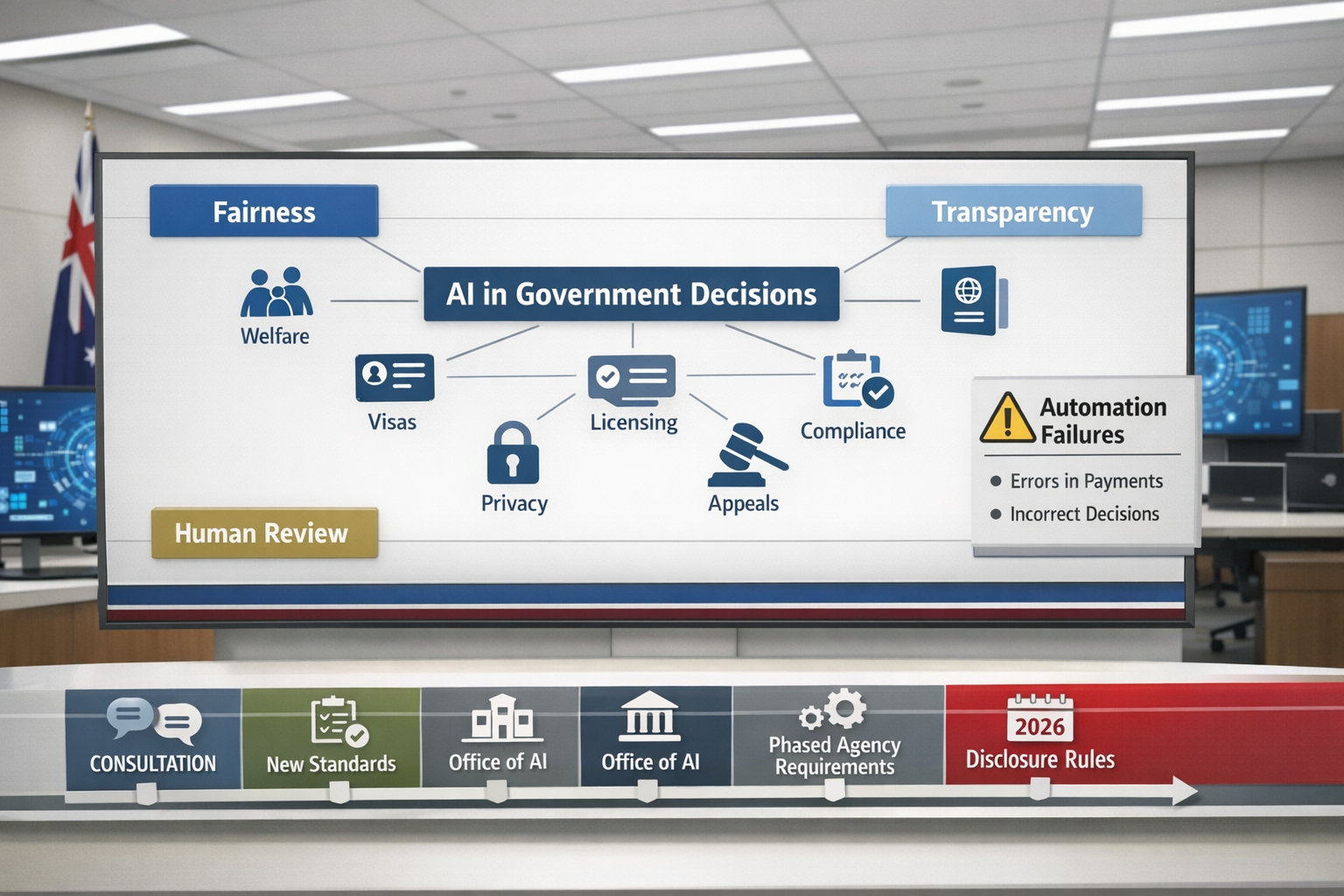
Australia’s government is moving to place new limits and obligations on the use of artificial intelligence in official decision-making, sharpening a policy drive that has shifted in recent months from broad ambition to the mechanics of control.
Senior ministers are developing a framework for automated decision-making across federal agencies, with the Attorney-General’s portfolio saying the aim is to ensure decisions made with AI are fair, accurate and transparent. The effort is expected to sit alongside a wider national push on AI safety, consumer protection, workplace safeguards and privacy.
The move is among the clearest signs yet that Canberra is trying to turn its AI strategy into enforceable routines inside government, where algorithmic systems can affect some of the most sensitive parts of civic life: welfare payments, visas, licensing, compliance action and other decisions that shape people’s rights and livelihoods.
From AI strategy to operational rules
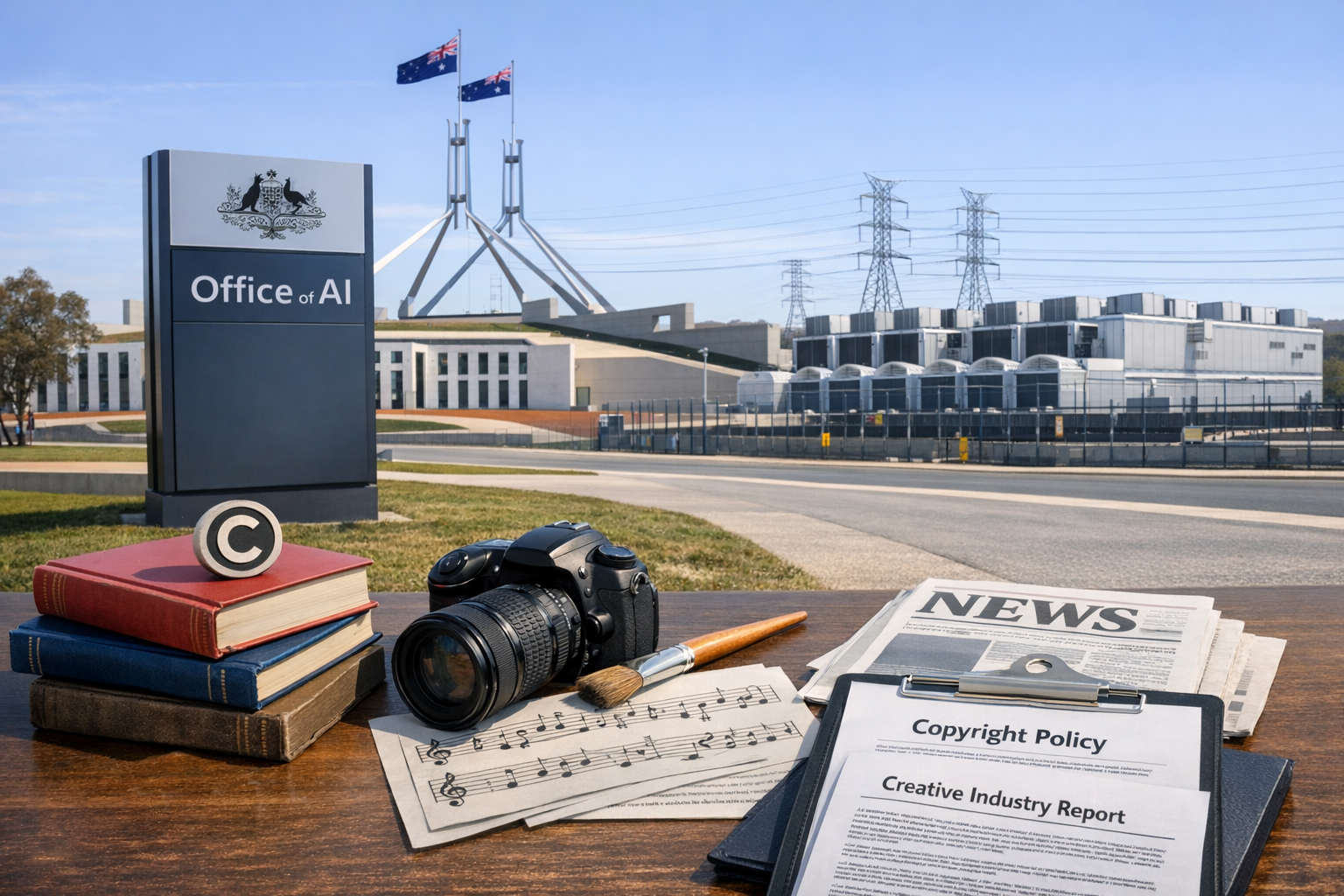
The latest step follows Prime Minister Anthony Albanese’s announcement on July 15 of a new Office of AI within the Department of the Prime Minister and Cabinet, as well as new Australian Standards for AI. Those measures were presented as a bid to centralize expertise and set national direction as AI adoption accelerates.
But the government’s challenge has always extended beyond promoting innovation or attracting investment in data centers. It has also had to answer a more difficult question: how to govern systems that can make or heavily influence state decisions about individuals.
That is where the new automated decision-making framework is intended to bite. Rather than relying only on high-level principles, it is expected to translate broad concerns — fairness, privacy, transparency, security and safety — into requirements for agencies using AI in practice.
Some of those controls are already beginning to take shape. Under existing Digital Transformation Agency policy, federal agencies must register certain AI uses, assign accountable officials and complete impact assessments before deployment. Mandatory requirements began to be phased in on June 15, with more due in December.
A post-Robodebt shadow
The politics of the issue are inseparable from the legacy of Robodebt, the unlawful debt recovery scheme that became a defining warning about automated government action without adequate safeguards.
In a March implementation update responding to post-Robodebt reforms, the government said it had accepted recommendations to examine a more consistent legal framework for automation in public services. That work included consideration of review rights, plain-language explanations to affected people and potential audit or oversight powers.
Those ideas now loom over the AI debate. For critics of automated governance, the central question is not whether departments can use advanced tools, but whether citizens will know when machines are involved, be able to challenge decisions and obtain meaningful human review when errors occur.
That concern has grown more urgent as AI systems have become more capable and more widely available, making it easier for agencies to deploy them not only in back-office tasks but potentially in decisions with legal or financial consequences.
What is known — and what is not
For now, much of the legal design remains unsettled.
The government has not publicly detailed which agencies or categories of decision will be covered by the new framework, when human intervention will be mandatory, what form any independent audit regime might take, or whether fresh legislation will be needed to underpin the system.
It is also unclear how the federal model will fit with other pieces of the government’s broader AI architecture, including a national assurance framework for AI in government agreed by data and digital ministers, and Labor’s separate push for a digital duty of care.
That leaves important open questions about enforcement. Standards and internal policies can shape behavior, but rights-sensitive government decisions have often prompted demands for firmer legal protections and clearer avenues of appeal.
Broader pressure on privacy and disclosure
The government’s effort is unfolding as Australia’s privacy regime is also tightening around automated decisions.
From Dec. 10, 2026, certain entities that use personal information in automated decisions affecting an individual’s rights or interests will be required to disclose that use in their privacy policies. While that rule is broader than the federal public sector alone, it reinforces the direction of travel: more transparency about when automated systems are making consequential judgments about people.
The government’s own AI planning has been building toward this point for some time. Australia launched its National AI Plan in December 2025, and a public consultation focused specifically on automated decision-making ran from November 2024 to January 2025.
The result is a policy landscape that is starting to look less like a technology agenda and more like an administrative law project — one concerned with accountability, explainability and the limits of machine judgment inside the state.
Why it matters now
The urgency reflects both the pace of AI adoption and the distinct risks posed when governments use it. A flawed chatbot may frustrate a customer; a flawed public-sector decision system can wrongly deny a benefit, trigger an investigation or distort a person’s legal standing.
Australia is hardly alone in grappling with that tension. Governments around the world are trying to capture AI’s efficiencies while preventing opaque systems from quietly making life-altering decisions. But in Australia, the memory of past failures has made the stakes unusually concrete.
What Canberra appears to be acknowledging is that AI governance cannot stop at speeches, advisory offices or voluntary principles. If automated tools are to be trusted inside government, they will need rules that determine who is accountable, how risks are assessed, when humans must step in and what recourse citizens have when the technology gets it wrong.
Sources
Further reading and reporting used to add context:
- AI Policy Update: Strengthening responsible use across government | Digital Transformation Agency
- https://www.pmc.gov.au/domestic-policy/office-ai
- https://www.dta.gov.au/articles/responsible-choices-new-policy-using-ai-australian-government
- https://oia.pmc.gov.au/impact-analysis/australian-government
- https://oia.pmc.gov.au/resources/impact-analysis-ia-process-guide
- https://www.pmc.gov.au/about-us/accountability-and-reporting/corporate-reporting/artificial-intelligence-transparency-statement
- https://www.dta.gov.au/media-releases/dta-releases-new-guidance-australian-government-use-public-generative-ai-tools
- https://www.dta.gov.au/ai-transparency-statement
- https://www.dta.gov.au/corporate-plan-2025-26
- https://www.minister.industry.gov.au/charlton/media/ai-safety-forum
- https://www.dta.gov.au/media-releases/ai-policy-overhauled-new-impact-assessment-tool-and-procurement-guidance
- https://oia.pmc.gov.au/resources/guidance-impact-analysis/australian-government-guide-policy-impact-analysis
- Robodebt Royal Commission Implementation update (March 2026)
- https://www.pmc.gov.au/sites/default/files/foi-logs/foi-2026-174.pdf
- https://www.dta.gov.au/sites/default/files/documents/2025-09/Released%20DTA%20IGB%202025%20-%20Compendium%20%20-%20DTA%20reforms%20and%20deliverables%20-%20redactions%20FINAL_Redacted.pdf
- https://www.dta.gov.au/sites/default/files/documents/2025-09/25-0179%20corporate%20plan%2025-26%20layout%20FINAL.pdf
- https://www.dta.gov.au/sites/default/files/documents/2025-09/Released%20DTA%20Incoming%20Government%20Brief%202025%20-%20redactions%20FINAL_Redacted_0.pdf
- https://www.dta.gov.au/sites/default/files/2023-10/Annual%20Report%202022-2023%20-%20final%20accessible_0.pdf
- https://www.pm.gov.au/media/ai-australias-interests
- https://www.infrastructure.gov.au/department/media/publications/digital-duty-care-australia-developing-duty-care-framework-online-services-used-australians
- https://www.fedcourt.gov.au/about/corporate-information/ai-statement
- https://www.pm.gov.au/media
- AI Consumer safety priorities | Our ministers – Attorney-General’s portfolio
- https://www.digital.gov.au/secretaries-digital-and-data-committee/sddc-communique-02-july-2026
- https://www.abc.net.au/news/2026-07-14/albanese-maps-out-ai-future-introducing-national-framework/106915094
- https://www.ai.gov.au/staying-safe-and-responsible/ai-and-australian-law
- https://www.finance.gov.au/government/public-data/data-and-digital-ministers-meeting/national-framework-assurance-artificial-intelligence-government/statement-data-and-digital-ministers
- https://humanrights.gov.au/about-us/media-centre/opinion-pieces/rights-and-freedoms/human-rights-belong-at-the-centre-of-australias-ai-future2
- https://www.ai.gov.au/news-and-insights/events/ai-safety-forum-2026
- https://www.digital.gov.au/ai/ai-in-government-policy
- https://www.infrastructure.gov.au/sites/default/files/documents/digital-duty-of-care-for-australia-developing-duty-of-care-framework-for-online-services-used-by-australians-may2026.pdf
- https://www.infrastructure.gov.au/sites/default/files/documents/foi-26-276_documents_released.pdf
- https://www.aicd.com.au/content/dam/aicd/pdf/news-media/research/2026/director-guide-to-ai-governance.pdf
- https://www.ai.gov.au/sites/default/files/2026-05/australias-artificial-intelligence-ecosystem-growth-and-opportunities-june-2025_0.pdf
- https://www.ai.gov.au/sites/default/files/2026-05/Guidance-for-AI-adoption-implementation-guidance_0_0.pdf
- https://www.industry.gov.au/sites/default/files/2025-10/disclosure-log-2025-072-300101.pdf
- https://www.reddit.com/r/australia/comments/1uwuquh/ai_in_australias_interests/
- https://www.reddit.com/r/australian/comments/1uwuex9/albanese_ai_speech/
- https://www.reddit.com/r/AustralianPolitics/comments/1uxiyuo/albanese_rolls_out_a_rule_book_and_a_red_carpet/
- https://arxiv.org/abs/2604.26075
- https://arxiv.org/abs/2407.01110
- https://www.industry.gov.au/publications/national-ai-plan
- https://www.industry.gov.au/news/developing-national-ai-capability-plan
- https://www.industry.gov.au/science-technology-and-innovation/technology/artificial-intelligence?embed=true
- https://www.minister.industry.gov.au/ministers/timayres/transcripts/interview-sally-sara-abc-radio-national-1
- https://www.minister.industry.gov.au/ministers/timayres/transcripts/interview-sarah-abo-and-david-campbell-today-show
- https://www.industry.gov.au/news/australia-launches-national-ai-plan-capture-opportunities-share-benefits-and-keep-australians-safe
- https://www.ai.gov.au/news-and-insights/blog/ai-adoption-insights-december-2025-february-2026
- https://www.minister.industry.gov.au/ministers/timayres/transcripts/interview-sarah-ferguson-abc-730
- https://www.minister.industry.gov.au/ministers/timayres/transcripts/interview-kieran-gilbert-sky-news
- https://www.minister.industry.gov.au/t-ayres/media/ministerial-address-the-lowy-institute-artificial-intelligence-and-australias-national-interest
- https://www.industry.gov.au/science-technology-and-innovation/technology/artificial-intelligence/collaborating-ai-and-technology-companies
- https://www.industry.gov.au/sites/default/files/2025-12/national-ai-plan.pdf
- https://www.legislation.gov.au/C2024A00128/asmade/2024-12-10/text/1/pdf
- https://www.oaic.gov.au/engage-with-us/consultations/consultation-on-guidance-for-transparency-in-automated-decision-making
- https://www.legislation.gov.au/C2024A00128/asmade/2024-12-10/text/1/epub/OEBPS/document_1/document_1.html
- https://www.legislation.gov.au/Series/C2013C00482
- https://www.oaic.gov.au/privacy/australian-privacy-principles/australian-privacy-principles-guidelines/chapter-1-app-1-open-and-transparent-management-of-personal-information
- https://www.oaic.gov.au/__data/assets/pdf_file/0038/264899/Attorney-Generals-Department.pdf
- https://www.oaic.gov.au/__data/assets/pdf_file/0027/263925/ADM-Issues-Paper.pdf
- https://www.legislation.gov.au/C2024A00128/
- https://www.ag.gov.au/integrity/australias-open-government-partnership/australias-third-national-action-plan
- https://www.oaic.gov.au/engage-with-us/submissions/agd-consultation-paper-use-of-automated-decision-making-by-government
- https://ministers.ag.gov.au/media-centre/draft-childrens-online-privacy-code-released-31-03-2026
- https://www.ag.gov.au/rights-and-protections/privacy/review-privacy-act-1988
- https://www.ag.gov.au/about-us/accountability-and-reporting/attorney-generals-department-artificial-intelligence-transparency-statement
- https://www.legislation.gov.au/F2025L01195/asmade/2025-09-26/es/original/pdf
- https://www.aph.gov.au/DocumentStore.ashx?id=8b8b1ac5-aa7c-4f64-afc9-3343a5e74e84
- https://www.legislation.gov.au/bills/C2019B00241EM_1.pdf
- https://www.reddit.com/r/AustralianPolitics/comments/1tyx5gm/exclusive_unprecedented_automation_in_ndis/
- https://www.reddit.com/r/AustralianPolitics/comments/1143bsy
- https://arxiv.org/abs/2511.03211
- https://arxiv.org/abs/2208.10087
- https://www.reddit.com/r/AustralianPolitics/comments/1rg081y/labors_foi_bill_is_back_from_the_dead_unchanged/
- https://consultations.ag.gov.au/integrity/adm/user_uploads/automated-decision-making_summary-of-the-public-consultation-process.pdf
- https://consultations.ag.gov.au/integrity/adm/?trk=article-ssr-frontend-pulse_little-text-block
- https://consultations.ag.gov.au/we_asked_you_said/
- https://consultations.ag.gov.au/integrity/adm/user_uploads/plain-language-summary-of-adm-consultation-paper-english.pdf
- https://consultations.ag.gov.au/integrity/adm/consultation/published_select_respondent
- https://consultations.ag.gov.au/terms_and_conditions/
- https://consultations.ag.gov.au/rights-and-protections/privacy-act-review-discussion-paper/user_uploads/privacy-act-review-discussion-paper.pdf?%3C%2Ffont%3E%3Cfont+color=
- https://www.ag.gov.au/legal-system/publications/meeting-arc-13-february-2026-statement-meeting-outcomes
- https://www.ag.gov.au/legal-system/new-system-federal-administrative-review
- https://www.ag.gov.au/legal-system/publications/meeting-arc-24-november-2025-statement-meeting-outcomes
- https://www.ag.gov.au/crime/consultations/reform-australias-electronic-surveillance-framework-consultation
- https://consultations.ag.gov.au/consultation_finder/
- https://consultations.ag.gov.au/rights-and-protections/iccpr/




Leave a Reply