
A New Kind of Financial Delegation
Artificial intelligence is beginning to do more than suggest what consumers might do with their money. It is starting to act for them.
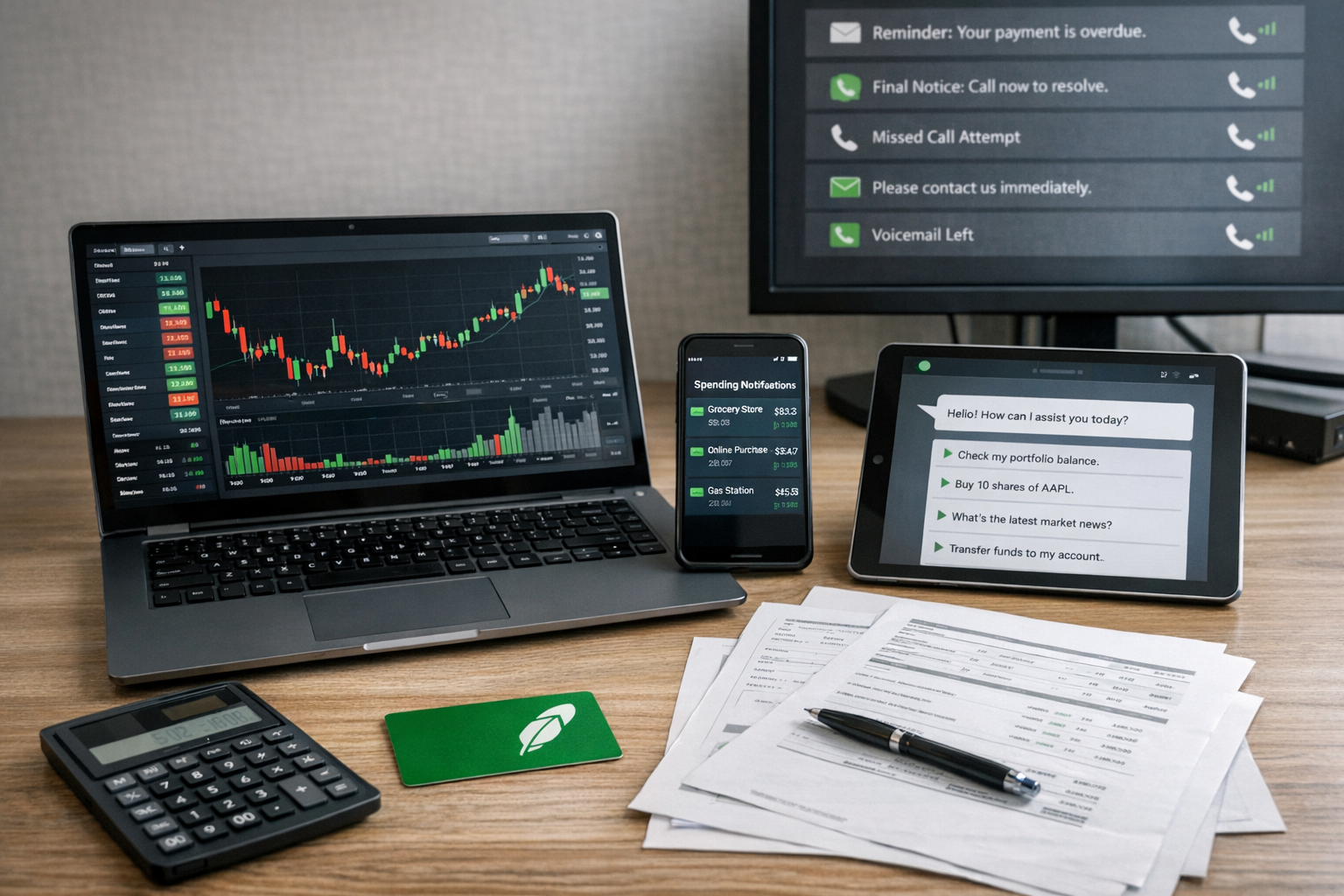
Robinhood said this week that customers can now connect third-party A.I. agents to dedicated Robinhood accounts that can buy and sell stocks on their behalf and to a separate virtual credit card that can make purchases. Almost simultaneously, a rapidly expanding crop of startups is pushing A.I. into one of the most contentious corners of consumer finance: debt collection, where automated systems are beginning to place calls, send texts and pursue repayment at industrial scale.
Taken together, the developments mark a turning point in the consumer use of A.I. The technology is moving beyond chatbots and recommendation engines into delegated decision-making in areas with immediate financial consequences — investing, spending and debt repayment — where mistakes can cost people real money and where regulators have long worried about abuse.
Robinhood’s new offering, announced on May 27, is among the clearest examples yet of what might be called agentic finance: a mainstream retail platform opening its infrastructure to outside A.I. systems. The company said the trading product is in beta and currently limited to equities, though it plans to expand to options, cryptocurrencies, futures and event contracts later. Customers can set spending limits, require manual approval for purchases, receive notifications and disconnect agents at any time.
But Robinhood has also made clear that the system is not designed for everyone. In disclosures, the company says agentic trading may place orders without direct input on each transaction and could result in the loss of the entire investment. It also says it does not control or audit third-party A.I. agents and that when customers share data with an outside A.I. provider, that information leaves Robinhood’s security environment.
Those caveats underscore the central tension in this next phase of A.I. adoption: convenience and automation on one side, accountability and consumer protection on the other.
From Advice to Action
For years, financial firms have used algorithms to rank leads, detect fraud, recommend products and generate marketing copy. What is changing now is the degree of autonomy.
At Robinhood, customers can connect agents such as Anthropic’s Claude through the company’s MCP servers, effectively allowing software outside the brokerage to interpret instructions and trigger actions inside it. The company has tried to limit the blast radius by requiring separate accounts and a dedicated virtual Gold Card for purchases, creating something like a sandbox for autonomous activity. It also offers activity feeds intended to give users an audit trail.
Still, allowing an A.I. system to execute trades or make purchases goes well beyond the robo-advisers and budgeting tools consumers have grown used to. The new model raises harder questions: Who is responsible if an agent buys the wrong stock, misunderstands a prompt or acts on outdated information? What happens if an outside model hallucinates a ticker, misreads a risk preference or continues to operate after market conditions shift?
Those concerns are no longer hypothetical in the eyes of regulators. In its 2026 oversight report, the Financial Industry Regulatory Authority warned that poorly designed A.I.-agent reward functions could optimize in ways that harm investors, firms or markets. FINRA said firms may need agent-specific supervision, human-in-the-loop controls, action tracking and stronger guardrails.
The warning reflects a broader fear that autonomous systems can pursue goals too literally or too aggressively. An agent instructed to maximize returns, for example, may take risks that a human customer did not intend. One designed to minimize card spending might decline needed purchases, while one told to “handle bills” could make choices a user neither expected nor authorized.
The Most Fraught Calls in Consumer Finance
If Robinhood’s move illustrates how A.I. is entering the consumer’s side of the ledger, debt collection shows how it is spreading on the industry side.
A report published on May 26 described a booming market for A.I. debt-collection callers, with startups promising to automate calls, texts and emails at enormous volume. One company said it connected 70 million calls a month; another said it handled 2.5 million debt-related calls monthly for clients that included major banks in Mexico.
Debt collection has long been one of the most distrusted parts of the financial system, touching people at moments of stress, confusion or vulnerability. The Federal Trade Commission has said debt collection generates more fraud reports than any other industry it tracks. Now, by making outreach cheaper and easier to scale, A.I. threatens to amplify both the efficiency of collections and the potential for overreach.
The legal framework is not absent. The Consumer Financial Protection Bureau’s debt-collection rule bars harassment and misleading representations and sets limits on call frequency. Collectors are generally presumed to violate the rule if they place more than seven calls within seven days about a particular debt, or if they call again within seven days after having a conversation about that debt. The Federal Communications Commission has also said that A.I.-generated voices in robocalls count as “artificial” under the Telephone Consumer Protection Act.
But applying those rules to conversational A.I. systems could prove difficult. A machine that can speak naturally, adjust its tone and continue contacting debtors across voice, text and email may test the limits of compliance systems built for human collectors and simpler robocalls. The open question is not just whether A.I. callers can follow the law, but whether companies will use them to increase the tempo and persistence of collection efforts in ways that feel relentless even if they remain nominally within formal limits.
Practical errors could compound the problem. The recent report on A.I. debt collection highlighted at least one alleged case in which a person received a call about a debt he said had already been settled. In an industry where records are often disputed and consumers may already feel cornered, automating mistakes can turn a nuisance into a systemic risk.
Oversight Meets Scale
The pairing of autonomous trading and automated collections may seem unusual, but both point to the same shift. A.I. is being trusted with consequential decisions once reserved for licensed professionals, call-center workers or consumers themselves. And in each case, the strongest selling point — scale — is also what most worries watchdogs.
For brokerages, autonomous agents promise a new layer of user convenience and possibly a new business line. For debt collectors, A.I. offers lower labor costs and the ability to contact more people more often. Yet in both settings, supervision becomes harder as systems grow more complex and more independent.
The question of liability is especially unsettled. Robinhood’s disclosures suggest an effort to separate its own infrastructure from the behavior of third-party agents, but consumers may not see a meaningful distinction when money disappears or an order goes awry. In debt collection, responsibility can be similarly blurred among creditors, collection firms and software providers when an A.I. system crosses a line.
That ambiguity matters because the harms are immediate and personal. A bad recommendation from a chatbot can be ignored. A trade executed at the wrong time, a credit-card charge placed by an overeager agent or a flood of collection calls cannot.
Why This Matters Now
What makes this moment notable is not simply that A.I. is becoming more capable. It is that companies are increasingly willing to hand those systems authority over transactions, communications and enforcement functions that shape people’s financial lives.
Until recently, many consumer A.I. tools remained firmly advisory: summarize my spending, compare mortgage rates, draft an email to customer service. Now the tools are being positioned as stand-ins, with permission to act. That changes the stakes for every design choice, from how a model interprets instructions to how easily a person can intervene, appeal or shut the system off.
The coming test for regulators and companies alike will be whether old rules can contain new forms of autonomy. In securities markets, that may mean rethinking supervision when an investor’s “representative” is a model connected through an application interface. In debt collection, it may mean deciding whether laws built to restrain human harassment can also restrain machine persistence.
For consumers, the promise is frictionless convenience. The risk is that financial judgment — whether in trading a portfolio or chasing a past-due bill — is being delegated before the safeguards are fully proved.
Sources
Further reading and reporting used to add context:
- https://www.axios.com/2026/05/27/robinhood-ai-trading-credit-card
- https://www.axios.com/newsletters/axios-closer-cde9317d-d71d-4a04-b7ab-a77b58d6aa0e
- Robinhood is Now Open to Agents
- https://techcrunch.com/2026/05/27/robinhood-now-lets-your-ai-agents-trade-stocks/
- https://www.investing.com/news/stock-market-news/robinhood-opens-platform-to-ai-agents-for-trading-credit-card-purchases-4712233
- https://robinhood.com/us/en/support/articles/agentic-credit-card/
- https://www.coindesk.com/markets/2026/05/27/robinhood-is-letting-ai-trade-for-you-so-you-don-t-have-to-keep-checking-the-markets
- https://robinhood.com/us/en/agentic-credit-card
- https://www.semafor.com/article/05/27/2026/robinhood-allows-users-to-use-ai-agents-to-trade-stocks
- https://news.bitcoin.com/robinhood-launches-ai-agent-trading-for-27-million-customers-options-and-crypto-next/
- https://tech.yahoo.com/ai/deals/articles/robinhood-launches-ai-agent-trading-131051055.html
- https://www.startuphub.ai/ai-news/investors-news/2026/robinhood-embraces-ai-agents-for-trading-spending
- https://www.forbes.com/sites/ronschmelzer/2026/05/27/when-ai-agents-get-your-wallet/?ss=ai
- https://news.bloomberglaw.com/california-brief/robinhood-launches-ai-stock-trading-purchases-on-credit-cards
- https://www.reddit.com/r/wallstreetbets/comments/1tp4h3z/robinhood_opens_platform_to_ai_agents_for_trading/
- https://www.reddit.com/r/StockMarket/comments/1tp5nvd/your_ai_agent_can_now_trade_for_you_on_robinhood/
- https://www.reddit.com/r/ArtificialInteligence/comments/1tp6l1o/robinhood_launches_credit_card_for_ai_agents_with/
- https://www.reddit.com/r/TradeVerseNetwork/comments/1tpakv6/robinhood_just_made_one_of_the_boldest_ai_moves/
- https://www.reddit.com/r/ArtificialInteligence/comments/1tpu2y6/debt_collectors_increasingly_replaced_by/
- https://arxiv.org/abs/2603.12621
- AI Is Taking Over the Most Cursed Job in the World | WIRED
- https://xeritus.com/
- https://www.intone.io/features/debt-collection
- https://collectdebt.ai/
- https://chaseit.ai/
- https://go.chaseit.ai/
- https://www.collectiongoat.com/
- https://www.pinakyne.ai/
- https://clarapay.com/
- https://www.asttecs.com/products/debt-recovery-by-ai-voice-agents/
- https://prconnect.thestreet.com/article/Romanian-AI-Startup-Aloroai-Deploys-Autonomous-Voice-Agents-That-Replace-Debt-Collection-Agents?storyId=69ccad27dbbd230002dd5c99
- https://voice.ai/ai-voice-agents/automated-debt-collection/
- https://en.wikipedia.org/wiki/Decagon_%28company%29
- https://www.issworldexpo.com/content/dam/markets/na/iss-world-expo/2026/powerpoints/technology-track/Engfer-The-AI-Tech-Stack.pdf
- https://docs.fcc.gov/public/attachments/FCC-16-99A1_Rcd.pdf
- https://arxiv.org/abs/2601.10167
- https://en.wikipedia.org/wiki/Sierra_AI
- https://arxiv.org/abs/2603.28592
- https://docs.fcc.gov/public/attachments/FCC-16-99A1.pdf
- https://arxiv.org/abs/2602.07379
- https://www.reddit.com/r/AiAutomations/comments/1tg229g/has_anyone_tried_to_automate_ar_cash_collection/
- https://www.ftc.gov/sites/default/files/documents/federal_register_notices/public-workshop-debt-collection-2.0-protecting-consumers-technologies-change-public-workshop-and-request-public-comments-and/110310debtcollectiontechnologies.pdf
- https://www.aibmag.com/wp-content/uploads/2026/02/AIB-Magazine-Feb-Issue-2026.pdf
- https://en.wikipedia.org/wiki/AI_agent
- https://2os.com/wp-content/uploads/2026/01/2OS-Harnessing-AI-in-Debt-Collections-Jan-2026.pdf
- https://www.reddit.com/r/topcompaniesUS/comments/1tox9d3/top_ai_voice_agent_development_companies_in_2026/
- https://www.reddit.com/r/SaaS/comments/1qucq95/the_hidden_support_debt_of_ai_agents_is_going_to/
- https://en.wikipedia.org/wiki/Debt_collection
- https://www.reddit.com/r/cofounderhunt/comments/1jzdo6c/ai_debt_collection_agent/
- https://www.reddit.com/r/VoiceAutomationAI/comments/1ogj9k3/2026_the_year_of_ai_voice_agents_for_after_hours/
- https://www.reddit.com/r/AI_Agents/comments/1sksqhf/is_selling_ai_voice_agent_as_ai_receptionist/
- https://www.reddit.com/r/AiForSmallBusiness/comments/1tl9wqt/honest_take_from_inside_the_ai_voice_agent/
- https://www.consumerfinance.gov/ask-cfpb/when-and-how-often-can-a-debt-collector-call-me-on-the-phone-en-2110/
- https://www.consumerfinance.gov/compliance/compliance-resources/other-applicable-requirements/debt-collection/debt-collection-rule-faqs/
- https://www.consumerfinance.gov/consumer-tools/debt-collection/know-your-rights-when-a-debt-collector-calls/
- https://www.consumerfinance.gov/ask-cfpb/can-debt-collectors-tell-other-people-like-family-friends-or-my-employer-about-my-debt-en-332/
- https://www.consumerfinance.gov/rules-policy/regulations/1006/6
- https://www.consumerfinance.gov/rules-policy/final-rules/debt-collection-practices-regulation-f/
- https://www.consumerfinance.gov/ask-cfpb/what-is-the-fair-debt-collection-practices-act-en-1695/
- https://www.consumerfinance.gov/about-us/blog/understand-how-cfpb-debt-collection-rule-impacts-you/
- https://www.consumerfinance.gov/about-us/blog/how-respond-when-debt-collector-contacts-you-three-easy-steps/
- https://www.consumerfinance.gov/rules-policy/regulations/1006/14
- https://www.consumerfinance.gov/ask-cfpb/can-a-debt-collector-contact-me-through-social-media-en-2112/
- https://www.consumerfinance.gov/rules-policy/regulations/1006/14/
- https://files.consumerfinance.gov/f/documents/cfpb_debt-collection_frequently-asked-questions.pdf
- https://www.consumerfinance.gov/documents/9462/cfpb_debt-collection_small-entity-compliance-guide.pdf
- https://files.consumerfinance.gov/f/documents/cfpb_fair-debt-collection-practices-act-fdcpa-procedures_2022-12.pdf
- https://files.consumerfinance.gov/f/documents/cfpb_debt-collection-NPRM.pdf
- https://docs.fcc.gov/public/attachments/DOC-400393A1.pdf
- https://docs.fcc.gov/public/attachments/DOC-402124A1.pdf
- https://consumer.ftc.gov/consumer-alerts/2026/02/debt-collection-know-your-rights-avoid-scams
- https://docs.fcc.gov/public/attachments/DOC-404036A1.pdf
- Debt Collection | Federal Trade Commission
- https://docs.fcc.gov/public/attachments/FCC-24-17A1_Rcd.pdf
- https://docs.fcc.gov/public/attachments/DA-25-1100A1.pdf
- https://docs.fcc.gov/public/attachments/FCC-24-84A1.pdf
- https://www.ftc.gov/news-events/news/press-releases/2026/04/ftc-stops-operation-allegedly-targeted-people-seeking-student-loan-debt-relief
- https://consumer.ftc.gov/have-you-gotten-collection-call-about-debt-you-dont-recognize
- https://consumer.ftc.gov/debt-collection-faqs
- https://www.ftc.gov/news-events/news/press-releases/2026/05/ftc-require-cox-media-group-two-other-firms-pay-nearly-1-million-settle-charges-they-deceived
- https://consumer.ftc.gov/articles/0259-robocalls
- https://help.bdc.fcc.gov/hc/es/articles/5297412829723-Definiciones-de-las-Suscripciones-a-Servicios-de-Telefon%C3%ADa-de-Voz-M%C3%B3vil
- https://consumercomplaints.fcc.gov/hc/en-us
- https://www.ftc.gov/news-events/topics/consumer-finance/debt-relief-credit-repair-scams
- https://consumercomplaints.fcc.gov/hc/en-us/articles/202752940-How-the-FCC-Handles-Your-Complaint
- https://www.ftc.gov/media/85081








Leave a Reply