

A New Test for the AI Age
As artificial intelligence becomes routine in software development and office work, employers are beginning to redraw one of the most consequential lines in the modern labor market: what, exactly, they want to measure when they decide whom to hire.
That shift is coming into view in unusually explicit ways. Anthropic, one of the leading A.I. companies, tells candidates in publicly posted guidance that they may use A.I. to refine applications and prepare for interviews, but that during live interviews, “it’s all you — no AI assistance unless we indicate otherwise.” The same guidance says take-home assessments are also off limits to A.I. unless a role specifically permits it.
Yet Anthropic has also published examples of hiring assessments for some roles that do allow A.I. use, underscoring a broader reality across the industry: companies are not moving in one direction so much as splitting the hiring process in two. In some settings, they want to observe unaided reasoning. In others, they want to see how candidates work with the very tools that now shape daily productivity.
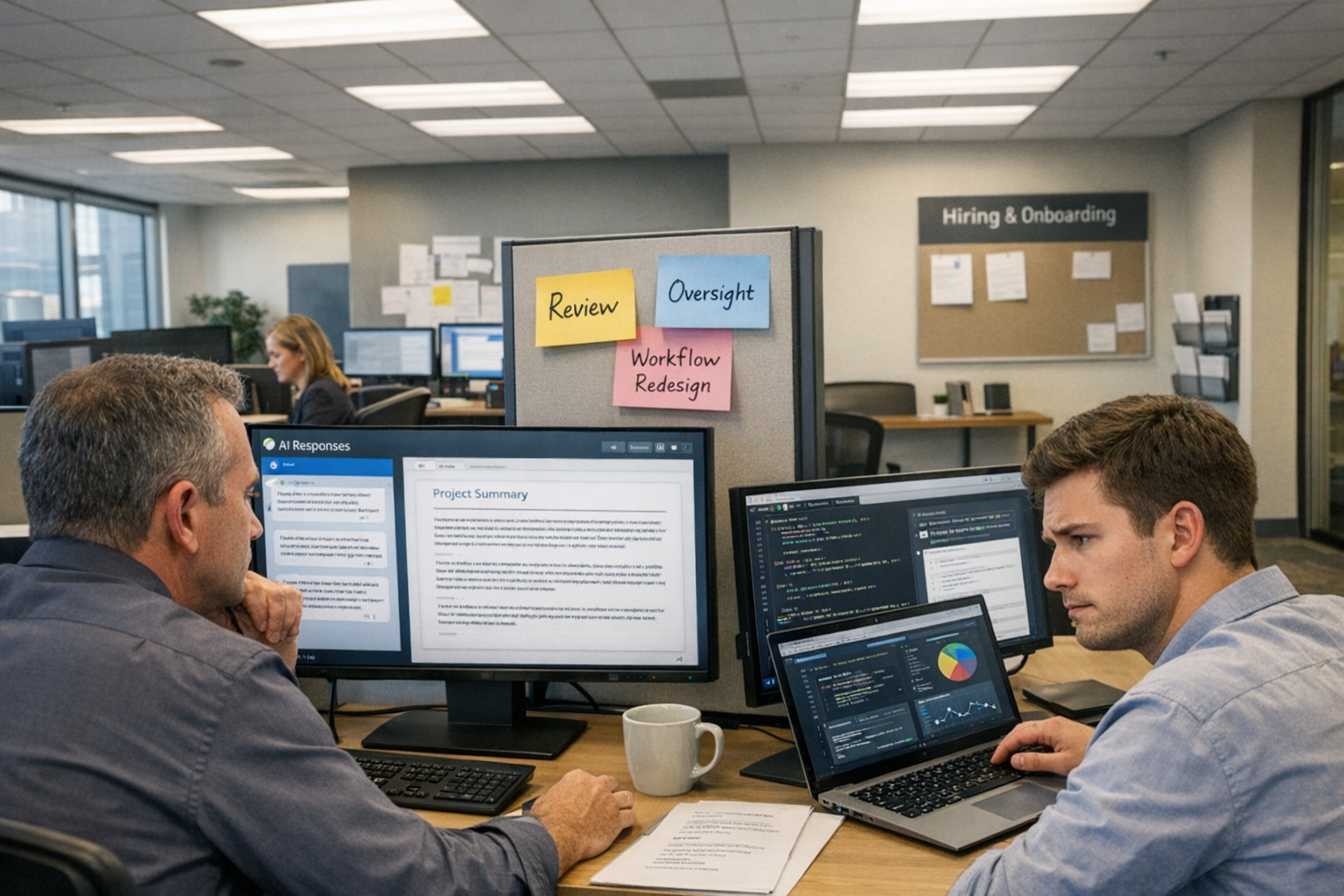
The result is a quiet but significant change in workplace gatekeeping. For years, especially in technology, employers often relied on coding tests, polished résumés and standardized interviews to identify talent. Now those signals are under pressure from generative A.I., which can write code, draft memos, summarize research and help candidates present themselves more effectively. Hiring managers are increasingly less interested in whether applicants can produce an answer on their own than in whether they can reason through a problem, verify A.I. output and exercise judgment when the tool is wrong.
From Coding in Isolation to Reasoning Under Ambiguity
That tension is especially acute in engineering hiring, where the old model of whiteboard coding and live technical puzzles is losing credibility.
Recruiters and engineers have spent months debating whether conventional coding interviews still measure anything meaningful when candidates can readily use powerful coding assistants in ordinary work. The emerging consensus in many corners of the industry is that they often do not. Instead, companies are experimenting with assessments that emphasize architecture, system design, trade-offs, communication, codebase navigation and decision-making in ambiguous situations.
Karat, a company that helps run technical interviews, said in April that 71 percent of engineering leaders in its data reported that A.I. was making technical skills harder to assess. Its newer interview formats place greater weight on how candidates think through problems, explain decisions and handle flawed A.I. suggestions, rather than simply whether they can produce working code under pressure.
Meta has also reportedly been testing coding interviews that allow A.I. assistants, reflecting a different philosophy: if software engineers use these tools on the job, the interview should measure how well they use them.
This emerging divide — ban A.I. to test first principles, or allow it to mirror real work — has become one of the central design questions in hiring. So far, the answer appears to be both.
Why the Question Matters Beyond Silicon Valley
The stakes reach beyond engineers and beyond the tech industry.
Experimental evidence posted this year found that listing A.I. skills increased interview invitation rates by roughly 8 to 15 percentage points across software engineering, office assistance and graphic design. That suggests A.I. fluency is rapidly becoming a hiring signal across occupations, not just among programmers.
As A.I. moves deeper into everyday work, employers are effectively redefining which human strengths are legible in the hiring funnel. Candidates who are strong at structured reasoning, verification and tool orchestration may benefit. Others who were once rewarded for memorized syntax, résumé polish or speed on conventional tests may find those advantages fading. Schools, universities and boot camps are likely to feel the effects as well, as training programs adjust to what employers now value.
Anthropic’s own research has pointed in that direction. In a study of its workplace published in late 2025, the company said engineers and researchers were already using A.I. heavily, becoming faster and more “full-stack” while taking on more complex work. The same research also flagged anxieties that are now showing up in hiring: whether workers may over-delegate to tools, and whether heavy A.I. use could weaken the development of underlying skills.
In labor-market research published in March, Anthropic argued that A.I. exposure was becoming increasingly relevant to how work is organized and how workers are evaluated, even if broad unemployment effects remained difficult to measure. That debate has intensified amid concern that entry-level roles, particularly in technology, are becoming scarcer as employers expect fewer people to do more with better tools.
The Fairness Problem
The new interview landscape also raises uncomfortable questions about fairness and trust.
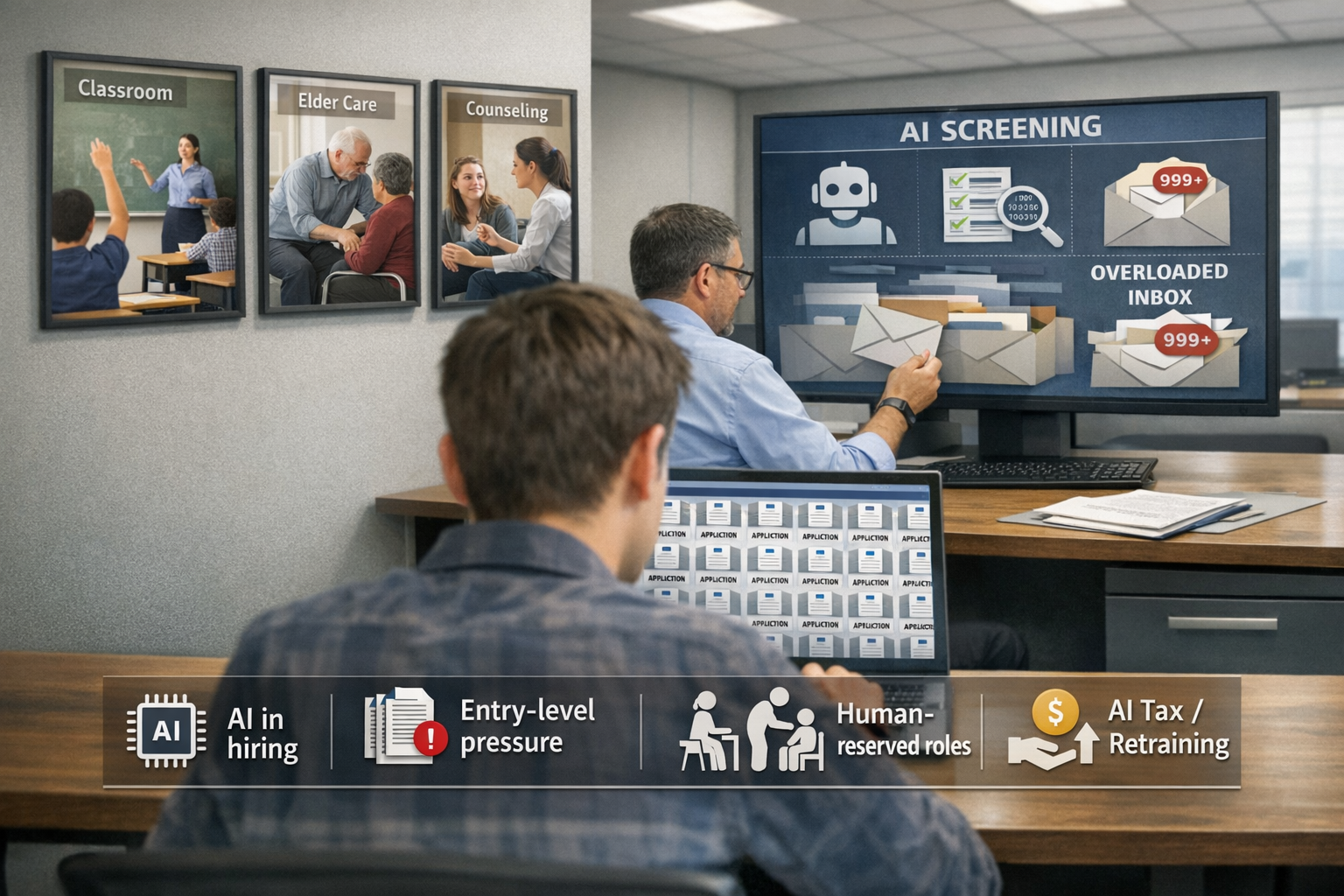
If companies allow A.I. during assessments, candidates with better access to tools — or simply better prompting habits — may gain an advantage unrelated to core ability. If they prohibit A.I., they may end up measuring a skill set that no longer resembles the job. And if employers increasingly use A.I. to screen résumés and applications before a human ever reviews them, then A.I. itself starts to become a gatekeeper, shaping who gets seen and who disappears in the funnel.
That has fed growing frustration among applicants, particularly in technology, where some complain that companies use automated screening tools, intrusive proctoring software and human-verification hurdles even as they demand workers who can thrive in an A.I.-native environment. In online discussion, the Anthropic policy became a proxy for a wider argument over whether hiring processes are adapting to the world as it is or clinging to a version of work that is already receding.
Some hiring managers defend A.I.-free interviews as the clearest way to understand how a person thinks without assistance. Critics counter that such exercises risk measuring isolation rather than competence. In modern engineering, they argue, the real skill is not coding from memory but deciding when to trust a tool, when to ignore it and how to check its work.
There is little consensus yet on which method best predicts job performance. Even companies designing new interview systems describe the calibration as unresolved and highly specific to the role and organization.
A Signal of What Employers Now Value
What is becoming clearer is that hiring is turning into a referendum on how companies understand intelligence itself.
For decades, employers treated individual output as the basic unit of evaluation: Can this person write the code, answer the question, produce the memo? A.I. complicates that. In many jobs, the relevant question is now whether a worker can produce reliable results in collaboration with a machine — and whether that worker still has enough independent judgment to catch errors, make trade-offs and know when the machine is leading them astray.
Anthropic’s candidate guidance, updated on July 10, 2025, offers one of the clearest public illustrations of that new logic. Use A.I. to get ready. Do not use it when the company wants to observe your own reasoning. But be prepared for other contexts in which using A.I. well may be part of the test.
That balancing act is likely to spread. As A.I. becomes embedded in more forms of work, employers will face mounting pressure to decide not simply whether candidates can do a task, but whether they can do it under the right constraints, with the right tools and with judgment that remains distinctly human.
In that sense, the hiring interview is becoming one of the first institutions to be fully remade by the A.I. era — and one of the first places where its new rules for opportunity are being written.
Sources
Further reading and reporting used to add context:
- https://preparefrontend.com/blog/blog/coding-interviews-in-the-ai-era-what-changed
- https://www.metaintro.com/blog/inside-anthropic-brutal-hiring-process-bans-ai-interviews
- https://builtin.com/articles/audit-interview-scorecard
- https://thita.ai/blog/ai/how-ai-is-changing-technical-interviews-in-2026
- https://cadence.withremote.ai/blog/ai-technical-interviews
- https://www.techradar.com/pro/meta-is-going-to-let-candidates-use-ai-in-job-interviews
- https://techcrunch.com/2026/02/28/the-trap-anthropic-built-for-itself/
- https://coderpad.io/blog/product-updates/2026-product-recap/
- https://papers.ssrn.com/sol3/papers.cfm?abstract_id=6180838
- https://tianpan.co/forum/t/technical-interviews-are-finally-changing-companies-now-let-candidates-use-ai-in-live-coding-but-what-are-you-actually-evaluating/568
- https://stack.convex.dev/should-ai-be-used-in-coding-interviews
- https://nyrion.ai/guide/ai-assisted-coding-interview
- https://www.interviewnode.com/post/how-generative-ai-is-changing-ml-interviews-in-2026
- https://en.wikipedia.org/wiki/Anthropic
- https://www.reddit.com/r/nonprofit/comments/1t8d3pj/candidates_using_ai_during_an_interview/
- https://www.altmansolon.com/hubfs/Artificial-Intelligence-Applicants-EN.pdf
- https://www.reddit.com/r/Hack2Hire/comments/1t6ncgs/anthropic_interview_process_experience_megathread/
- https://en.wikipedia.org/wiki/Anthropic%27s_Responsible_Scaling_Policy
- https://en.wikipedia.org/wiki/Dario_Amodei
- https://www.reddit.com/r/VancouverJobs/comments/1r29ju0/anyone_seeing_prohibitions_against_ai_in_job/
- https://www.anthropic.com/news/anthropic-interviewer
- https://www.anthropic.com/research/how-ai-is-transforming-work-at-anthropic?hl=en-US
- https://www.anthropic.com/about-anthropic-interviewer
- https://www.anthropic.com/customers/magicschool
- https://www.anthropic.com/careers?via=aitoolzs
- https://www.anthropic.com/customers/micro1
- https://www.anthropic.com/research/AI-assistance-coding-skills?e45d281a_page=1
- https://www.anthropic.com/careers/jobs/5041174008
- https://www.anthropic.com/careers?guides=image-generation-social-good
- https://www.anthropic.com/engineering/AI-resistant-technical-evaluations
- https://www.anthropic.com/customers/lex
- https://www.anthropic.com/customers/bito
- https://assets.anthropic.com/m/ec212e6566a0d47/original/Disrupting-the-first-reported-AI-orchestrated-cyber-espionage-campaign.pdf
- https://www-cdn.anthropic.com/e5645986a7ce8fbcc48fa6d2fc67753c87642c30.pdf
- https://assets.anthropic.com/m/377027d5b36ac1eb/original/Sabotage-Evaluations-for-Frontier-Models.pdf?trk=public_post_comment-text
- https://www-cdn.anthropic.com/38a1fb9db81446402a70bc45d104327aab12f3fe.pdf
- Engineering Interview Trends in 2026 (New AI Hiring Data)
- https://karat.com/karat-launches-nextgen-interviews-the-first-human-led-ai-enabled-talent-evaluation-solution/
- Evaluating AI-Ready Engineers
- https://www.interviewquery.com/p/technical-interviews-2026-ai-shift
- https://www.interviewquery.com/p/karat-data-science-technical-interviews-2026
- https://karat.com/best-us-cities-engineering-talent-2026/
- https://insight.ieeeusa.org/articles/three-ways-ai-is-reshaping-traditional-technical-interviews-in-2026/amp/
- https://karat.com/
- https://www.aceround.app/blog/karat-interview-ai-guide/
- https://recruitingtechreviews.com/articles/best-ai-interviewers-software-engineering-intern-hiring-2026
- https://karat.com/hiring-insights/
- https://karat.com/resources/category/reports/
- https://karat.com/wp-content/uploads/2026/02/FinServ-AI-workforce-transformation.pdf
- https://www.reddit.com/r/EnhancvResumes/comments/1tq1tcy/we_surveyed_1066_job_seekers_and_interviewed_25/
- [2601.13286] AI Skills Improve Job Prospects: Causal Evidence from a Hiring Experiment
- https://arxiv.org/abs/2604.06187
- https://connect.karat.com/hubfs/Navigating_the_AI_Engineering_Hiring_Boom.pdf
- https://www.reddit.com/r/cscareers/comments/1squcw7/karats_2026_survey_shows_how_technical_interviews/
- https://public.karat.io/marketing/Karat-Engineering-Technical-Interview-White-Paper.pdf
- https://karat.com/wp-content/uploads/2026/03/How-to-Build-Better-Technical-Interview-Questions-1.pdf
- https://www.reddit.com/r/aiengineering/comments/1rf7myh/the_actual_state_of_ai_engineering_in_2026/
- https://www.reddit.com/r/learnmachinelearning/comments/1tnen5l/i_have_senior_ai_engineer_interview_with_citibank/
- https://www.reddit.com/r/leetcode/comments/1tnnppr/karat_interview_result_chances/
- https://www.reddit.com/r/DeveloperJobs/comments/1rw2wee/are_aipowered_interviews_replacing_recruiters_in/
- https://www.anthropic.com/research/anthropic-interviewer?aff=BbMy6
- https://www.anthropic.com/research/team/societal-impacts?gh_src=Menlo+Ventures+job+board
- https://www.anthropic.com/research/labor-market-impacts?aff=qgrqo
- https://www.anthropic.com/careers/jobs/4961072008
- https://www.anthropic.com/careers/jobs/4980504008
- https://www.anthropic.com/careers/jobs/4980420008
- https://www.anthropic.com/customers/bluenote
- https://www.anthropic.com/careers/jobs/5026097008
- https://www.anthropic.com/careers/jobs/4819732008
- https://www.anthropic.com/careers/jobs/5015340008
- https://www.anthropic.com/careers/jobs/5061729008
- https://resources.anthropic.com/hubfs/2026%20Agentic%20Coding%20Trends%20Report.pdf
- https://resources.anthropic.com/hubfs/The%202026%20State%20of%20AI%20Agents%20Report.pdf
- Guidance on Candidates' AI Usage \ Anthropic
- How AI Is Transforming Work at Anthropic



Leave a Reply